
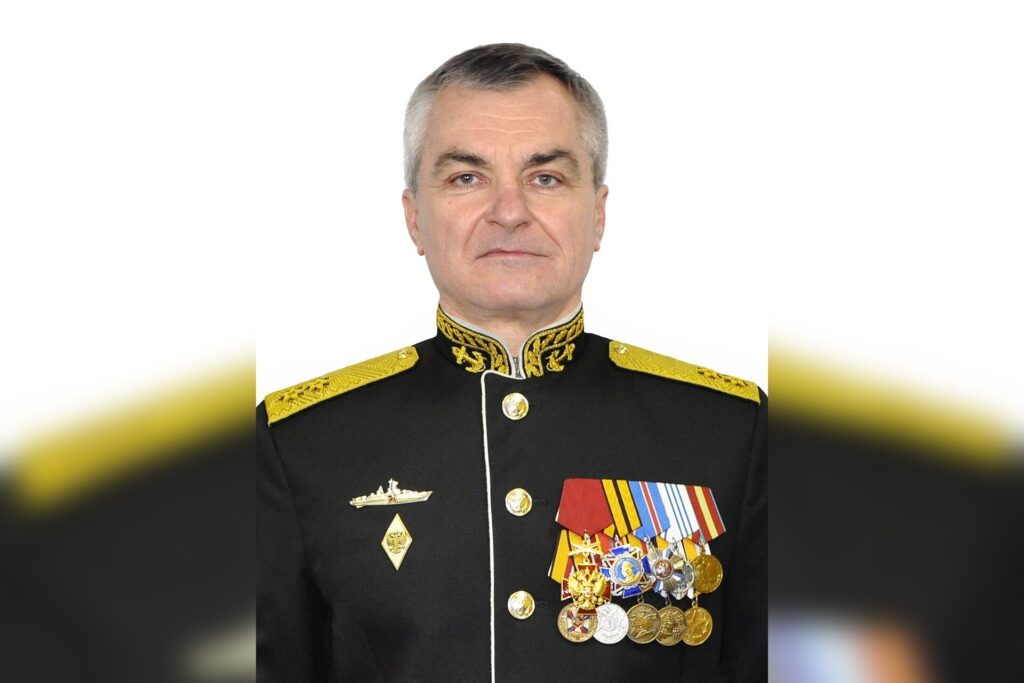
Thirty-four officers dead, including the man who commanded Russia’s Black Sea Fleet. That was the claim Ukraine’s Special Operations Forces made on September 25, 2023, three days after a missile strike on the fleet’s headquarters in Sevastopol. A day later Moscow answered with a picture of its own: Admiral Viktor Sokolov, apparently alive, in a video conference with Defense Minister Sergei Shoigu.
Neither side offered proof that settled the matter on the day.
The strike and the claim
The Sevastopol headquarters was hit on September 22. Both Kyiv and Moscow acknowledged that, according to the Kyiv Independent, which added that satellite imagery from Planet.com showed extensive damage to the building. Sky News, it noted, said the attack used long-range Storm Shadow missiles. Ukraine’s military said its air force carried out 12 strikes on the site and hit two anti-aircraft missile systems and four Russian artillery units, according to AP.
Early Ukrainian figures were far lower. Kyrylo Budanov, who heads Ukraine’s military intelligence, told Voice of America at least nine people were killed and 16 wounded, and named General Alexander Romanchuk, who commands Russian forces on a key southeastern front, as being in a “very serious condition”. Then came the Special Operations Forces statement on September 25. Thirty-four officers killed, 105 wounded, and the headquarters building beyond repair. “Thirty-four officers were killed, including the commander of the Black Sea fleet,” the unit said.
The statement did not name Sokolov. Anton Gerashchenko, an adviser to Ukraine’s interior minister, posted his name and photo online, AP reported, and noted that Ukraine offered no supporting evidence. The Kyiv Independent said reports of Sokolov’s death had circulated earlier but had not been confirmed by official Ukrainian sources until that statement. Had it been true, DW pointed out, he would have been the highest-ranking Russian officer killed in the war.
Moscow’s version
Russia’s own account of the strike was much smaller. Its military said initially that one serviceman had been killed, then revised that to missing, and AP said Moscow gave no further update. On September 26 the Defense Ministry released the video showing Sokolov taking part in a conference with Shoigu, other senior admirals and army chiefs. DW reported the ministry’s claim that he was attending a meeting. Ukraine had said the strike was timed to coincide with a meeting of naval officials.
The British Ministry of Defense gave its own read that same day. Damage to the headquarters was “certainly severe but localized”, it said, and the fleet “almost certainly remains of capable of fulfilling its core wartime missions of cruise missile strikes and local security patrols”. Wider patrols, and the fleet’s de facto blockade of Ukrainian ports, would be harder to sustain, the ministry added, and a “deep strike battle” in the Black Sea was likely pushing Russia onto the defensive.
The wider campaign
The strike came as Ukraine stepped up attacks on Crimea, which Russia annexed in 2014 and which serves as a hub for its invasion. AP, citing the Institute for the Study of War, said Kyiv was targeting naval facilities there while its summer counteroffensive made slow gains in the east and south. A barrage followed the headquarters attack on the Saturday. Kyiv said missiles and naval and aerial drones had also destroyed defense systems and damaged Russian ships and submarines.
The reports from those days leave one point open: the Ukrainian claim was never backed by evidence in these accounts, and the Russian video was a ministry release that no outside party had checked.
Sources
- Russia's Black Sea Fleet commander among 34 killed in a missile strike in Crimea, Ukraine claims (AP, via EL PAIS English)
- Military: 34 Russian Black Sea Fleet officers, including commander, killed in Sevastopol strike (Kyiv Independent)
- Ukraine updates: 'Killed' commander seen in Russian video (DW)
- Ukraine: Kyiv says it killed Russian fleet commander (DW)




