
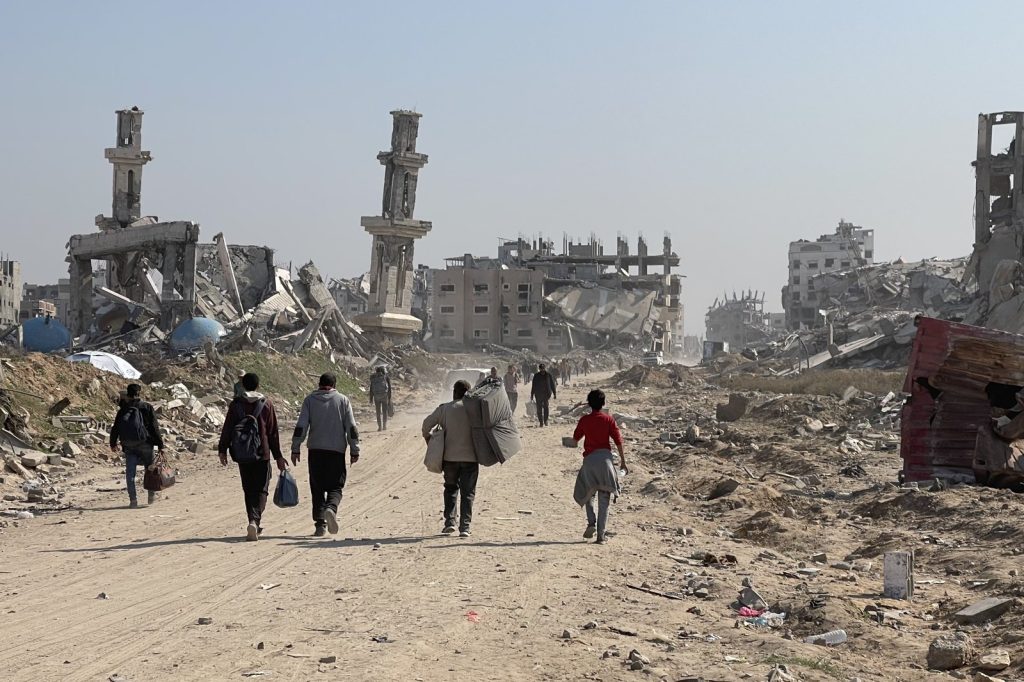
A ceasefire is supposed to stop the killing. In Gaza, five boys and two girls were reported killed over two weeks, and at least 33 children were seriously injured, in air strikes, drone strikes and gunfire. Two more boys died of earlier wounds.
UNICEF Global Deputy Spokesperson Ricardo Pires gave those figures to a press briefing at the Palais des Nations in Geneva on 16 October 2026. A little over a year after the ceasefire was announced, he said, more than 340 children have been reported killed and hundreds more hurt. “Those terrible statistics do not equate with a ceasefire as most would imagine one,” Pires said.
What the UNICEF report counts
A new UNICEF report, released the same day, tallies the cost to children. About 800,000 are still displaced, most of them in tents or in bombed-out buildings that are unsafe. An estimated 60,000 children have seen one or both parents killed during the war or since the ceasefire. Nearly every child needs some form of mental health support, Pires said.
Winter is coming again, the fourth for these children, with torn tents and no proper sanitation.
Pires described Norhan, a 16-year-old UNICEF staff met recently. Her mother was shot while eight months pregnant, delivered the baby, and died the next day. Her father lives with a disability, so Norhan looks after her one-year-old sister, Narjis, and does the cooking and housework. She also helps her three other siblings with schoolwork after their classes at a UNICEF-supported learning centre. Norhan wants to become a pharmacist, Pires said. She has not given up on it, “but she doesn’t expect it.”
Progress, and what is still broken
Some things have improved. More humanitarian aid and commercial goods now enter Gaza, and food security has got better. More than 560,000 children have gone back to learning since the ceasefire, including at over 200 UNICEF-supported centers. This year UNICEF has delivered digital cash assistance to more than 380,000 people and keeps supplying safe water to 1.2 million.
The sewage system is another matter. All six wastewater treatment plants are out of service, and most raw sewage goes straight into the sea. The Sheikh Radwan stormwater basin is half full of wastewater. UNICEF warned a year ago that it could overflow into downstream homes once the rains arrive. Children have drowned in contaminated water before. The basin could be drained in two weeks, Pires said, but the equipment has not yet been allowed into Gaza by Israel.
He called for Israeli authorities to let in materials, spare parts, generators and engine oil at scale, and for all parties to honor the ceasefire and UN Security Council Resolution 2803.
Shrinking ground
A separate warning came on 28 October from the Gaza Center for Human Rights. It said Israeli forces are shifting yellow concrete barriers westward, extending areas under military control. The so-called Yellow Line was set under the ceasefire arrangements of October 10, 2025, and the center described it as a moving boundary that pushes toward populated areas and forces people to move again and again.
The center documented several incidents in October: barriers advanced in Gaza City’s Shujaiya neighborhood and near al-Maghazi refugee camp, with gunfire, shelling and property destroyed. It also reported drone attacks on displacement shelters in eastern Khan Yunis on October 8 and in Gaza City on October 25. Tents reportedly burned, and dozens of families fled.
By the center’s account, Israeli forces control or severely restrict access to more than 70% of Gaza’s roughly 365 square kilometers, while land fit for housing and shelters may be no more than 15%. It cited Article 49 of the Fourth Geneva Convention, which bars the forcible transfer of civilians from occupied territory except in narrow circumstances, and asked the US, Egypt, Qatar and Türkiye, the ceasefire guarantors, to step in.
Sources
- Childhood defined by struggle for survival in the Gaza Strip
- Gaza’s shrinking territory: Rights group warns Israeli expansion leaves little room for displaced Palestinians




