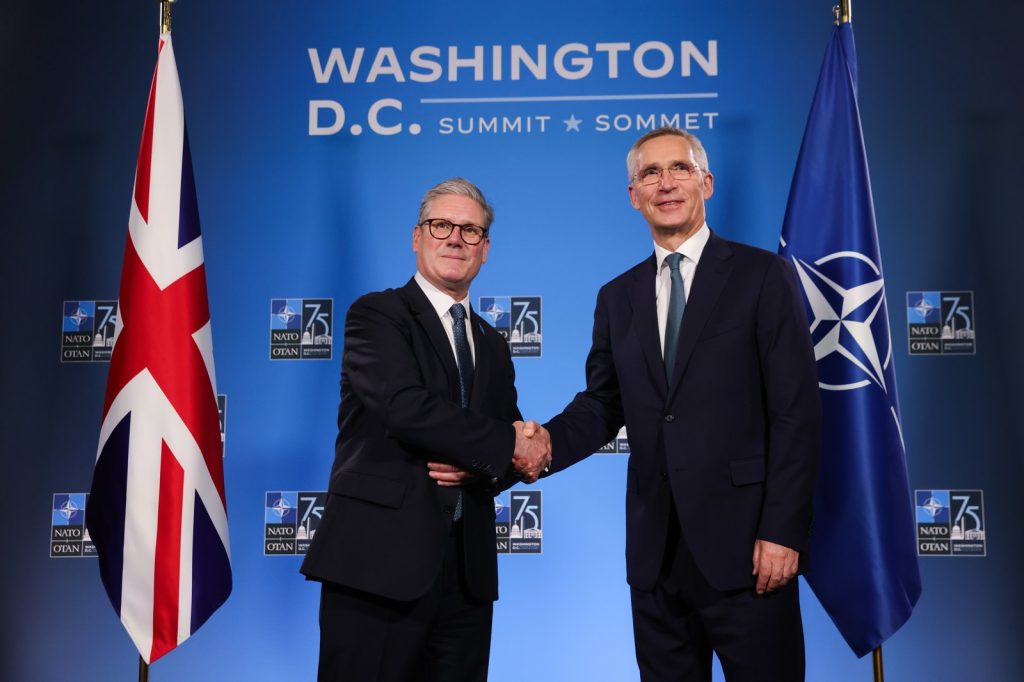
Keir Starmer walked out to the lectern at 10 Downing Street on Monday, 22 June 2026, and gave up the leadership of the Labour Party. “That is why I will resign as leader of the Labour Party,” he said, after describing every decision he had made as an effort to put “the country I love first.”
He is staying put for now. Nominations for his successor open on 9 July, and the Irish Times reported that the contest should wrap up around 16 July, just as parliament heads into its summer recess.
The politics.co.uk site counted him as the sixth person to leave the office in a decade. The Irish Times framed it from the other end: Andy Burnham, the likely replacement, would be the seventh prime minister in ten years.
How the ground gave way
Starmer took Labour to a landslide in the 2024 general election, winning 411 seats and a majority of 174. The vote share behind it was thin, 33.7%, the lowest for any majority government in British history.
Trouble stacked up quickly. The winter fuel payment cuts angered backbenchers, a welfare bill revolt followed in June and July 2025, and the vetting scandal around Peter Mandelson dogged him afterward. The May 2026 local and devolved elections turned a slow bleed into a crisis, with more than 90 MPs calling on him to go.
Then came Makerfield. Burnham, the Greater Manchester mayor, won that by-election on 19 June with 54.8% of the vote, which put him in position to enter the leadership race. Within days, the number of MPs demanding Starmer’s exit passed 100. On 11 June, John Healey had already quit as Defence Secretary over military spending, and Armed Forces Minister Al Carns went with him.
A clear field for Burnham
Burnham confirmed he would stand soon after Starmer finished speaking. Wes Streeting, who resigned as Health Secretary and set the crisis in motion, dropped his own ambitions and backed Burnham. Around 200 Labour MPs, among them Chancellor Rachel Reeves and Chief Whip Jonathan Reynolds, turned up to meet Burnham in Westminster Hall. The Irish Times said that points toward a coronation rather than a fight.
Burnham was sworn in as an MP the same day. Opposition members greeted him by shouting “he’s not the Messiah.”
Starmer’s own exit was shaky. He struggled to keep his composure, especially when he spoke of his family, saying he wanted to be “the best husband I can to my fantastic wife.” Mark Paul, the Irish Times London correspondent, called him “essentially a broken man.” In his statement, Starmer said he had taken over a party that was “politically, financially and morally bankrupt,” and called becoming Prime Minister “the proudest moment of my life.” On his party’s doubts, he put it plainly: “I have heard the answer of my parliamentary party to that question.”
Reaction
Nigel Farage demanded an immediate general election. Kemi Badenoch took issue with the timing of the handover. Gordon Brown credited Starmer with returning Labour to government in 2024.
Ursula von der Leyen offered a warmer line: “It can take many leaders years to grow into the statesman you became in just two years.” Volodymyr Zelenskiy thanked him for his support, and Irish Taoiseach Micheal Martin called him “a person of great ability, decency and honour.”
Burnham has signalled he would not call a snap election, which would leave Labour three years of its five-year term. The EU, meanwhile, was weighing whether to keep a UK-EU summit set for 22 July.
Sources
- Keir Starmer resigns as prime minister
- Andy Burnham sworn in as new MP after 'broken' Starmer holds back tears as he resigns