
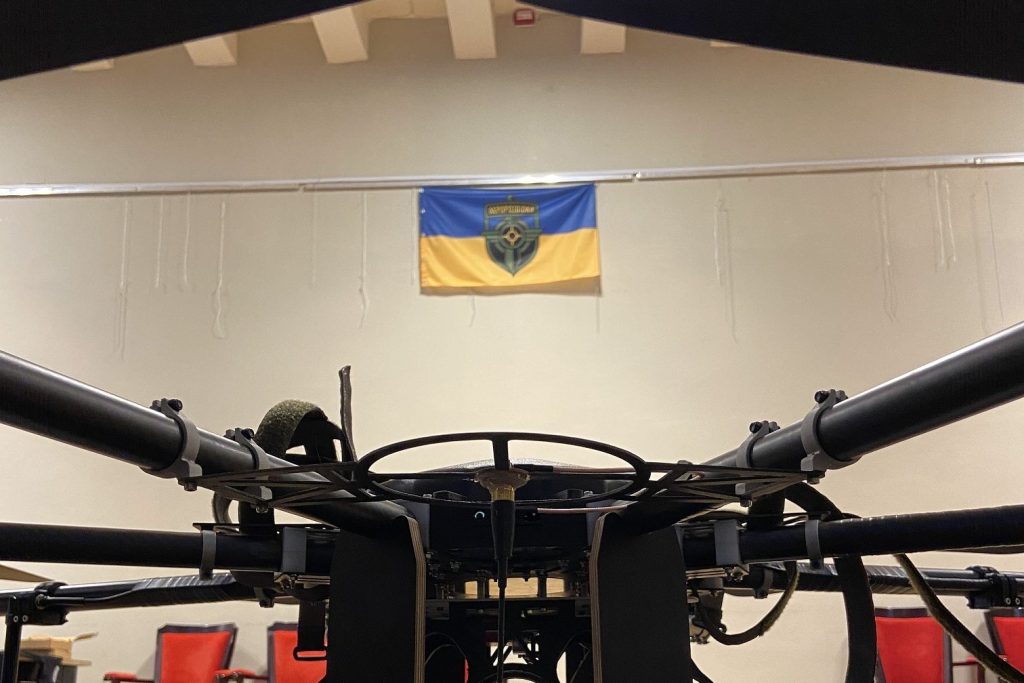
On August 21, a Ukrainian drone unit attacked Colonel Dmitry Shabaev, commander of Russia’s 64th brigade, seriously wounding him in the ongoing Russia-Ukraine war. The assault, reported by Euromaidan Press and Ukrainian National News (UNN), marks a rare instance of battlefield targeting of a senior Russian officer linked to wartime atrocities. According to Ukrainian sources, fighters from the “Scythian Griffins” Regiment carried out the operation, which aligns with Kyiv’s stated strategy of holding individual Russian commanders accountable during active hostilities.
Shabaev’s role in the 2022 Bucha massacre remains central to the narrative. Reports confirm he was tied to the killing of 637 civilians during Russia’s occupation of the town, a fact corroborated by international investigations.
His command of the 64th brigade placed him at the intersection of military leadership and documented war crimes, a connection that Ukrainian forces have emphasized in their actions. The wounding, which occurred amid a conflict described by some analysts as a prolonged global conflict with high casualty rates, underscores the escalating tactics employed by Ukraine to counter Russian military leadership.
Accountability and Targeting
Analysts note that such actions are not isolated. Similar cases have emerged in recent months, where Ukrainian forces have targeted Russian officers implicated in alleged war crimes. These strikes, while controversial, are framed by Kyiv as necessary to deter future atrocities.
However, they also risk escalating tensions, as Russia has historically responded to such operations with counter-measures. The broader context of the war—its scale, duration, and human cost—makes these decisions both pragmatic and fraught with risks.
Political and Legal Dimensions
In the context of the Russia-Ukraine war, which has drawn international attention as a high-casualty conflict, the targeting of individual commanders like Shabaev raises questions about the balance between military necessity and accountability. Some Western officials have expressed support for Ukraine’s approach, arguing that it aligns with principles of justice in wartime. Others caution against normalizing such actions, warning they could undermine diplomatic efforts or provoke broader escalation.
The U.S. administration, under President Donald Trump, has maintained a stance focused on ending the conflict, though it has not publicly commented on specific battlefield tactics. As the Russia-Ukraine war continues, incidents like Shabaev’s wounding illustrate the complex interplay between military strategy, accountability, and political leadership.
The event reinforces the principle that commanders tied to war crimes face heightened risks on the battlefield, while political leaders remain under pressure to address the broader implications of their decisions. For now, the focus remains on the immediate consequences of the attack and its potential to influence the war’s trajectory. Observers will watch closely for any shifts in Russian or Ukrainian tactics, as well as developments in international responses to the conflict.




