
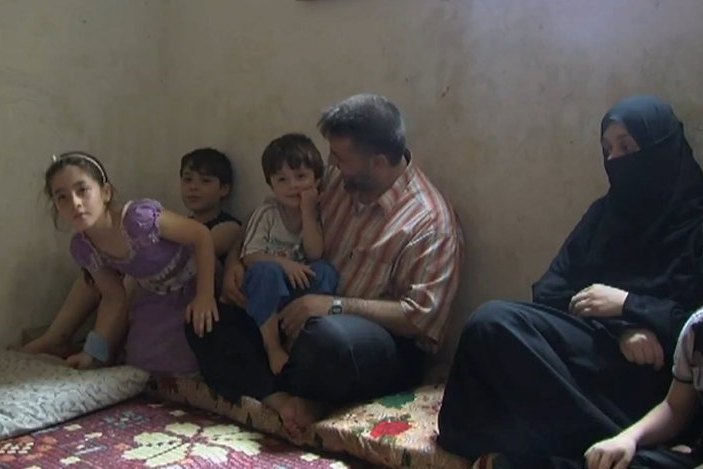
Abdul Qader Basmaji was 25 when Turkish security forces detained him in Istanbul. He never got to an ATM to withdraw his savings. A few days later he stood at the border with Syria’s northwestern region of Idlib, ten years after leaving Aleppo, with nothing but what was in his pockets. “Nobody reimbursed me,” he told DW.
His story is one small piece of the largest displacement crisis of the century, and it did not end when the Syrian war did.
How it began
It started in March 2011 with peaceful protests, in Daraa, and the response was violence, as the UN’s regional information centre recounts. Army defectors formed the Free Syrian Army by July 2011, and civilians took up arms. Outside powers joined in. By the end, 14 million people had left their homes, per the UN figures.
Before the war, Syria had 22 million people. More than half had to flee, plenty of them repeatedly. At its peak, the number of Syrian refugees abroad passed 6.7 million, and around 7.4 million more were displaced inside the country.
The milestones
Zaatari camp opened in Jordan in July 2012 and hosted 120,000 refugees within its first twelve months. In September 2015 a large number of Syrians reached Europe. In December 2019, renewed bombing in northwest Syria drove 961,000 people out in three months, the largest displacement since the start of the conflict, according to Prosper Global.
Turkey took the most: over 3.6 million Syrians. Not all of them stayed. Human rights groups saw forced returns rising, and DW counted more than 57,000 Syrians deported to Idlib since January 2023.
After Assad
The government collapsed in December 2024, and people began going home. Between then and 31 August 2026, some 1.8 million refugees returned from Turkey, Lebanon, Jordan and Iraq, UNHCR figures show, and over two million internally displaced people went back to their areas. Tom Fletcher, the UN humanitarian chief, told the Security Council on 17 September 2026 that this was “a profound sign of hope”.
The numbers still weigh heavily. Roughly 3.9 million Syrians are still refugees abroad. Turkey now hosts about 2.2 million. Lebanon has nearly 900,000, Jordan close to 350,000, Iraq more than 300,000. About six million are displaced inside Syria.
Going back is hard. Returnees find damaged infrastructure, few services, scarce work and unexploded ordnance. Of a population of 25.6 million, an estimated 15.6 million need humanitarian aid, and more than seven million face acute food insecurity. The country is also going through drought-like conditions at their worst in 36 years. Nanar Hawach of the International Crisis Group put it bluntly to DW: returning “often means returning to square one.”
Germany and Sweden, which took in the most Syrians in Europe, count assisted returns only in the low thousands (Germany) and low hundreds (Sweden). Germany had roughly 712,000 people with protection status at the end of 2023.
Sources
- Syrian refugees: A profound sign of hope (UN Information Centre for Western Europe)
- Syrian Refugee Crisis – What You Need to Know (Prosper Global)
- Syria: Refugees return to 'square one' at best (DW)
- Syrian Refugee Crisis timeline (Prosper Global)




