
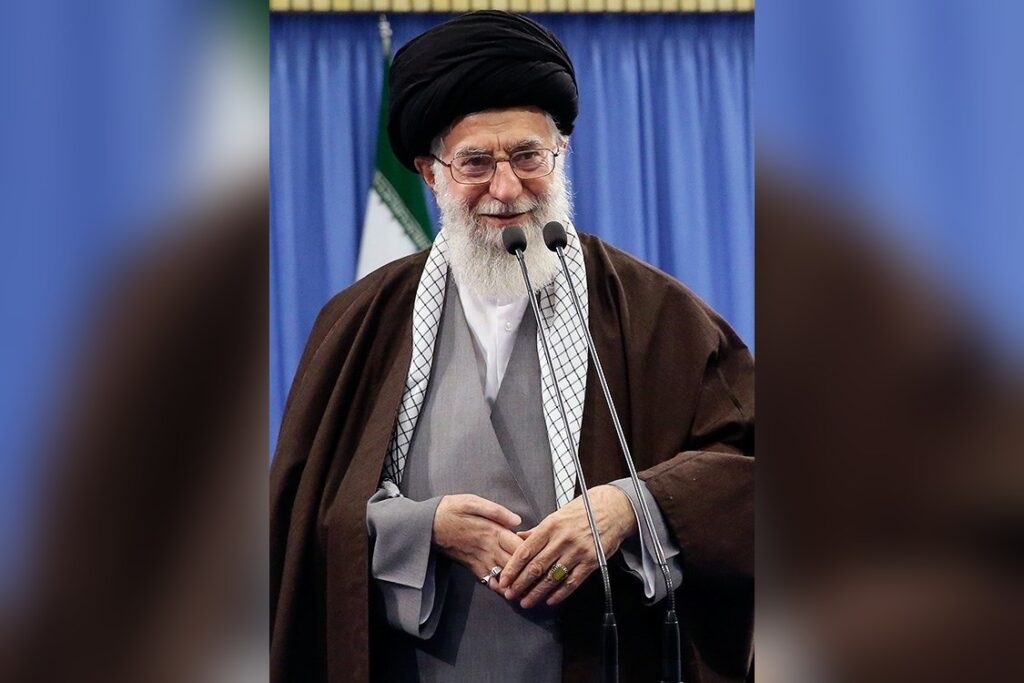
The news hit the world like a seismic shock: Iran’s Supreme Leader, Ayatollah Ali Khamenei, was dead. For decades, he had been the unchallenged center of gravity in a country that defies easy categorization – part theocracy, part republic, part security state. His passing, regardless of the precise circumstances, triggers not just a succession crisis but a fundamental test of a political structure so unusual, so layered, that it often confuses outsiders and concentrates power in ways that are both deliberate and fragile. To understand what happens next, one must first understand the machine he commanded.
Iran’s system is officially called the Islamic Republic, a hybrid born from the 1979 revolution that toppled the Shah. Its architect, Ayatollah Ruhollah Khomeini, envisioned a state where ultimate authority rested not with elected officials but with a supreme religious jurist – the *Vali-ye Faqih*, or Guardian Jurist. This doctrine, known as *velayat-e faqih*, holds that in the absence of the hidden twelfth Imam, a just and learned cleric must guide the nation, ensuring that all laws and policies align with Shia Islam. It was a radical idea, and it reshaped the country’s entire DNA.
At the apex of this system sits the Supreme Leader. He is not merely a symbolic figurehead. He commands the armed forces, appoints the heads of the judiciary and state media, and can dismiss the president. He has the final say on foreign policy and nuclear negotiations. For nearly four decades, Khamenei wielded these powers with a calculating, often cautious hand, surviving wars, sanctions, and internal protests. His authority was immense, but it was not absolute – it rested on a delicate scaffolding of institutions that both empowered and constrained him.
Beneath the Leader lies the Guardian Council, a twelve-member body of jurists and clerics. Half are appointed by the Supreme Leader directly; the other half are nominated by the judiciary and confirmed by parliament, but the Leader’s influence is decisive. The Council’s most potent power is vetting: it decides who can run for president, parliament, and the Assembly of Experts. In practice, this means that no reformist or moderate candidate who challenges the system’s core principles can ever reach high office. The Council also reviews all legislation, ensuring it complies with Islamic law. It is a gatekeeper, a filter, and a shield for the Leader’s vision.
Then there is the Assembly of Experts, an 88-member body of clerics elected every eight years. Its formal role is to choose the next Supreme Leader when the current one dies or is incapacitated, and to oversee his performance. In theory, it could even remove him. In reality, the Assembly has never challenged a sitting Leader. Its members are themselves vetted by the Guardian Council, ensuring ideological loyalty. When Khamenei succeeded Khomeini in 1989, the Assembly’s choice was a foregone conclusion. The current body, elected in 2016 and 2024, is dominated by hardliners. Its power is real but latent – it matters most in moments like this, when a succession is imminent.
The president, by contrast, is a more visible but less powerful figure. Elected by popular vote every four years, the president manages the economy and domestic policy, but remains subordinate to the Supreme Leader on matters of state security and grand strategy. The current president, Ebrahim Raisi, was himself a product of this system: a hardline cleric and former judiciary chief, he was seen as a potential successor to Khamenei. His death in a helicopter crash in May 2024, alongside Foreign Minister Hossein Amir-Abdollahian, removed a key figure from the succession calculus. That event, still shrouded in some mystery, reshuffled the deck and made the current transition all the more uncertain.
Perhaps the most critical institution in this web is the Islamic Revolutionary Guard Corps, or IRGC. Created after the revolution to protect the new regime from internal and external threats, the IRGC has evolved into a parallel state. It controls Iran’s ballistic missile program, its nuclear security, and its network of proxies across the Middle East – Hezbollah in Lebanon, Hamas and Islamic Jihad in Gaza, the Houthis in Yemen, and Shia militias in Iraq and Syria. Its commanders report directly to the Supreme Leader, not the president. The IRGC’s economic empire spans construction, telecommunications, banking, and oil smuggling. Its budget is secret. Its loyalty is to the Leader alone.
This dual structure – elected institutions checked by unelected ones – creates a system of concentrated authority that is remarkably resilient. It allows for popular participation, which gives the regime legitimacy, while ensuring that no election can threaten the core ideology. Protests, like those in 2009, 2019, and 2022, have shaken the system but never broken it. The security apparatus, from the IRGC to the Basij paramilitary, has proven willing to use lethal force to suppress dissent. The system’s architects learned from the Shah’s mistake: a dictator who relied on a single pillar of support could be toppled. Iran’s Supreme Leader has many pillars.
The human cost of this concentration is profound. Dissidents, journalists, and activists are routinely imprisoned. Women have been beaten and killed for defying the hijab law. Economic mismanagement, compounded by sanctions, has left millions struggling with inflation and unemployment. Yet the system endures, in part because it offers stability in a volatile region, and in part because its opponents are fragmented and often co-opted.
Now, with Khamenei gone, the system faces its greatest stress test since 1979. The Assembly of Experts must choose a successor – a process that will involve intense backroom negotiations among clerics, IRGC commanders, and political factions. The new Leader may be more hardline, or more pragmatic, but the structure itself is unlikely to change. The Guardian Council will still vet candidates. The IRGC will still guard the revolution. The president will still be a subordinate.
What will change is the human element. Khamenei’s personal authority, built over decades, cannot be transferred. His successor will inherit the machinery but not the mystique. In the coming weeks, the world will watch not just who takes the throne, but whether the throne itself can hold. The answer will shape the Middle East for a generation.




