
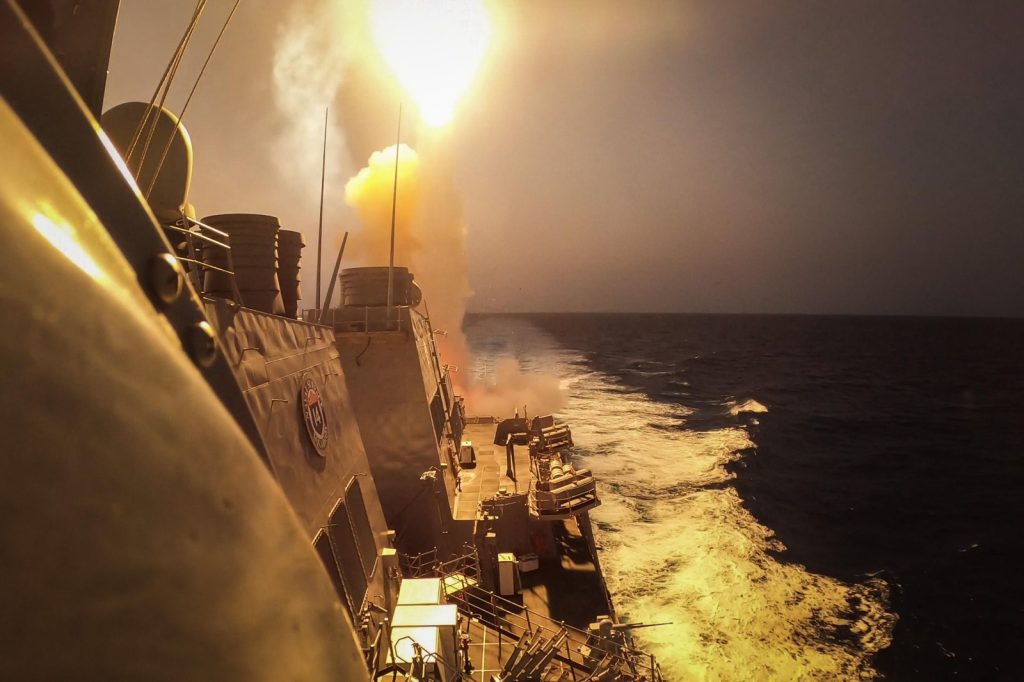
On 7 June 2024, six air‑to‑ground missiles struck three facilities on Yemen’s Red Sea coast, according to a television broadcast run by the Houthi‑controlled network. The targets were Hodeida International Airport, the Port of Salif and the Al‑Thawrah district within the city of Hodeida.
The United States and the United Kingdom were identified as the operators of the strikes. The Houthi channel, which describes itself as a primary vehicle for information dissemination and propaganda, reported the attacks in detail, noting the number of strikes and naming each site. By publicising the hits on its own infrastructure, the broadcaster appears to be shaping a narrative that emphasizes external aggression and seeks to rally domestic support.
All three locations serve primarily military purposes rather than civilian ones. Hodeida International Airport functions as a strategic airfield, the Port of Salif handles cargo shipments, and Al‑Thawrah is a district that hosts military assets.
Their placement along the Red Sea makes them part of a critical maritime corridor that the Houthis have previously used to challenge commercial shipping. The United States has been conducting air operations against Houthi positions for several months, a campaign that the United Kingdom joined more recently. Both governments have framed their actions as efforts to diminish the rebels’ capacity to launch attacks on merchant vessels and to signal resolve against Iran, which Washington and London accuse of supplying weapons, training and financing to the Houthis.
While the strikes were confirmed by the Houthi broadcast, neither the U.S. nor the U.K. released an official statement confirming the operation, providing casualty figures, or offering an assessment of damage. This silence is consistent with a broader strategy of limiting public acknowledgment of specific targeting decisions, thereby reducing the risk of granting the Houthis a propaganda advantage.
Analysts note that the effectiveness of hitting an airport, a port and a district in a guerrilla‑style conflict is uncertain. The Houthis have withstood extensive bombing campaigns by Saudi Arabia, the United Arab Emirates and now Western forces, continuing to fire missiles, attack ships and retain control over sizable territory. Their operational model does not rely on large airfields or major seaports; instead, they use small vessels, concealed caches and overland routes from neighboring Oman to move equipment.
Nevertheless, the June 7 attacks serve multiple political purposes. For the United States and the United Kingdom, they demonstrate the ability to strike Houthi‑held sites at will and convey a message to Tehran that external support for the rebels will be met with force.
For the Houthis, broadcasting the incident reinforces a narrative of victimhood and external hostility, aiming to sustain internal cohesion and external sympathy. The episode adds another chapter to a protracted war that has seen repeated cycles of violence without a clear path to resolution. While the immediate impact on Houthi logistics may be limited, the strikes underscore the continued involvement of Western powers in Yemen’s conflict and the ongoing information battle between the parties.
Sources
- See the latest updates, context, and perspectives about this story.
- US and UK conduct air strikes on Houthi targets in Yemen




