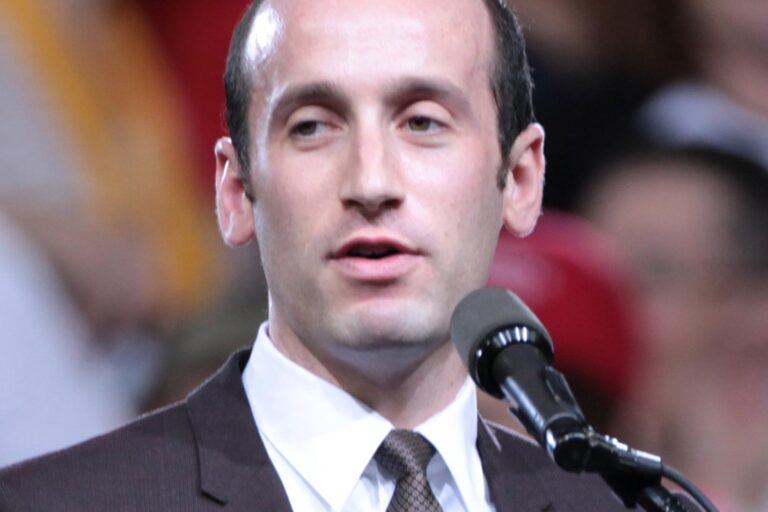
Stephen Miller’s promotion to White House chief of staff following Susie Wiles’s departure signals a significant shift in the administration’s approach to national security and immigration policy. As a key architect of the administration’s most aggressive immigration policies, Miller’s elevation is expected to have far-reaching implications for the country’s national security posture.
Background And History
Miller has been a central figure in the Trump administration since the president’s first term, serving as senior advisor to the president and director of speechwriting from 2017 to 2021. He has been instrumental in shaping the administration’s immigration policy, including the family separation policy and Executive Order 13769, which restricted travel from several Muslim-majority countries. Miller’s politics have been described as far-right, anti-immigration, and white nationalist, and he has been a vocal advocate for aggressive immigration enforcement and border control measures.
Policy Portfolio And Strategic Influence
As White House chief of staff, Miller will have significant influence over the president’s time and attention, and is likely to exercise even greater control over the administration’s national security and immigration policy decisions. His policy portfolio spans immigration, homeland security, and executive authority, and he has been a key player in shaping the administration’s response to issues such as the war in Iran and the treatment of undocumented immigrants. Miller’s appointment has been described as a “giant middle finger to every single voter who came out to the polls and demanded a change” by Representative Pramila Jayapal, and his promotion is seen as a signal that the president has no intention of backing away from his most polarizing policies.
Implications For National Security Decisions
Miller’s appointment is likely to have significant implications for the administration’s national security decisions, particularly with regards to immigration and border control. He has been a strong advocate for aggressive immigration enforcement and has pushed for policies such as the use of the Insurrection Act to send in military troops and the expulsion of undocumented immigrants to detention centers. The administration’s approach to national security is likely to become even more hardline, with a focus on domestic issues such as immigration and border control, rather than international conflicts. As Jamal Abdi, the president of the National Iranian American Council, noted, “We’re concerned that this means the president may be doubling down on his domestic agenda of ICE crackdowns and on deportations if Stephen Miller is at the helm.”
What It Means Now
The appointment of Stephen Miller as White House chief of staff signals a significant shift in the administration’s approach to national security and immigration policy. With Miller at the helm, the administration is likely to double down on its most polarizing policies, including aggressive immigration enforcement and border control measures. As the country moves forward, it is likely that the administration’s approach to national security will become even more hardline, with a focus on domestic issues rather than international conflicts. As Representative Jayapal stated, “Trump’s appointment of Stephen Miller tells the American people everything they need to know about whose side he is on: his own.” By nightfall, the implications of Miller’s appointment will be clear: a more aggressive and hardline approach to national security and immigration policy.
Sources
- Stephen Miller’s promotion shows the White House is ready for war
- Stephen Miller
- Jayapal Statement on Stephen Miller’s Appointment to White House Chief of Staff – Congresswoman Pramila Jayapal
- Stephen Miller will replace Susie Wiles as Trump's chief of staff
- Stephen Miller’s appointment shows Trump hasn’t learned his lesson on immigration
- Stephen Miller rises, but California hopes it can blunt his force with Democratic gains
Photo: Gage Skidmore (CC BY-SA 3.0)