TEHRAN, November 7, 2026 — Iranian authorities executed at least 85 prisoners in October, including five Kurds, while nuclear negotiations and the fate of the Strait of Hormuz dominate international attention. European lawmakers and a Nobel laureate warn that the repression is intensifying precisely as the world looks away.
The numbers behind the repression
October’s tally of 85 executions, recorded by monitoring groups, spans charges from drug offences to premeditated murder. Five of those hanged were Kurdish prisoners, accounting for roughly 6 per cent of the monthly total, according to the Hengaw Organization for Human Rights. Three faced murder charges; two were convicted of drug crimes. The same month, Hengaw documented 64 arrests of Kurds across several provinces — more than half of all arrests the group recorded nationwide — alongside four cases of femicide and three landmine injuries.
The scale is not new. Between 1981 and 1985, the Islamic Republic executed more than 7,900 people as the prison system was centralised and expanded. Current penalties routinely exceed international human rights norms, a pattern documented over decades of systematic repression targeting political dissidents, religious minorities and ethnic communities.
The Alikhani Square case
Since 19 July, nine protesters linked to unrest in Isfahan’s Alikhani Square have been executed, including two Afghan nationals. Three more defendants — Shervin Bagherian, Ali Dashti and Abolfazl Ebrahimi — remain at imminent risk. The judiciary’s Mizan News Agency confirmed the latest hangings, of Amirhossein Maleki and Amirhossein Ebrahimi, both 19, at Isfahan Central Prison on 3 November.
Iran Human Rights (IHRNGO) says the case is marred by torture-tainted confessions and due process violations. Director Mahmood Amiry-Moghaddam called the scale of abuse “unconscionable,” noting that authorities tortured the 16-year-old brother of Amirhossein Ebrahimi to extract testimony that secured the conviction. At least a dozen of the 16 defendants indicted in the case received death sentences. Seven were executed earlier, two of them publicly in Alikhani Square itself.
A fruit seller’s sentence upheld
In Tehran, the Supreme Court upheld the death sentence against Arman Marefati, a 38-year-old fruit seller from Saqqez County arrested during nationwide protests in January. He was convicted in March by a revolutionary court on charges including participation in the burning of a mosque and a religious seminary. His co-defendants, Mehrdad Mohammadiania and Ashkan Maleki, were executed in June without advance notice to their families or lawyers, a pattern Amnesty International has condemned as systemic.
Marefati’s conviction rests on charges of acting against national security and destroying public property, though rights groups say no evidence of mosque destruction was presented. Two female protesters arrested in the same wave received a combined 44 years in prison, reflecting what monitors describe as a targeted campaign against women activists.
International warnings ignored
European Parliament security and defence committee chair Marie-Agnes Strack-Zimmermann said on Saturday that the human rights of Iranians are being overlooked as diplomacy focuses on the nuclear file and the Strait of Hormuz. Speaking at a ceremony in Frankfurt honouring the Iranian people, she demanded asset freezes on the Revolutionary Guards and sanctions on judges and prison officials involved in repression.
“Anyone negotiating with Tehran must never, under any circumstances, leave human rights off the table,” she said. “The future of Iran will not be decided by us in this church, nor by Washington, Berlin or Brussels. Only the Iranian people will decide, freely and democratically.”
The lawmaker linked the internal crackdown to Tehran’s external posturing, arguing that the two cannot be separated in any diplomatic framework.
Narges Mohammadi’s defiance
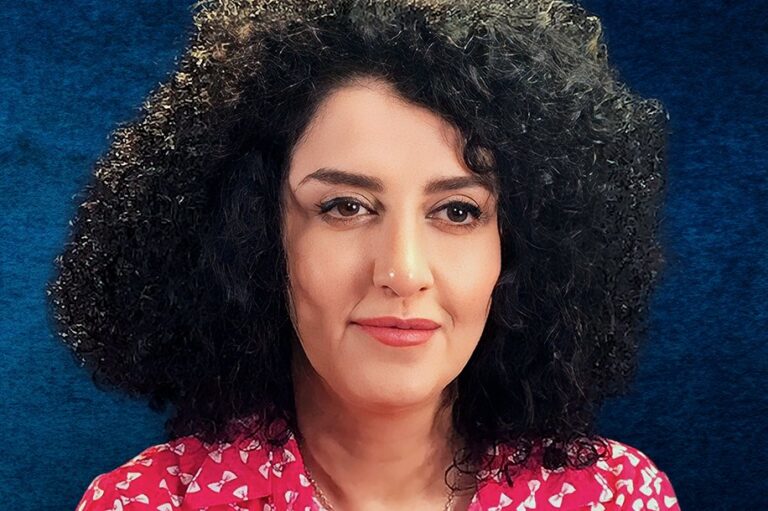
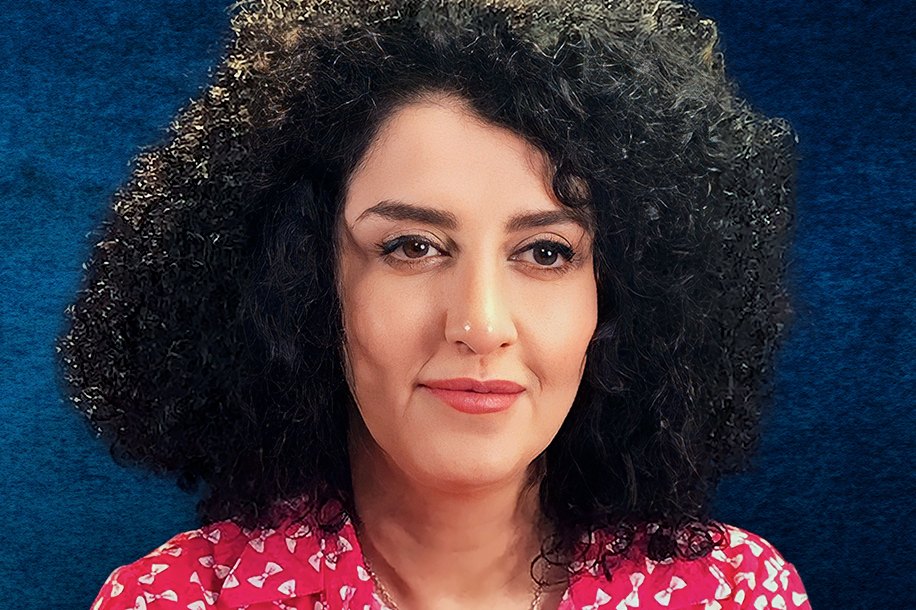
Nobel Peace Prize laureate Narges Mohammadi, 54, spoke to El País from a Tehran green room presided over by a statue of Justice — a quiet act of courage. Her freedom is a medical reprieve granted in May after two heart attacks in custody; she still faces a cumulative sentence of 44 years and 154 lashes. She has been arrested 14 times, tried on 10 occasions, and spent 161 days in solitary confinement. She has not embraced her twin children, now 19 and living in exile in Paris with their father, since 2015.
Her memoir, A Woman Never Stops Fighting, was written in Evin prison and smuggled out. She says the Nobel Prize intensified pressure rather than easing it: prison directors lost discretion over her medical care to higher state authorities, and every protest behind bars brought new convictions. “Iranian society no longer tolerates the Islamic Republic,” she told the paper.
What comes next
The EU’s proposed sanctions on Revolutionary Guards assets and judicial officials remain under discussion. The Alikhani Square defendants face execution in the coming weeks. Marefati’s lawyers have exhausted domestic appeals. And in Frankfurt, Strack-Zimmermann closed her remarks with a direct challenge to negotiators: human rights must not be the price of a nuclear deal.
Sources
- EU lawmaker warns world is overlooking Iranians' human rights amid war and diplomacy
- Human rights in Iran
- January Protesters Amirhossein Maleki and Amirhossein Ebrahimi Hanged; Nine Alikhani Square Defendants Executed
- Monthly report on human rights violations against Kurds in Iran – October 2026
- Iran’s Supreme Court upholds death sentence for a fruit seller arrested in connection with nationwide protests
- Narges Mohammadi, 2023 Nobel Peace Prize winner: ‘Iranian society no longer tolerates the Islamic Republic’
Photo: VOA (Public domain)