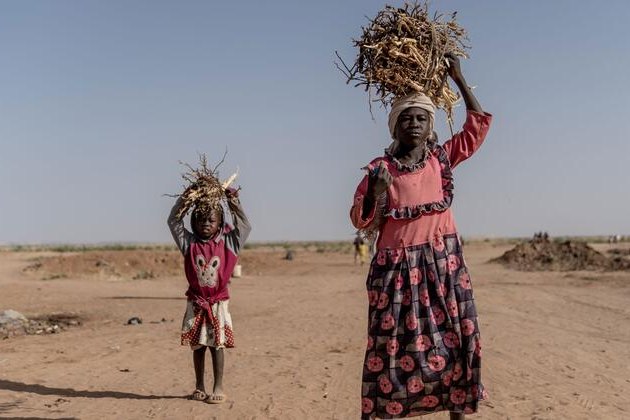
Sudan’s war has entered its fourth year, with the conflict deepening and the country’s democratic transition and long-term economic viability under threat. According to the record, the war has destroyed lives and communities, with UNICEF reporting that 33.7 million people needed humanitarian assistance in the first half of this year, and over 17 million of them were children.
Background
The conflict in Sudan began in April 2023, after a power struggle between the army and the Rapid Support Forces (RSF), a paramilitary group. The war has since displaced about 13 million people and pushed parts of the country into famine. The country’s history is marked by coups, military rule, civil wars, and genocide, with the 2019 revolution briefly raising hopes for democracy through a power-sharing deal between the military and civilians.
How It Works
The conflict is characterized by intense fighting between the RSF and the Sudanese Armed Forces (SAF), with both sides using drones in attacks that have caused mounting civilian casualties. The RSF is led by Mohamed Hamdan Dagalo, known as “Hemedti”, and has been accused of nepotism and corruption. The group’s finances, weapons, troop movements, and military promotions are tightly controlled by Hemedti’s relatives, according to sources familiar with the situation.
The Numbers
The humanitarian crisis in Sudan is dire, with nearly 26,000 volunteers from the Emergency Response Rooms (ERRs) working to evacuate civilians, run hospitals, and support survivors of conflict-related sexual violence. The ERRs are a Sudanese grassroots, community-led network that has become the backbone of the country’s humanitarian response. The price of a loaf of bread in Khartoum has doubled from 250 to 500 Sudanese pounds over the past week, and the Sudanese pound has lost about 25 per cent of its value against the dollar, hitting a record low of more than 10,500 pounds to the dollar.
What It Means Now
The conflict has led to a wave of defections from the RSF, with several senior commanders leaving the group this year. The defections have weakened the RSF and created an opportunity for the SAF to gain ground. However, the conflict has also led to a humanitarian crisis, with hundreds of aid trucks stranded due to fuel shortages and hospitals struggling to maintain lifesaving services.
Key Players
The key players in the conflict include the RSF leadership, the SAF, and the Emergency Response Rooms. International donors have also played a crucial role in providing humanitarian assistance to the affected populations. Damon Wilson, President and CEO of the National Endowment for Democracy, has emphasized the need to build democratic and economic resilience in Sudan, even in the midst of conflict.
What Comes Next
The future of Sudan’s democratic transition and long-term economic viability remains uncertain. Peace talks between the warring parties are necessary to end the conflict and restore stability to the country. The international community must also provide urgent humanitarian assistance to the affected populations and support the efforts of the Emergency Response Rooms to deliver life-saving aid. As Denise Brown, UN Resident and Humanitarian Coordinator, has said, “This is not about politics. This is about people.” On October 28, Damon Wilson delivered remarks at the Sudan Integrity Summit 2026, emphasizing the need to build democratic and economic resilience in Sudan, and the summit will continue to explore ways to support the country’s transition to peace and prosperity.
Sources
- Damon Wilson’s Remarks on Building Democratic and Economic Resilience Amid Conflict in Sudan – NATIONAL ENDOWMENT FOR DEMOCRACY
- Sudan
- ‘This is not about politics. This is about people’: UN warns of impact of deadly drone strikes in Sudan
- RSF senior commander defects, accusing Sudan group’s leadership of nepotism
- Emergency Response Rooms – Right Livelihood
- Sudan bread crisis deepens as soaring prices put staple beyond reach
Photo: news.un.org (official press image)