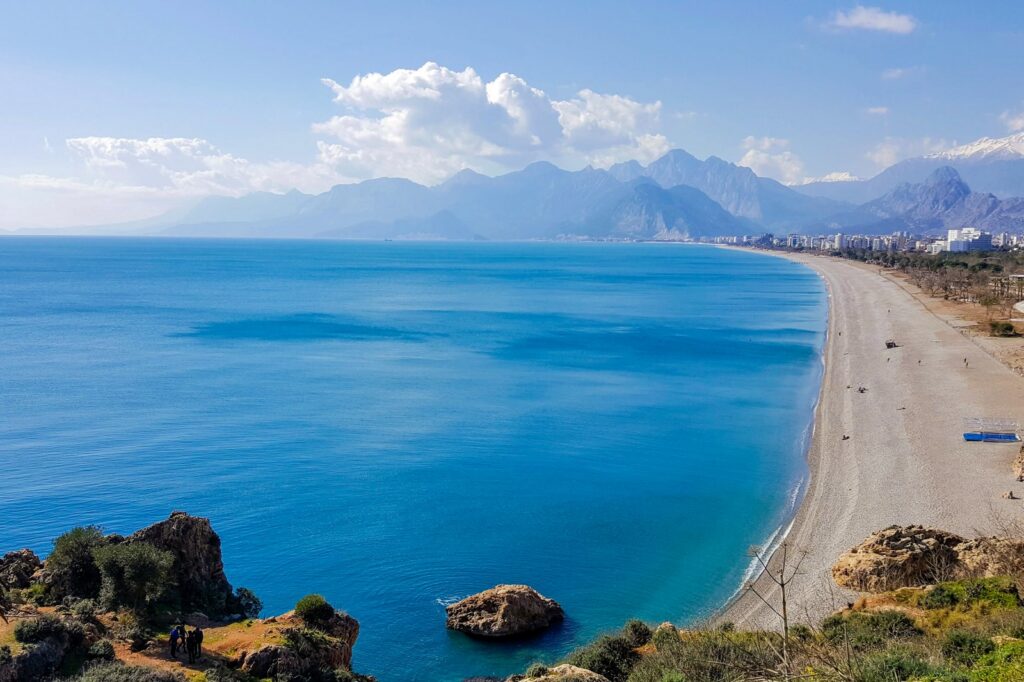
Antalya will host COP31 next week, with Türkiye also holding the summit’s presidency. The Mediterranean city has staged major international gatherings before, including the Antalya Diplomacy Forum.
For Türkiye, the meeting caps a long change in diplomatic status. Its officials once attended the annual climate negotiations as observers. Now they will chair them.
From Rio to Ankara
The international climate treaty opened for signatures at the 1992 Earth Summit in Rio de Janeiro and took effect in 1994. Its formal name is the U.N.’s Framework Convention on Climate Change. Berlin hosted the first Conference of the Parties in 1995.
Türkiye became a party to the convention on May 24, 2004. Until then, it had participated in COP meetings as an observer.
Changes followed quickly at home. Ankara restructured its Climate Change Coordination Board in 2004 and formed eight technical working groups. The capital also held the Ankara Climate Change Conference on September 1-3 that year.
Türkiye’s initial greenhouse-gas inventory went to the UNFCCC Secretariat in 2006. Parliamentary commissions addressing global warming were established as well.
Policies behind the diplomacy
Türkiye signed the Kyoto Protocol in 2009. A National Climate Change Strategy Document followed in May 2010, then two plans in 2011 covering climate action and adaptation.
The Paris Agreement came next. Türkiye signed it on April 22, 2016, although it did not become a party until November 10, 2021.
Parties submit Nationally Determined Contributions, or NDCs, setting out emissions commitments and resilience measures. Türkiye updates its contribution every five years, with voluntary adaptation goals alongside increasingly ambitious emissions targets.
Its Updated First NDC, submitted on April 13, 2023, retained a commitment to cut greenhouse-gas emissions 41% by 2030 against the reference scenario. That scenario used 2012 as its base year.
The Second NDC, known as NDC 3.0, goes further. By 2035, it pledges to reduce carbon-dioxide-equivalent emissions by 466 million tons against the reference scenario, capping them at 643 million tons.
Zero Waste becomes an international initiative
Climate diplomacy has also involved households and communities through the Zero Waste Project. First lady Emine Erdoğan sponsored its 2017 launch by Türkiye’s Ministry of Environment, Urbanization and Climate Change.
The U.N. General Assembly voted on December 14, 2022, to make March 30 International Zero Waste Day.
U.N. Secretary-General Antonio Guterres subsequently proposed an Advisory Board of Eminent Persons for the initiative. It was established on April 12, 2023, with Emine Erdoğan as chair.
Türkiye’s vulnerable geography gives those policies a local dimension. The country contains three biodiversity hotspots and faces significant climate-change risks.
Its route to the COP31 chair was settled through consensus at COP30 in Belem, Brazil, last year. Antalya now takes over as host.
Sources
- From observer to host, Türkiye rises in climate diplomacy
- Turkey
- McKinney launches 2026 Inflatable Turkey Map featuring citywide scavenger hunt and 25-foot giant display
- Turkey’s Four Headaches Are Also Europe’s
- Peacock Puts on His Best Show for a Turkey Who Couldn’t Be Less Impressed
Photo: Esginmurat (CC BY-SA 4.0)