Serbia’s student movement has done what years of protest across much of the world have not: it removed an entrenched leader through the ballot box, ending 14 years of Aleksandar Vučić’s rule after two years of organizing built on direct democracy. The victory lands in the same month that the Trump administration announced it will withdraw the United States from GRECO, the Council of Europe’s anti-corruption body, a split that captures how differently governments and citizens are now approaching the fight against corruption.
Serbia’s Students Win at the Polls
Vučić conceded on October 26 after a high-turnout election driven by anti-corruption activists, according to the Center for International Policy. Turnout approached 70 percent, a figure the center’s interviewee, organizer Ivan Marovic, called the prime indicator of an electoral revolution. “We did 72 against Milošević,” he said, referring to the 2000 uprising that toppled Slobodan Milošević. “Everything over 65 is good. Seventy, it’s gonna be a blowout.”
The opposition slate deliberately excluded students themselves and almost all career politicians, a design meant to keep the list institutionally neutral. Vučić, in conceding, blamed the American deep state and said it had meddled against the wishes of President Donald Trump. Marovic said the speed of the surrender surprised organizers, who had election observers at every polling station and had expected a fight that night.
For families across the region, the Serbian result is a rare case of a mass movement converting street energy into a peaceful transfer of power. Marovic, a veteran of the Otpor movement, framed high turnout as the mechanism: the more people who show up, the harder it becomes for an incumbent to dispute the count.
Washington Steps Back From Global Rules
The United States has moved in the opposite direction. Shortly after taking office in early 2025, the Trump administration paused enforcement of the Foreign Corrupt Practices Act, the nearly 50-year-old law barring American citizens and companies from bribing foreign officials for business, according to the Organized Crime and Corruption Reporting Project. Enforcement resumed six months later with an order that the Justice Department narrow its focus to limit “undue burdens” on American companies operating abroad.
US officials reportedly said the government would instead use unilateral tools such as sanctions and visa restrictions, which they described as more effective.
Lorenzo Crippa, a lecturer at the University of Strathclyde who studies how recorded corruption affects financial flows, told OCCRP that unilateral tools are unlikely to outperform coordinated standards. He pointed to the FCPA’s own history: adopted in 1977, the law sat largely unenforced for two decades because of fear that enforcing it would disadvantage American firms while German and French competitors could even deduct bribes from tax statements. Enforcement began in earnest only after the OECD Anti-Bribery Convention at the end of the 1990s.
“There’s research in political science and international relations that clearly shows that coordination among countries is the most effective way to address global issues, rather than unilateral actions,” Crippa said. The practical consequence for ordinary people is that a bribe paid to a customs officer or a licensing clerk is investigated, or not, depending on which country’s rules apply.
Guatemala Tests Whether Capture Can Be Undone
In Guatemala, the question is whether a captured state can be rebuilt from inside. President Bernardo Arevalo, elected in 2023 on an anti-corruption platform, spent the first half of his term governing alongside officials openly hostile to his agenda, according to GIS Reports. In May he appointed Gabriel Estuardo Garcia Luna as attorney general for the 2026-2030 term, replacing Maria Consuelo Porras, who had been sanctioned by the United States, Canada and the European Union.
Porras had become the symbol of the country’s institutional crisis. Her office pursued prosecutors, judges, journalists and civil society figures, and tried to prevent Arevalo from taking office after his 2023 victory. More than 50 justice officials were reported living in exile as of 2025.
The attorney general’s change coincides with the renewal of the Constitutional Court and the Supreme Electoral Tribunal, which will run the 2027 presidential and congressional elections. The EU, which monitored the selection processes, called the reforms critical for democratic stability and the rule of law, while saying their value depends on whether the new authorities act independently. Stronger courts could attract investment and support nearshoring, but entrenched networks and the 2027 elections will test the reforms.
A Movement Without Borders
The Serbian result is one node in a wider pattern. At a memorial lecture in Guwahati on Monday, Bhupen Sarmah, former director of the Omeo Kumar Das Institute of Social Change and Development, traced student and teacher movements across Serbia, Chile and Bolivia, along with protests in France over teacher shortages and school infrastructure, teacher demonstrations in Spain, school blockades in Germany, and protests in Nepal, Sri Lanka, Europe and Africa.
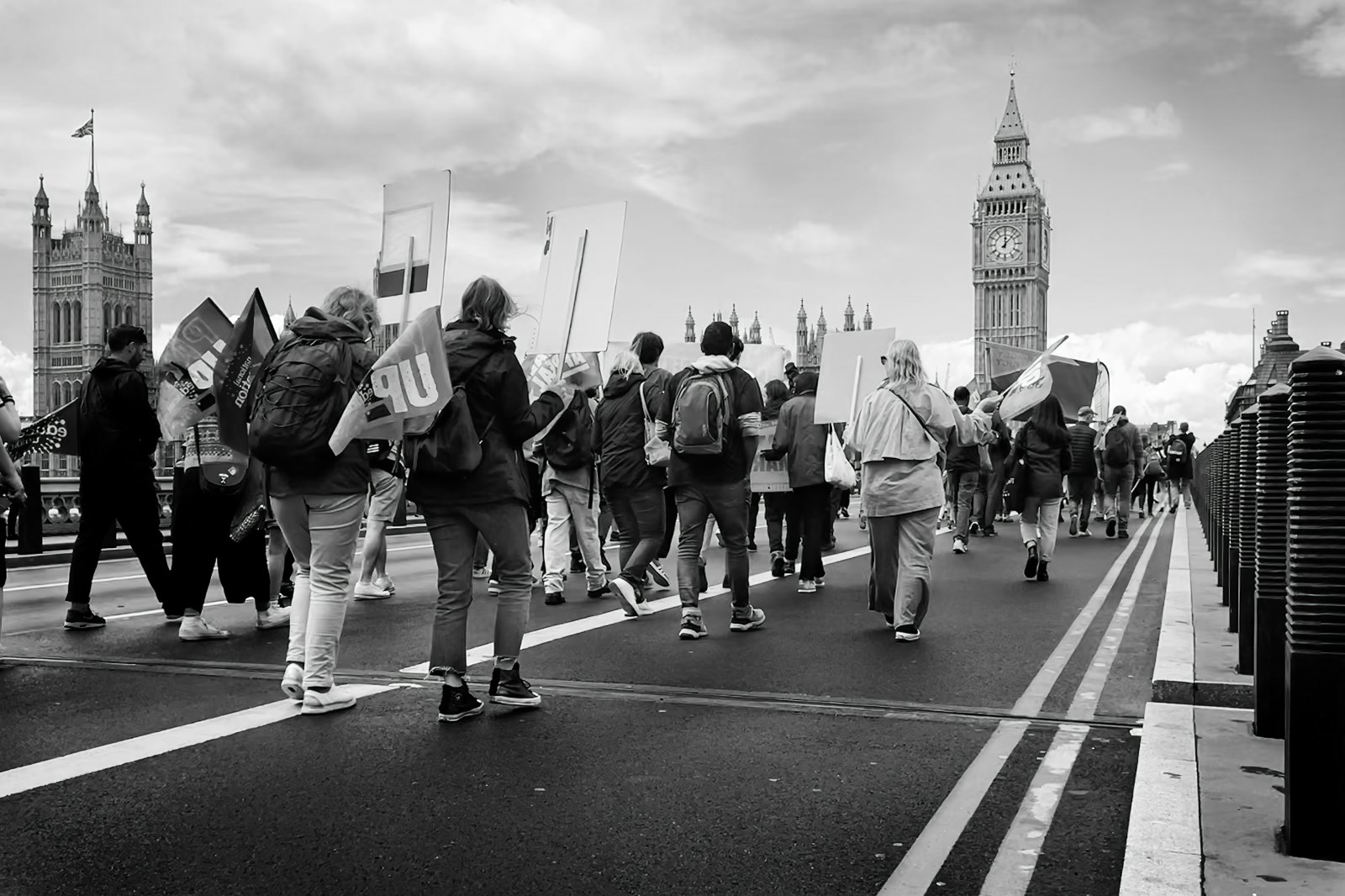
Sarmah said these movements share common concerns: resistance to the erosion of democracy and authoritarianism, attempts by governments to portray student protests as anti-national, and declining confidence among young people in electoral processes. He also criticized what he described as the silence of parts of the intellectual community on corruption, injustice and inequality.
The common thread is transparency. In India, he cited a 2026 protest at Jantar Mantar in New Delhi against alleged irregularities in the NEET-UG examination as evidence of younger people demanding accountability.
Older Than Hammurabi, Newer Than the App
None of this is new. The Code of Hammurabi, dated to about 1754 BC, the Edict of Horemheb from around 1300 BC and the Arthasastra from the 2nd century BC are among the earliest written records of anti-corruption efforts, all condemning bribes meant to influence civil servants, especially in the courts. Major religions, among them Buddhism, Christianity, Hinduism, Islam, Judaism, Sikhism and Taoism, condemn corrupt conduct in their texts.
What those codes covered was bribery. Embezzlement, cronyism and nepotism were not treated as offences because public office was seen as personal property rather than an entrusted function. Only in the 19th century, with the rise of a professional bureaucracy and the idea of public interest, did those forms become legislated against. In diplomacy and international trade, corruption remained broadly accepted well into the 20th century.
The 1990s changed the frame. Corruption came to be seen as damaging to economies, democracies and the rule of law, a point made by then-UN secretary-general Kofi Annan and later supported by empirical studies compiled by Juli Bacio Terracino. Awareness spread across professional, political and geographic lines, and the effort moved from prevention, such as education and corporate compliance programs, to reactive investigation by dedicated authorities.
What It Means for People
For households across the region, corruption is not an abstraction. It decides whether a clinic gets its budget, whether a school roof is fixed, whether a small business can get a permit without paying someone. When courts are captured, as in Guatemala, the people who lose first are prosecutors, judges and journalists willing to name names, and more than 50 of them are living abroad as a result.
The Serbian case offers a measurable lesson: turnout is the lever. A slate that kept students and career politicians off its own list, and a public that showed up at close to 70 percent, produced a result that two years of organizing had prepared but no one could guarantee.
The US decision to leave GRECO will be felt most in cases that cross borders, where a single country’s sanctions list cannot reach a bribe routed through a third jurisdiction. Crippa’s history of the FCPA suggests the reverse is also true: a law on the books without international coordination can sit unused for 20 years.
The next test is already scheduled. Guatemala’s new attorney general holds office through 2030, and the Supreme Electoral Tribunal he now works alongside will administer the 2027 presidential and congressional elections.
Sources
- Anti-corruption
- Q&A: Serbia’s Triumphant Students Give Hope for Democracy – CIP
- Five Questions About Trump’s ‘America First’ Approach to Fighting Corruption
- Guatemala tests whether state capture can be reversed – GIS Reports
- Assam: Apurba Kumar Das memorial lecture highlights global resistance to commercialisation of education
- These midterms could effectively end the Trump era – but neither side is yet ready for what comes next | Nesrine Malik
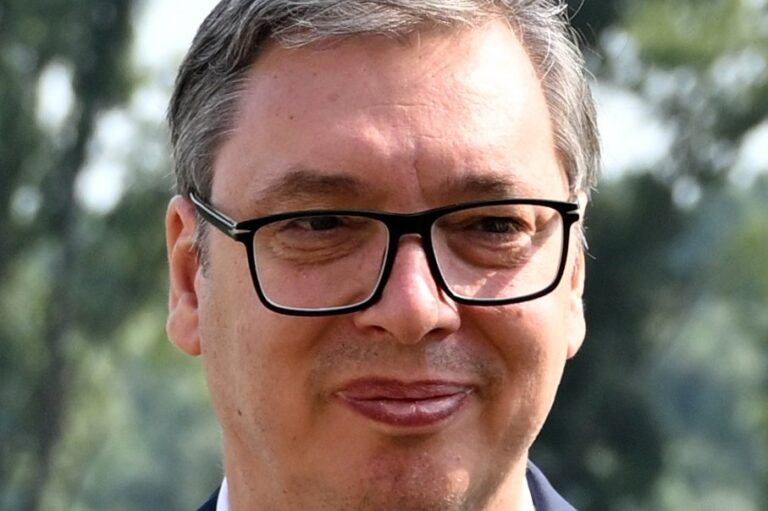
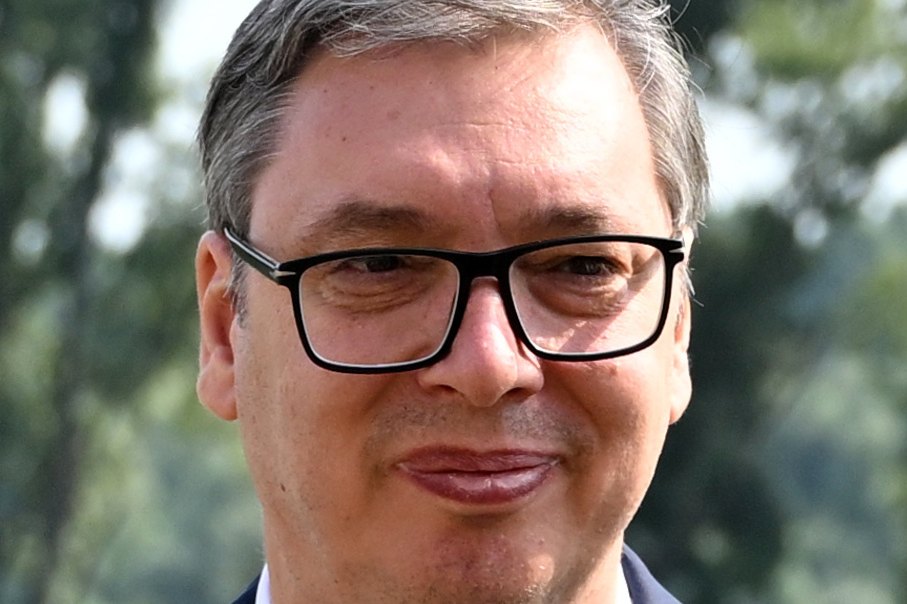
Photo: Oliver Bunic – European Commission (CC BY 4.0)