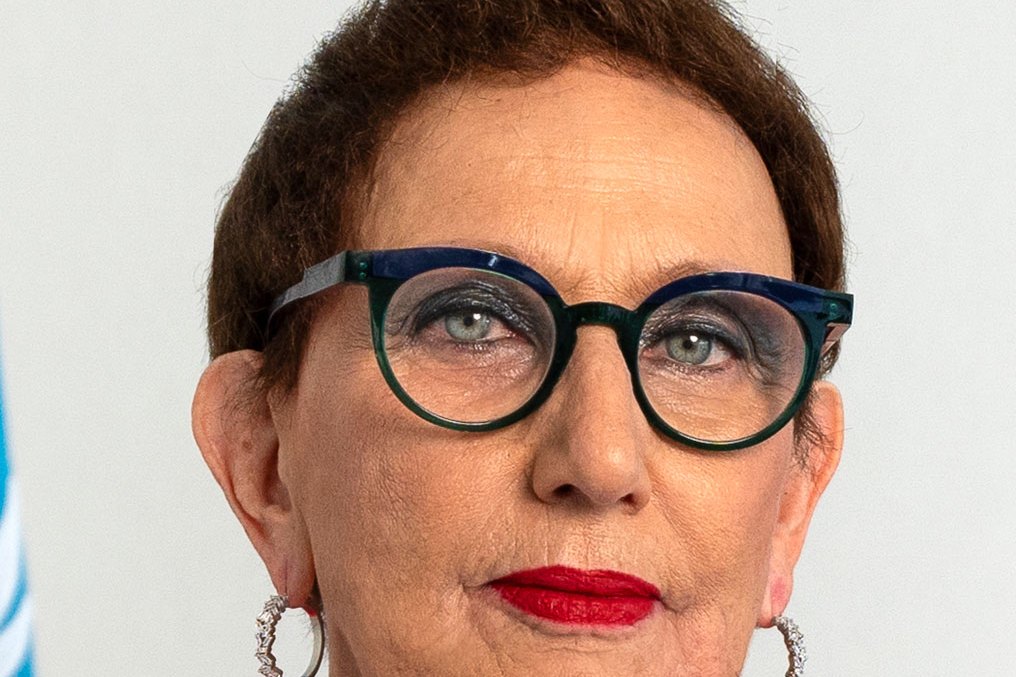
The race to succeed António Guterres as United Nations secretary-general has narrowed to six candidates with two months left in his term, and none of them has won over the Security Council’s permanent members. Five of the six are women, and five come from small nations, a field that has turned the world’s top diplomatic post into a test of whether the UN’s smaller members can shape its future.
A Job With No Written Job Description
The secretary-general is the UN’s chief administrative officer and de facto head of the organization, described by the Council on Foreign Relations as “equal parts diplomat and advocate, civil servant and CEO.” The office was created when the UN Charter was adopted in 1945, and the first appointment, Trygve Lie, took place in 1946. Chapter XV of the Charter lays out the role of the secretary-general and the secretariat, but the qualifications, selection process and tenure are open to interpretation and have been established by custom.
The secretary-general is appointed by the General Assembly on the recommendation of the Security Council. Because that recommendation must come from the Council, any of its five permanent members, the United States, the United Kingdom, France, China and Russia, can veto a nomination. Most secretaries-general have been compromise candidates from middle powers with little prior fame. All appointees to date have been career diplomats, and no woman has yet served in the role.
The selection itself is opaque and often compared to a papal conclave. Since 1981 the Security Council has voted in secret in a series of straw polls, then submits the winning candidate to the General Assembly for ratification. No candidate has ever been rejected by the General Assembly. In 2016, the General Assembly and the Security Council sought nominations and conducted public debates for the first time.
Small Nations, and a Record Field of Women
Seven candidates were in the running, five of them from small nations, according to the Council on Foreign Relations. Five of the seven were women, raising the prospect that the UN may choose its first-ever female leader. Under the UN’s informal regional rotation, there is also a strong possibility that a candidate from Latin America and the Caribbean will be selected.
Two candidates have since dropped out: former Chilean president Michelle Bachelet and Senegal’s Macky Sall, according to Geneva Solutions. Bachelet’s bid faltered after Chile’s newly elected conservative government said it would not support her, the Foundation for Defense of Democracies reported.
Rebeca Grynspan, a Costa Rican who heads UN Trade and Development, is one of the leading contenders. In the Security Council’s latest straw poll on 16 October, she won three “encourage” votes from the five permanent members but also two “discourage” votes, one of them from the United States, according to Geneva Solutions. In recent weeks her posts on X have taken on a different tone, insisting the United Nations “must change structurally, culturally and operationally.”
Rafael Grossi, the Argentine diplomat who heads the International Atomic Energy Agency, remains in the race but appears to face stiff opposition from the Russians over his concerns about the nonproliferation implications of Moscow’s invasion of Ukraine and its close relations with Iran, according to the Foundation for Defense of Democracies. Carolyn Rodrigues-Birkett, Guyana’s ambassador to the UN, has also been among the contenders.
The field grew more chaotic in late October with the entry of Lana Nusseibeh of the United Arab Emirates. The 48-year-old former UAE ambassador to the UN in New York was born in the Emirates to a prominent Palestinian family from East Jerusalem and has worked extensively to deliver food aid to Gaza. Backed by the Gulf Cooperation Council, she was due to give a public presentation to the General Assembly on Tuesday afternoon in New York and to hold bilateral talks with all 15 Security Council members, according to Geneva Solutions. Her rallying cry is “restoring trust in the United Nations.”
The Veto Looms Over Everything
The arithmetic of the race is unforgiving. A candidate needs a majority of the 15 Security Council members, 10 of whom serve temporary elected terms, and must avoid a veto from any of the five permanent members. Each of the remaining six is held back by two, three or even five negative votes from the P5, Geneva Solutions reported.
Daniel Forti, director of UN affairs at the International Crisis Group, told Geneva Solutions: “This is undoubtedly a delicate moment. Guterres was selected as early as October in 2016, but that doesn’t set a precedent. There have been times when no candidate had prevailed by November.”
Richard Gowan, program director for global issues and institutions at the International Crisis Group, described the post to the Council on Foreign Relations as “a remarkably powerless position, and yet it’s also a highly influential position.” He pointed to the secretary-general’s ability to use the pulpit, the willingness of member states to buy into their agenda, and the role of global public opinion.
The winner is typically chosen and appointed between October and December of the current officeholder’s final year and takes office on 1 January. Guterres’s term expires on 31 December. The last time the race went down to the wire was 1996, when the United States lifted its veto on a second term for the Egyptian incumbent Boutros Boutros-Ghali, according to the Foundation for Defense of Democracies. Every secretary-general since 1961 has been re-selected for a second term except Boutros-Ghali.
What the Next Boss Inherits
Whoever takes the helm will steer an 81-year-old organization through internal reforms, severe funding shortfalls, worsening climate change, the proliferation of artificial intelligence and escalating geopolitical tensions, according to the Council on Foreign Relations. The UN marked its 81st anniversary on 24 October. In his last message marking the day in charge, Guterres said the organization stood for the idea that “humanity’s future depends on our ability to work together to advance peace, development and human rights,” adding: “The United Nations is an essential part of the fabric of our world. And it’s needed more than ever.”
The financial pressure is structural. Seventy percent of UN personnel work in the field, and close to 90 percent of its spending goes to operational activities in development, humanitarian and peace operations, according to the Center on International Cooperation at NYU. Funding incentives shape field delivery more than strategic priorities do, the center found, and lasting reform will require a coalition of member states willing to change the incentives that reward fragmented delivery.
Esther Brimmer, CFR’s James H. Binger senior fellow in global governance, said the choice will come down to the individual: “A lot of the conversation about the selection of a secretary-general will be about what qualities are needed to address the crises and issues that we’re facing.”
The Security Council’s next move will decide how quickly that conversation ends. With Guterres due to step down on 31 December and the straw polls still showing no candidate clear of the pack, the appointment must come between now and the end of the year.
Sources
- Secretary-General of the United Nations
- Who Will Be the Next UN Secretary-General? | Council on Foreign Relations
- UN secretary general race takes chaotic turn as controversial candidates enter the fray – Geneva Solutions
- UN marks 81 years of global cooperation | United Nations
- The UN secretary-general race is steeped in intrigue. Should we care?
- Rethinking the United Nations’ Field Presence | Center on International Cooperation
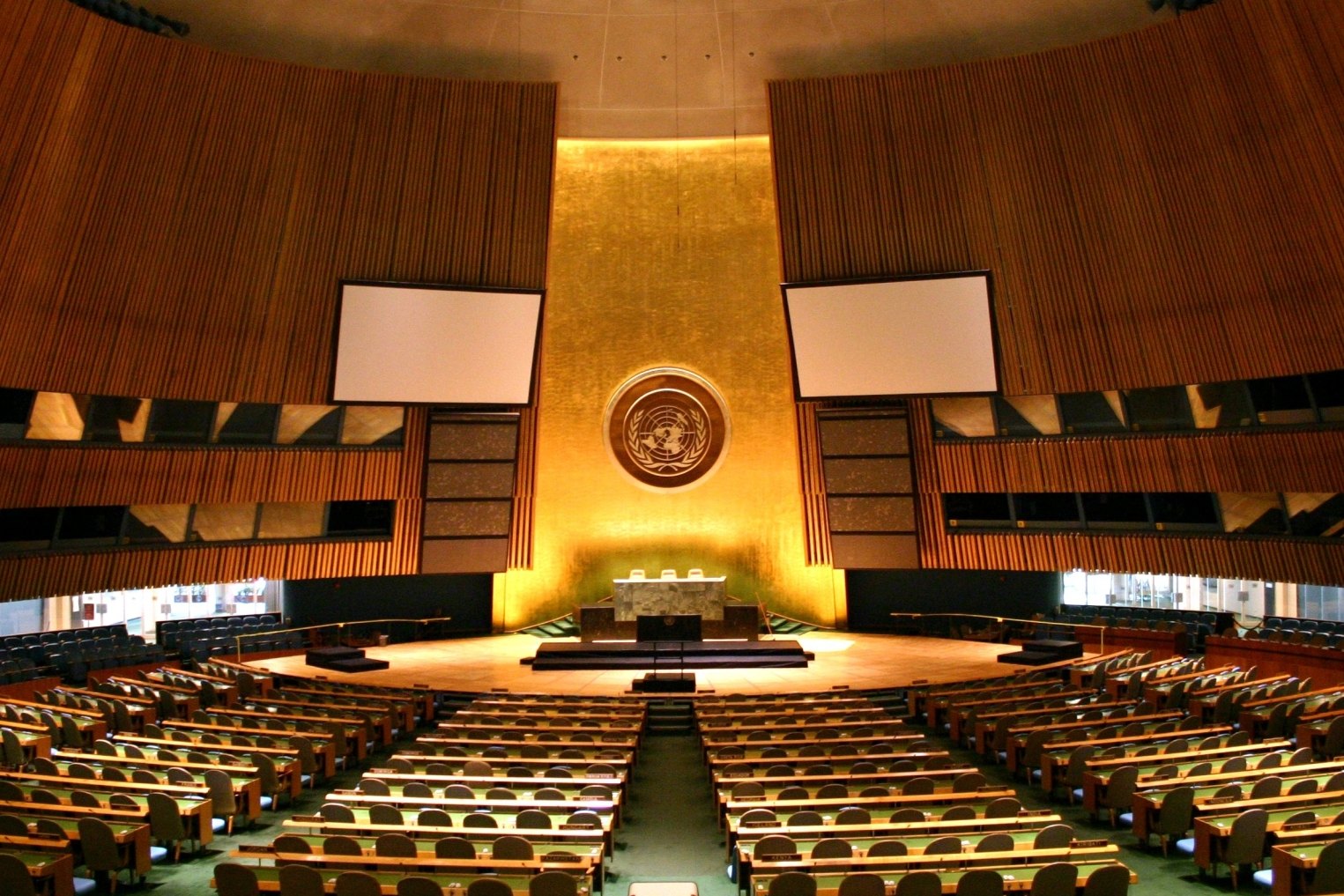
Photo: Gustavobarreto-un (CC BY-SA 4.0)