
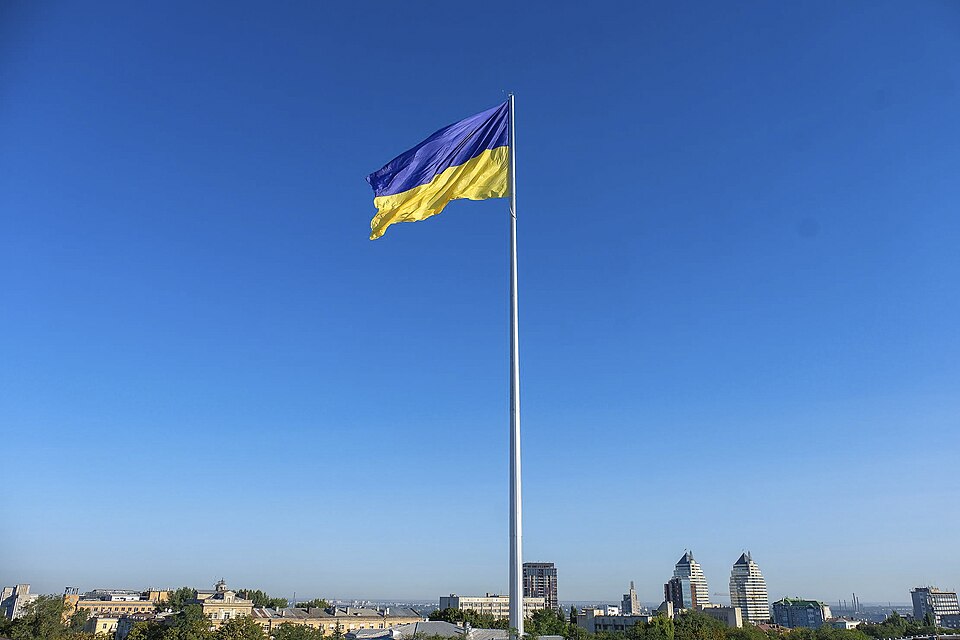
Vladimir Putin launched the full-scale invasion of Ukraine on February 24, 2022, and Moscow expected Kyiv to fall in three days. Some Russian soldiers reportedly packed their dress uniforms for the victory parade. More than four and a half years later, Kyiv is still the capital of an independent country, and Russia is still fighting for small gains. The war is now in its fifth year.
Where it began
The invasion of 2022 was not the start. The Kremlin’s grab for Ukrainian land began with the annexation of Crimea in 2014, and it spread and hardened after 2022. In the areas Russia holds in the south and east, the Irish Times reports, the occupiers have worked to impose Russian identity and citizenship on residents. Ukrainians who refuse a Russian passport find it all but impossible to work, attend school, see a doctor or collect a pension.
Schools teach a Russian programme in place of the Ukrainian curriculum, and soldiers and veterans visit classrooms to demonstrate weapons. Ukraine says more than 20,000 children have been illegally moved to Russia since 2022. The charity Save Ukraine says it has helped about 1,900 children and young adults return to Kyiv-controlled territory.
The toll
The Irish Times puts Russian losses at more than a million soldiers killed and injured. Kyiv officials said last November that Russia had drafted more than 46,000 Ukrainians into its military. Analysts quoted by the paper say Russia must recruit some 30,000 soldiers a month to replace its casualties, yet Putin wants to avoid a second mobilisation after about 400,000 people left the country to escape the first, in 2022.
On the Ukrainian side, the UN refugee agency says almost 6 million Ukrainians remain refugees abroad and nearly 4 million are displaced inside the country. Forbes reports that Kyiv has faced almost daily assaults since August, with long-range missiles and drones killing and wounding thousands of civilians, many in cities far from the front. The UN reported that Russian forces repeatedly targeted Ukraine’s energy infrastructure during the winter of 2025-2026, cutting electricity and heating for millions. The World Bank, European Commission, United Nations and Ukrainian government estimate reconstruction and recovery needs at nearly $588 billion over the next decade.
Who pays, and who votes
At its July summit, NATO said European allies and Canada now finance the “vast majority” of security assistance to Ukraine, and pledged €70 billion in military equipment, assistance and training for 2026. Washington is less predictable. President Donald Trump is pushing for an energy ceasefire, a reopened Black Sea grain corridor and renewed talks among the United States, Russia and Ukraine, Forbes notes, but his shifting emphasis forces Kyiv to plan around uncertainty as well as around Russia.
The legal record is plain. In March 2022 the UN General Assembly voted 141-5 to deplore Russia’s aggression as a violation of the UN Charter and demanded that Russian forces withdraw. A recent Security Council resolution calling for an end to the aggression had the backing of every member except Russia, which vetoed it.
Inside the occupied zone, the fighting shows up as a draft notice. Bohdan, who fled the Zaporizhzhia region last month, said a clerk handed him a call-up paper along with his new Russian passport.
Sources
- The young Ukrainians risking all to flee Russian occupation and the prospect of fighting their own – The Irish Times
- Russia's Invasion of Ukraine—Five Years of War With Global Stakes




