With two months left in António Guterres’s term, none of the six remaining candidates to lead the United Nations has cleared opposition among the Security Council’s permanent members. Geneva Solutions reports that each has attracted two, three or five negative votes from that group.
The next secretary-general is scheduled to take office on Jan. 1, 2027. Guterres’s term ends on Dec. 31.
Grynspan’s three encouragements, and two discouragements
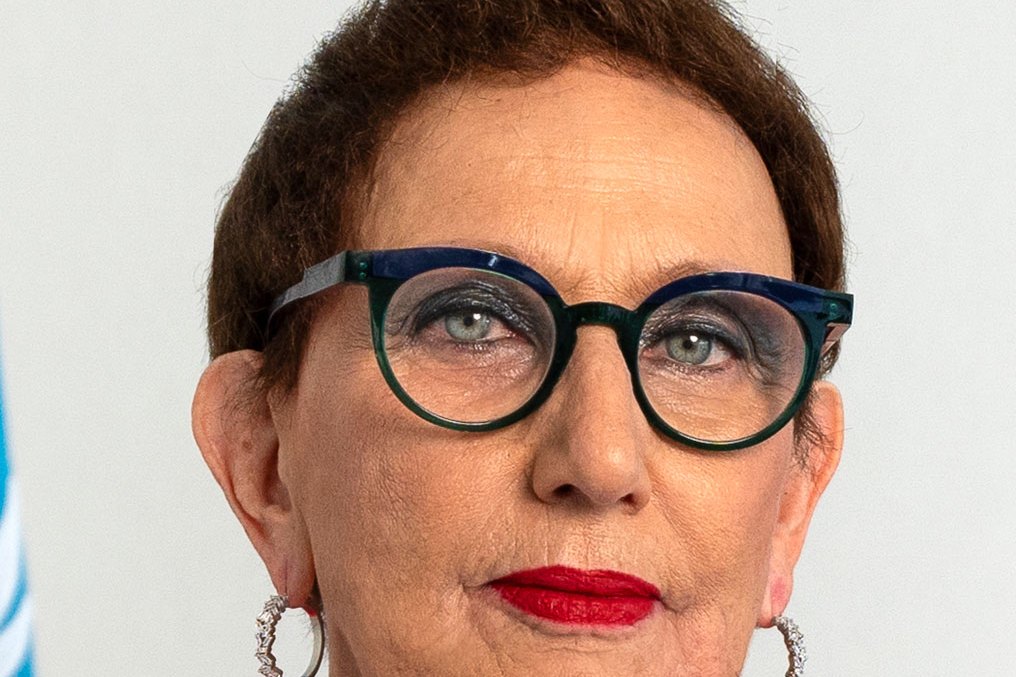
Costa Rican economist Rebeca Grynspan heads UN Trade and Development and previously served as her country’s vice president. In the Security Council straw poll on Oct. 16, three permanent members encouraged her candidacy and two discouraged it, including the United States.
Her recent public language has emphasized institutional change. The United Nations, she says, “must change structurally, culturally and operationally” to fulfill its peacebuilding mission.
Geneva Solutions links that sharper message to Washington’s demands, although it may also reflect her own stated convictions.
Rafael Grossi, the Argentine head of the International Atomic Energy Agency, remains another prominent contender. He has led the agency since 2019 and argues that handling complex emergencies there has prepared him for the UN role.
The Foundation for Defense of Democracies reports that Russia opposes him over concerns he has raised about nuclear proliferation connected to Moscow’s invasion of Ukraine and relations with Iran.
Carolyn Rodrigues-Birkett, Guyana’s UN ambassador since 2020, is also in contention. Her candidacy emphasizes UN principles, human rights and global development.
A late Emirati entry
Lana Nusseibeh entered the race in late October, backed by the Gulf Cooperation Council. The 48-year-old former UAE ambassador to the United Nations was born in the Emirates to a prominent Palestinian family from East Jerusalem.
She has worked extensively on food-aid deliveries to Gaza and calls for “restoring trust in the United Nations.”
Nusseibeh was due to address the General Assembly publicly in New York on Tuesday afternoon and meet individually with all 15 Security Council members.
Her candidacy has also revived scrutiny of the UAE’s position on Sudan. She called allegations that the country backs the Rapid Support Forces “categorically untrue” in a 2024 CNN interview, rejecting findings by a UN expert panel.
Daniel Forti of the International Crisis Group says Sudan will be the key question for her bid.
How the choice is made
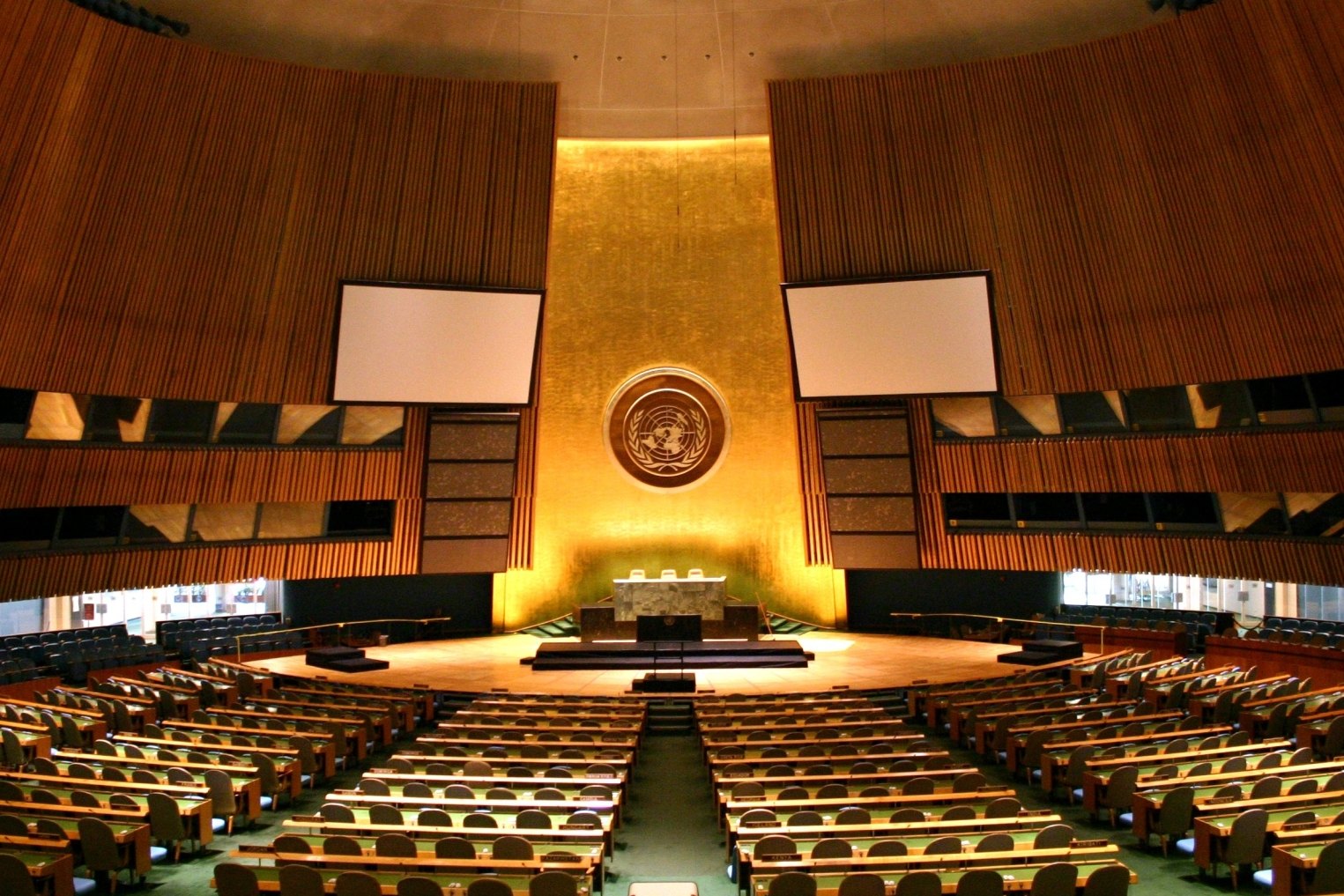
Article 97 of the UN Charter requires the General Assembly to appoint the secretary-general on the Security Council’s recommendation. The successful nominee needs at least nine Council votes and no veto from the United States, China, France, Russia or the United Kingdom.
Ten other Council members serve elected terms. Their straw polls use encouragement, discouragement or no opinion, with colored ballots in later rounds distinguishing permanent members.
The Council’s eventual recommendation goes to the General Assembly. No recommended candidate has ever been rejected there.
Public nominations and debates were introduced in 2016, but the decisive Council votes remain private. Since 1981, repeated secret straw polls have been part of the process.
The position itself is only broadly defined. The Charter names the secretary-general as chief administrative officer and provides authority to alert the Council to threats against international peace and security.
Richard Gowan of the International Crisis Group captures the paradox: “On one hand, it’s a remarkably powerless position, and yet it’s also a highly influential position.” Influence depends on public attention, member-state cooperation and the officeholder’s agenda.
Gender and regional rotation
Every previous secretary-general, nine in total, was a man. A September 2025 resolution encouraged member states to give strong consideration to nominating women.
The earlier field included five women. Michelle Bachelet of Chile and Macky Sall of Senegal subsequently withdrew, with Bachelet losing support from Chile’s newly elected conservative government.
Regional custom also favors Latin America and the Caribbean. Only Javier Pérez de Cuéllar, who served from 1982-1991, has represented that region in the job.
Yet custom is not binding. Guterres won in 2016 despite expectations that the post would go to Eastern Europe, which has never held it.
“Guterres was selected as early as October in 2016, but that doesn’t set a precedent,” Forti said. “There have been times when no candidate had prevailed by November.”
The organization waiting for a winner
The next leader inherits funding shortages, pressure for internal reform, climate change, geopolitical conflict and the spread of artificial intelligence.
The UN marked its 81st anniversary on Oct. 24. Guterres used his final anniversary message in office to say that humanity’s future depends on cooperation for peace, development and human rights.
Field work employs 70 percent of personnel. Development, humanitarian and peace operations receive close to 90 percent of spending.
New York University’s Center on International Cooperation says field delivery responds more to funding incentives than to strategic priorities. Durable reform would require member states to alter those incentives.
If no successor is chosen by Dec. 31, the Charter supplies no automatic succession plan. Options include a shorter term, a compromise nominee or an acting appointment.
A seventh straw poll could take place Friday, with Guterres’s departure date fixed at Dec. 31.
Sources
- Secretary-General of the United Nations
- Who Will Be the Next UN Secretary-General? | Council on Foreign Relations
- UN secretary general race takes chaotic turn as controversial candidates enter the fray – Geneva Solutions
- UN marks 81 years of global cooperation | United Nations
- The UN secretary-general race is steeped in intrigue. Should we care?
- Rethinking the United Nations’ Field Presence | Center on International Cooperation
Photo: Gustavobarreto-un (CC BY-SA 4.0)