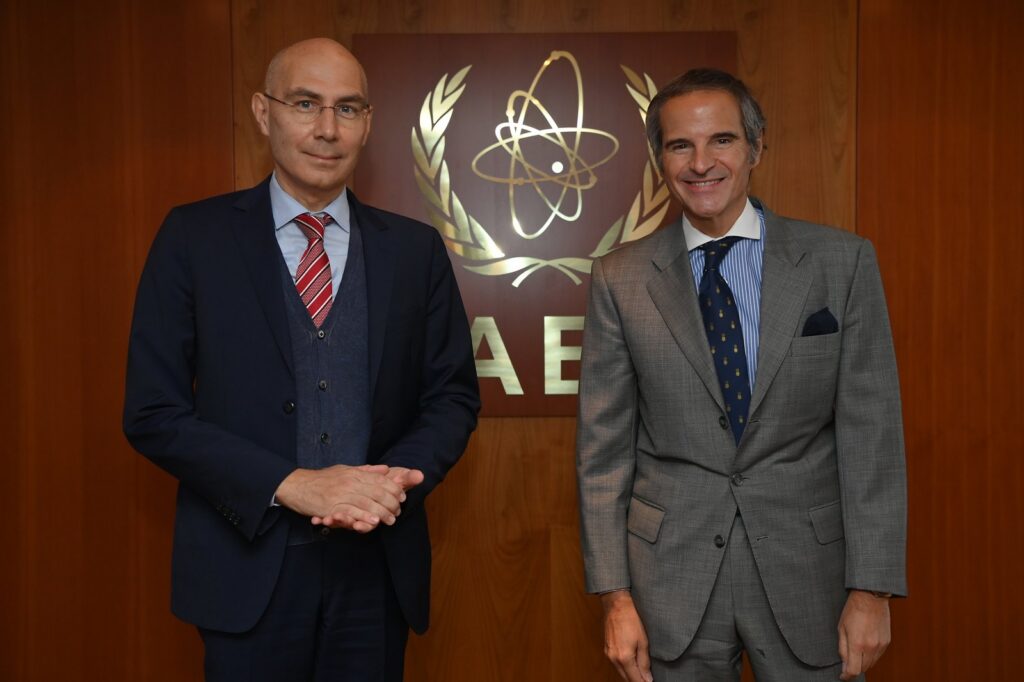
UN human rights chief Volker Türk used a press briefing in Geneva on October 28 to press for stricter respect for international law and better protection of civilians. He ran through Gaza, Ukraine and Yemen, and said monitoring matters because it keeps decisions grounded in fact.
Gaza
Türk said Palestinians are now confined to around 30 percent of the territory, face severe shortages of food and essential services, and continue to be killed by Israeli forces. He urged the next Israeli government, after Tuesday’s election, to “change the course of warfare” and respect international humanitarian law.
He rejected the charge that the UN condemns only Israel. According to Türk, it has repeatedly denounced the October 7 attacks and closely tracks abuses by Hamas and Palestinian authorities, and he singled out reports of extrajudicial executions by Hamas militants. Asked what leverage the UN has with a future Israeli government that controls aid flows, he pointed to monitoring in Gaza, the West Bank, Lebanon and Syria, which he called “extremely important” for keeping decision-making factual and the world informed.
Ukraine and Yemen
On Ukraine, Türk warned that civilian casualties could reach their highest level since 2022 as drone warfare intensifies. Attacks on electricity grids have hit older people and people with disabilities hardest, and strikes on railway infrastructure and supermarkets have added to the damage. “I often feel there is no empathy about the plight of the civilians in Ukraine,” he said, and he asked for more attention to human rights in ceasefire and peace talks.
On the Houthis, he was asked whether attacks on Saudi airports and other civilian infrastructure amount to war crimes. Targeting civilian sites, he said, raises questions of war crimes because they are not clearly military objectives. He also called for the immediate and unconditional release of 71 UN workers held by the Houthis, citing reports of “very, very dire” conditions in detention centres.
Türk opened the briefing by pointing to youth-led protests against corruption and inequality in Serbia, Bangladesh, Nepal and Madagascar. The vast majority of people, he said, care about human rights and reject cruelty, though many advocates feel isolated.
The legal baseline
The rules he invoked are old and specific. Under international humanitarian law, civilians are people who are not members of any armed force in a conflict, and deliberately targeting them is a war crime. The Red Cross commentary on the Fourth Geneva Convention of 1949 holds that nobody in enemy hands falls outside the law: a person is a prisoner of war, a civilian or medical personnel. Protocol I of 1977 first defined a civilian and requires parties to distinguish between combatants and civilians at all times. Civilians who take a direct part in hostilities lose protection from attack for that time and can be prosecuted under the detaining state’s domestic law.
Gender and protection
On October 27, four organizations released joint research on gender and civilian protection: the Center for Civilians in Conflict (CIVIC), ODI Global’s Humanitarian Policy Group, Nonviolent Peaceforce and Fight for Humanity. CIVIC’s study draws on 11 focus groups and 134 interviews across Mali, Somalia, Ukraine and Yemen. It finds that gender consistently shapes protection risks and access, and that women’s meaningful role in community-based protection improves safety for whole communities. It also documents risks to men that often go unrecognised: detention, forced recruitment and combat-adjacent violence.
The second paper, by HPG and Fight for Humanity with Nonviolent Peaceforce, rests on 50 interviews with 65 people in Iraq, South Sudan, Myanmar and Ukraine. It shows how overlapping aspects of identity change a person’s exposure to risk and access to protection, and warns that a well-funded anti-gender movement and deeper funding cuts are holding back this work. CIVIC’s Vanja Kovac said gender-responsive protection is not about favouring one group but about seeing the full picture of civilian harm. The findings were due to be presented on October 29 at the Maison de la Paix in Geneva.
Sources
- Civilian
- UN human rights chief urges better protection of civilians in conflicts
- New Joint Research Examines Gender, Intersectionality, and Protection of Civilians
Photo: IAEA Imagebank (CC BY 2.0)