
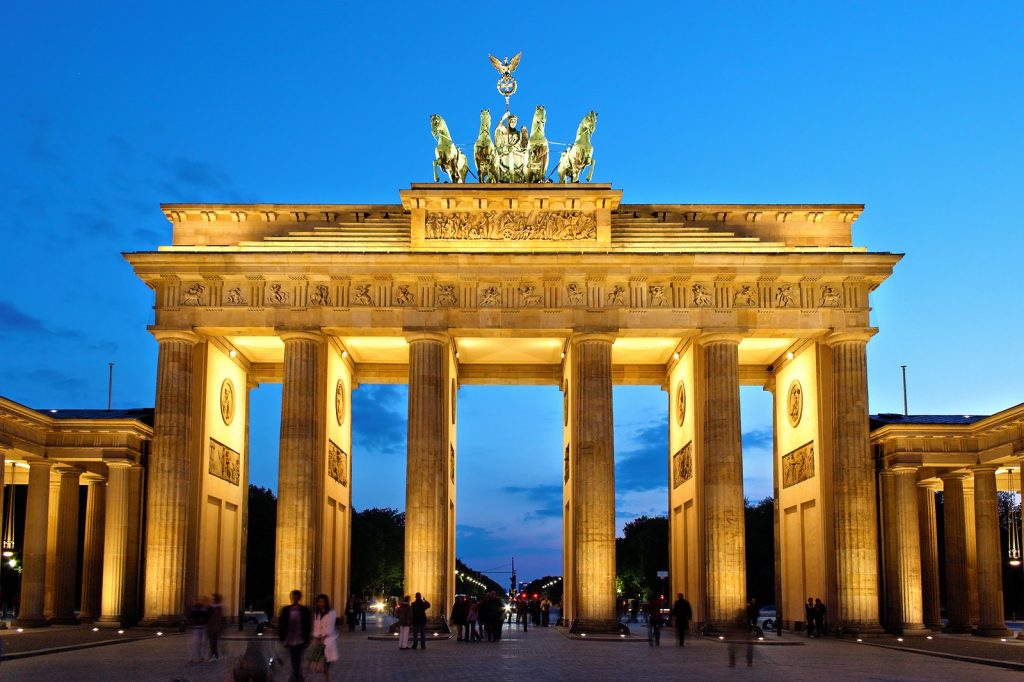
Berlin, March 14, 2022 — cybernewschronicle.com — Berlin’s Brandenburg Gate, once the dividing line between East and West, was again a symbol of division on Sunday. But the fault line this time ran not through Germany, but between Europe and Russia. Up to 30,000 people gathered there, waving Ukrainian flags, holding banners that read “Stop Putin” and “Russian soldiers go home.” They walked through the streets.
Some chanted. Some sang.
Toddlers in pushchairs were there. People in wheelchairs too. The crowd was large, but not as large as before.
Police put the number between 20,000 and 30,000. Two weeks ago, 100,000 had turned out.
The war is now in its fourth week. The initial shock has hardened into something else. Endurance, perhaps.
Or grim routine. Helene Krass, a protester, put it plainly. “Above all, it’s extremely important for Ukrainians to see that we will not forget them, not in two weeks and not after that.” She said she was ready to keep coming.
“If we take to the streets every other Sunday for a year that’s okay too.” That patience is being tested. The invasion has already forced Germany to break a taboo it held for decades.
Since World War Two, Berlin refused to send weapons into active conflict zones. That policy is gone. Germany is now shipping anti-tank weapons and Stinger surface-to-air missiles from its own military stocks to Ukraine.
Some demonstrators openly backed those deliveries. “Sanctions can be introduced which hit the economy and that’s important,” one protester said.
“But we should also consider what’s of help to the Ukrainian army in times of war and sadly, it’s weapons.” The protest followed a similar rally in Florence, Italy, the day before. Thousands there also showed support for Ukraine. The movement is European now, not just German.
It crosses borders the way the war itself does. Russia calls its actions a “special operation.” It says the goal is not to occupy territory, but to destroy Ukraine’s military and “de-Nazify” the country. That framing has little traction on the streets of Berlin.
The banners and chants made that clear. The slogans were blunt.
“Stop War.” “Solidarity with Ukraine.” No nuance. No room for the Kremlin’s language. What brought these 30,000 people out?
Not a single trigger. The invasion itself, yes.
But also the history that hangs over this city. The Brandenburg Gate saw German division. It saw the Cold War.
It saw crowds tear down a wall. Now it sees crowds demanding a different kind of change — an end to a war in Eastern Europe that feels, to many here, dangerously close. Germany’s shift on weapons is part of that.
So is the steady drumbeat of Sunday protests. The numbers may shrink.
The weather may turn. But the core of the movement — people like Helene Krass, ready to march for a year if needed — shows no sign of folding. The war grinds on.
The protests grind on too. In Berlin, at least, the two are now linked.
One feeds the other. And neither seems likely to stop soon.




