
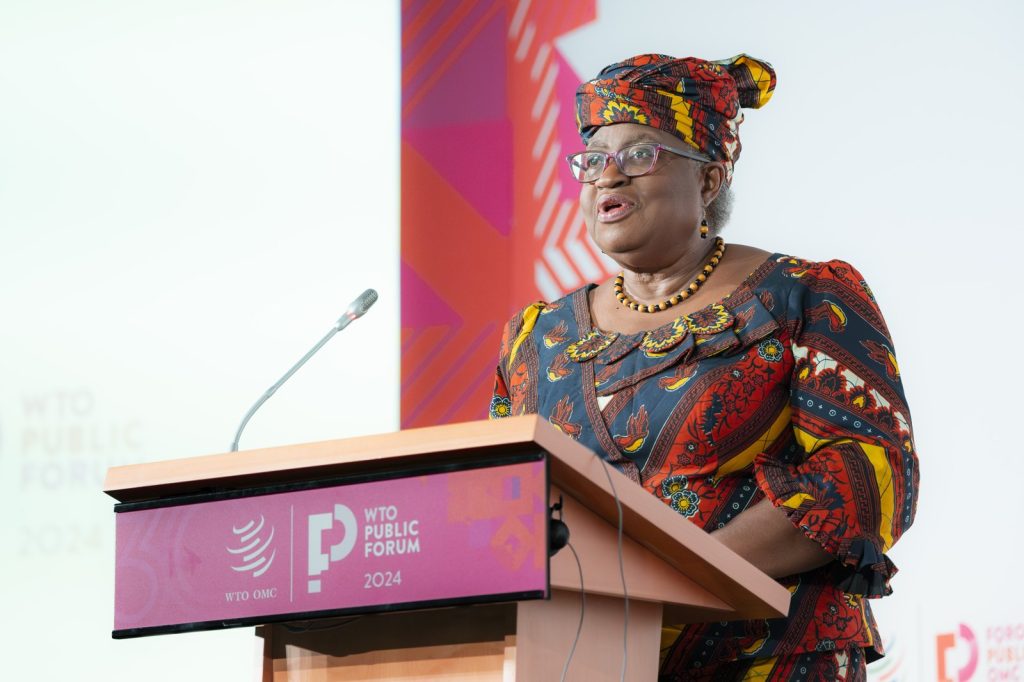
For families in developing nations already struggling to put food on the table, the warning from the World Trade Organization (WTO) carries a deeply personal weight. Rising costs for basic goods like bread and cooking oil, driven by global inflation and the war in Ukraine, are squeezing household budgets. Now, the WTO’s top official has cautioned that several major economies face a “real” risk of recession—a slowdown that could ripple outward, hitting the poorest communities hardest.
Speaking from Indonesia’s NUSA DUA, WTO Director-General Ngozi Okonjo-Iweala painted a stark picture of the global economy. “It may not happen everywhere, but several key countries risk sliding into recession,” she said.
The consequences for developing nations and emerging markets, she explained, could be severe because these countries depend on exports from wealthier nations to fuel their own recoveries. “Of course, that might have a big impact on developing nations and emerging markets, which depend on wealthy nations’ exports to recover,” Okonjo-Iweala noted. The crisis in Ukraine, combined with rising food and gasoline prices and surging inflation, has created what she described as a “cloudy view” of the world economy.
The WTO’s own data underscores the fragility. Last month, the organization projected global trade growth for 2023 at just 1.0 percent—a sharp downgrade from the 3.5 percent increase predicted for this year.
One factor compounding the strain on vulnerable populations is the rise in food export restrictions. Okonjo-Iweala has urged G20 nations to gradually remove these barriers, warning that they harm developing nations by driving up food prices. “I have urged G20 leaders to gradually lift these restrictions,” she said, emphasizing the need to keep trade flowing to prevent further hardship for families in low-income countries.
Amid the economic headwinds, there is cautious optimism about the resumption of high-level dialogue between the world’s two largest economies. On the fringes of the G20 summit, U.S. President Joe Biden and Chinese President Xi Jinping met to repair their strained bilateral relations. Okonjo-Iweala welcomed the meeting, saying, “It’s always beneficial when the two largest economies in the world talk to one another.
Certainly with respect to trade, it’s very helpful.” The WTO chief expressed her “very hopeful” expectation that the renewed U.S.-China engagement could lead to a breakthrough in stalled WTO reform talks scheduled for 2023. The WTO’s dispute settlement system has been paralyzed since 2019, when the administration of former U.S. President Donald Trump blocked the appointment of judges for an appeals body that arbitrates international trade disputes.
The trade ministers of the G7 advanced economies agreed in a September meeting to work toward having a functioning dispute settlement system by 2024. Okonjo-Iweala noted that “the Americans are consulting actively with other members at an informal level,” adding that the increased U.S. engagement will help and speed up the progress on reform from 2023. Looking ahead, the key question for families and businesses in vulnerable economies is whether these diplomatic efforts can translate into tangible relief.
With the WTO’s trade growth forecast for 2023 hovering at just 1.0 percent, and the risk of recession in major economies still looming, the coming months will be critical. All eyes will be on whether G20 leaders follow through on removing food export restrictions and whether the U.S.-China dialogue can restore confidence in the global trading system—steps that could determine whether struggling communities see a path back to stability or face deeper hardship.




