Seventeen appeals sit in a queue in Geneva that no one can hear. The oldest dates to 2018. The newest was filed in November 2025. They are stuck because the World Trade Organization’s appeals court, the Appellate Body, has had no judges to decide them since the term of its last sitting member expired on 30 November 2020.
That stalled court is the sharpest problem facing an organization that otherwise looks sturdy on paper. The WTO opened on 1 January 1995, a product of the Uruguay Round talks that ran from 1986 to 1994. It now has 166 members, which together account for 98 per cent of world trade, and more than 20 other countries are working toward joining.
How the organization runs
The Ministerial Conference sits at the top and usually meets every two years. Decisions there need consensus. Between those gatherings the General Council, which meets several times a year in Geneva, handles the day-to-day work. Ngozi Okonjo-Iweala has been Director-General since 1 March 2021, the first woman and the first African in the job.
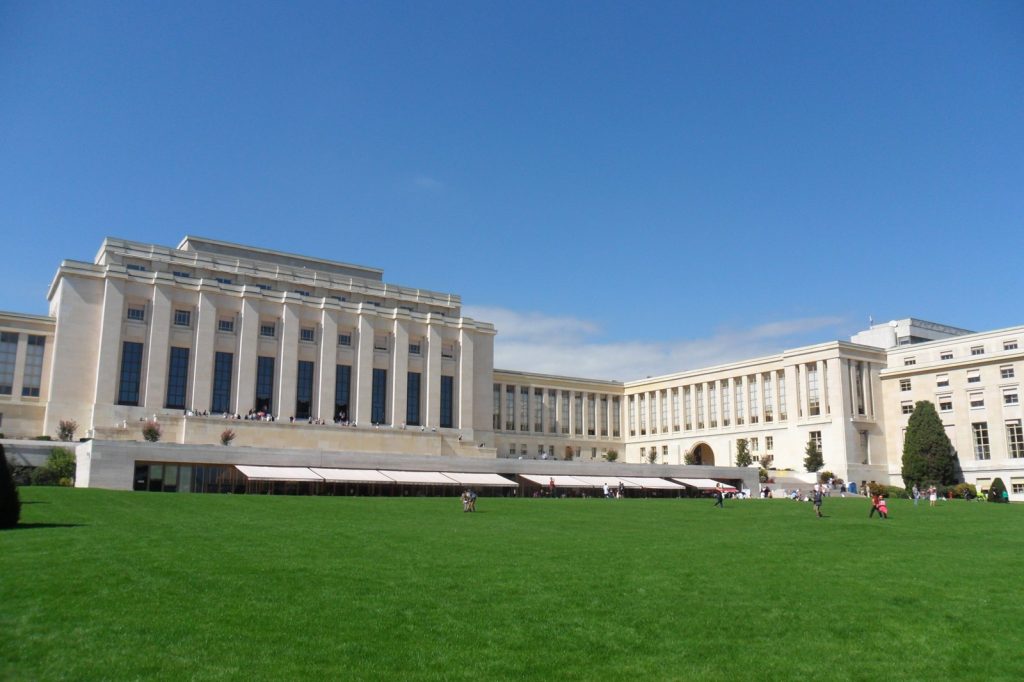
The 2024 budget came to 205 million Swiss francs, and the Secretariat employs 623 people in the Centre William Rappard building in Geneva.
A court with no judges
Countries that think a partner has broken the rules start with consultations. If those fail, the Dispute Settlement Body appoints a panel of trade experts to rule. Either side can then appeal to the Appellate Body, a standing seven-person tribunal created in 1995. The Council on Foreign Relations counted more than five hundred disputes filed since then. The United States has been the busiest user, with 124 complaints filed and 156 cases defended.
The trouble began in May 2016, when Washington blocked the reappointment of a South Korean judge, something that had not happened before. The Trump administration kept vetoing replacements, and the Biden administration did not lift the block. On December 10, 2019, the body fell below the three judges it needs to hear an appeal, according to the Council on Foreign Relations.
The Peterson Institute’s Alan Wm. Wolff put it bluntly in January 2026: “the United States cancelled the appellate level of WTO dispute settlement.” His complaint is also about what followed. Losing parties, the United States and India among them, file appeals they know will never be heard, which he calls “an appeal into the void.” A panel ruling stays frozen.
From 1995 to 2020 the Appellate Body issued about 150 reports, reviewing over half of 277 panel reports.
The workaround
A group of members built their own substitute. The Multi-Party Interim Arbitration Arrangement took effect on April 30, 2020, and 58 members representing 60 percent of global trade signed up. Washington refused to join and called it “a provocation rather than a solution.” Use has been thin: between its founding and the end of 2025, only two cases were fully decided through it, although at least 22 panel reports circulated in that time.
One difference matters to the Americans. The old Appellate Body insisted that its rulings be followed in later cases “absent cogent reasons.” The arbitration scheme drops that rule. US officials argued that members were using litigation to avoid negotiating.
Trade talks stalled too
The negotiating side has fared little better. The Doha round, launched in 2001 with farm trade at its centre, collapsed by 2008 over agricultural subsidies and the safeguards developing countries wanted for their farmers. The OECD put rich-country farm subsidies at roughly $300 billion a year. A 2013 meeting in Bali produced the Trade Facilitation Agreement, described by the Council on Foreign Relations as the first multilateral deal since the WTO was created. The 2017 Buenos Aires ministerial ended without any agreement after India blocked cuts to fisheries subsidies.
Wolff wanted the March 2026 ministerial in Yaoundé to set up a working party on binding dispute settlement. Enforceable obligations for every member “may seem extremely remote in the Trump era,” he wrote, “but it was once an attainable goal.”
Sources
- What's Next for the WTO? (Council on Foreign Relations backgrounder)
- Can the rule of law be restored to the world trading system? (Peterson Institute for International Economics, Alan Wm. Wolff)
- The WTO: About the organization / Appellate Body (World Trade Organization)