
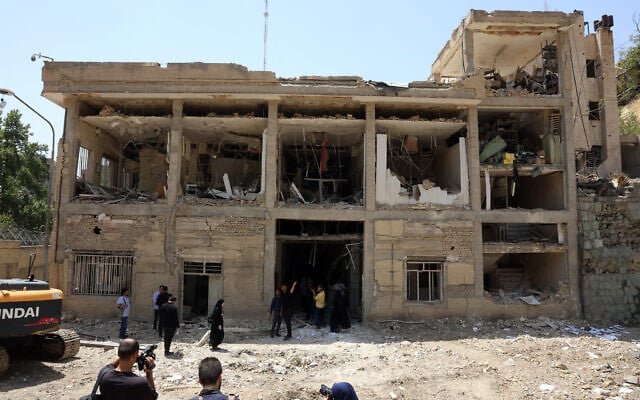
“We had nowhere to escape during the bombing, nor have we had any refuge from the organised violence.” That line comes from an unsigned letter written by inmates of Evin prison after Israel struck the Tehran jail on June 23, 2025, as reported by Al-Monitor.
Evin opened in 1972 in the northern foothills above the city. It has long been Iran’s best-known jail for political detainees, and rights groups have scrutinized it for years. Its Section 209, run by the intelligence ministry, is described by observers as a “prison within a prison.” In October 2022, a fire during nationwide protests killed at least eight inmates, and the circumstances were never made clear.
The strike and its toll
The attack came a day before a ceasefire between Israel and Iran took effect, at the end of a 12-day exchange that began on June 13. Israeli officials spoke of hitting “regime targets and government repression bodies in the heart of Tehran.” Why Evin in particular was never explained.
Six days later, Iran’s judiciary put the death toll at at least 71. Spokesperson Asghar Jahangir said the dead included “staff, soldiers, prisoners and members of visiting families.” Earlier, Iran had confirmed that top prosecutor Ali Ghanaatkar was among those killed. His cases against dissidents, Nobel Peace Prize winner Narges Mohammadi among them, had drawn wide international criticism. About 60 victims were buried after a large funeral procession in Tehran on the Saturday. Independent verification of the casualty figures has not been possible.
What was hit
Jahangir said the infirmary, the engineering building, the judicial affairs office and the visitation hall were damaged. Relatives were in the hall when the strike landed. Some of the injured were treated on site; others went to hospitals.
Al-Monitor, in a report by Cecile Feuillatre and Stuart Williams, said the front entrance was destroyed, along with damage to the women’s section, ward 8, which is believed to hold political prisoners, and the prosecutor’s office. The Center for Human Rights in Iran described extensive damage.
Prisoners moved, families waiting
Surviving inmates were transferred to other facilities within Tehran province. Women were sent to Qarchak prison outside the capital. Amnesty International said it was “extremely distressed,” noting that “hundreds of prisoners, including political dissidents and human rights defenders” are held at Evin.
Mohammadi, who was held at Evin until she received temporary medical leave the year before, told Al-Monitor that “Families are filled with fear and anxiety” as prisoners faced “intensified security conditions or relocated.” Nazanin Zaghari-Ratcliffe, the British-Iranian woman once held there, wrote that the bombing “did not feel like it made anyone safe inside.”
The New York-based Center for Human Rights in Iran condemned the strike as a breach of “the principle of distinction between civilian and military targets.” It also faulted Iranian authorities for their “failure to evacuate, provide medical assistance or inform families” afterward.
Sources
- Iran's judiciary says at least 71 killed in Israel's attack on Tehran's notorious Evin prison (Arab News)
- 'Nowhere to escape': Israel strike intensifies distress in notorious Iran jail (Al-Monitor, by Cecile Feuillatre and Stuart Williams)




