
The World Trade Organization runs on 205 million Swiss francs for 2024. That is the annual budget of the body that writes and polices the ground rules for 98% of world trade, and members pay for it by formula: the bigger a country’s share of international trade, the bigger its bill.
The mechanics here are less grand than the reputation. The WTO has 166 members and has existed since 1 January 1995, the product of the Uruguay Round talks that ran from 1986 to 94. Its own list of jobs is short: administer trade agreements, host negotiations, handle disputes, watch national trade policies, and train officials in developing countries. Over 20 more governments are in accession talks, each one bargaining its way in.
Who actually decides
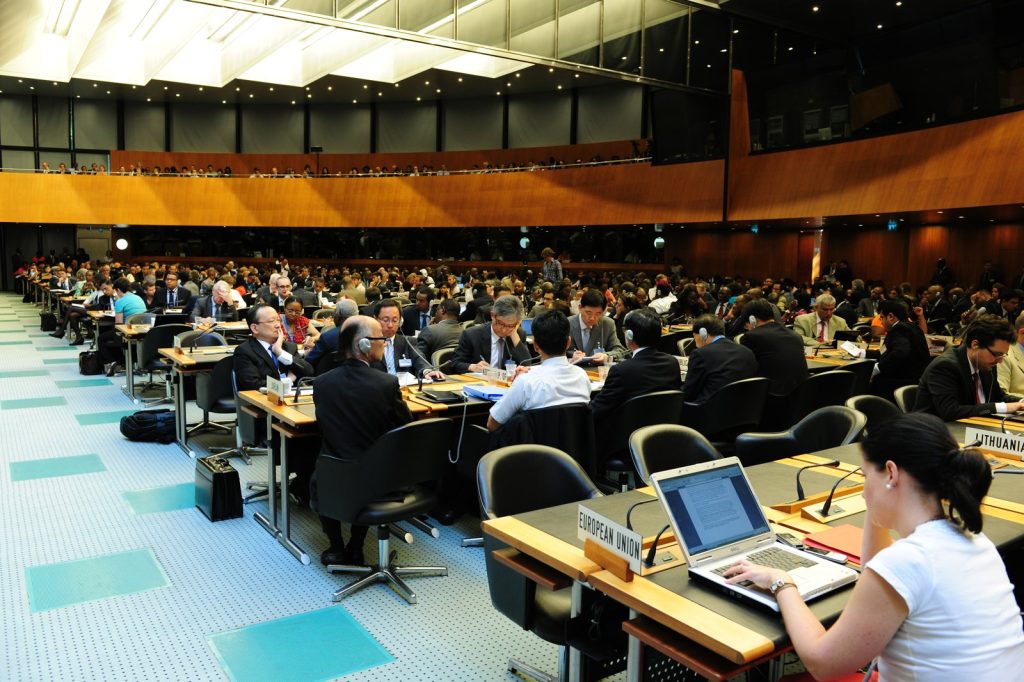
Not the boss. Unlike the World Bank or the International Monetary Fund, the WTO hands no power to a board or to its head. The main decision-making body is the Ministerial Conference, which usually meets every two years. Between those gatherings the General Council, meeting several times a year in Geneva, acts in its name. The same council puts on two other hats, sitting as the Dispute Settlement Body and as the Trade Policy Review Body.
The Secretariat serves all of this. It has 623 staff from about 80 nationalities and is led by Ngozi Okonjo-Iweala, who took office on 1 March 2021 as the first woman and the first African to hold the post. Her staff support committees, advise governments that want to join and give legal help when members fight. They do not rule on anything. The members do.
Where the machinery stalls
Disputes are where that design bites. A panel report binds the parties only if nobody appeals. If the losing side appeals, the report stays in limbo until the Appellate Body finishes its review, and each review needs three of its seven members. Those seven are appointed by consensus for four-year terms.
Consensus is the problem. Chiara Giuliani, a doctoral candidate in law at Sapienza University of Rome, laid it out in a September 2019 commentary for the Istituto Affari Internazionali. Since June 2017 no new judge had been appointed. Three terms had expired and one judge had resigned. Two more terms were due to end in December 2019, and by early 2020, she wrote, the body would lack the quorum it needs to function.
She put the blame mainly on Washington’s refusal to approve new appointments, which the United States presented as pressure for reform. Its complaints centre on the judges’ wide discretion to “uphold, modify or reverse” panel findings, and on the habit of missing the 90-day deadline for reports.
Members broadly agree the system needs repair. They have not agreed how. The proposals on the table would lift the Appellate Body from 7 members to 9 and stretch terms from 4 years to 6 or 8. Arbitration under Article 25 of the dispute rules is a fallback, but it is limited in scope, and both parties must agree on procedure before it starts. A government expecting to lose has little reason to sign up.
Sources
- WTO | Who we are
- Multilateral Trade in Crisis: The WTO's Appellate Body and the Risk of Paralysis (Istituto Affari Internazionali, Chiara Giuliani)




