
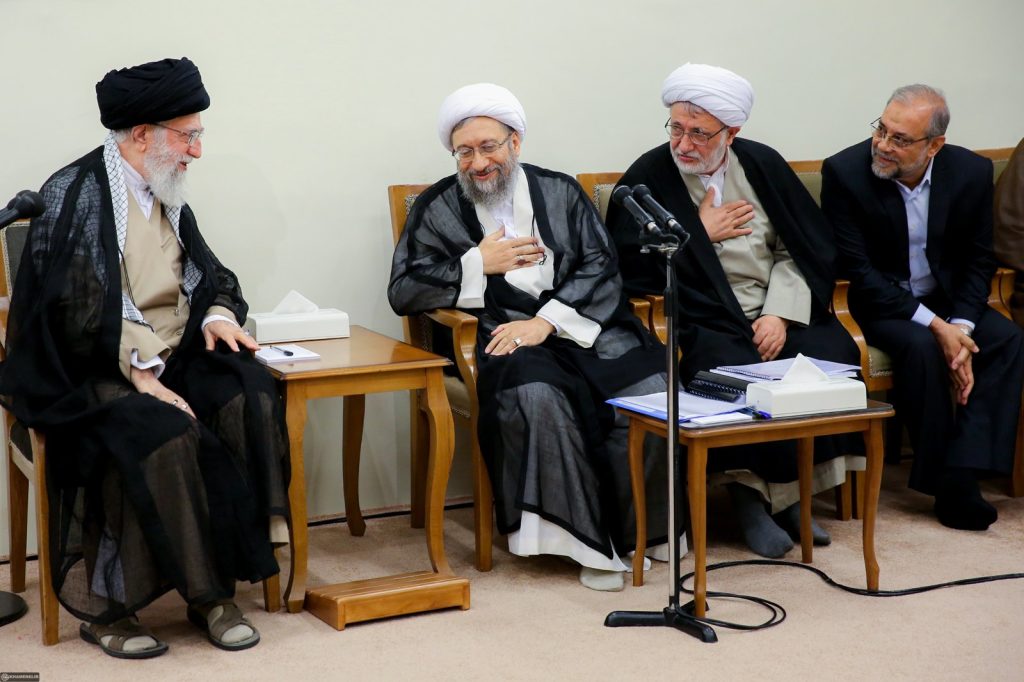
Ayatollah Ali Khamenei held Iran’s highest office for almost 37 years. On Saturday, February 28, 2026, he was killed when the United States and Israel struck the country. The Associated Press, in an explainer written the same day, said his death set off a succession process that has been used exactly once since the 1979 revolution.
The first move came fast. According to the AP, Iran formed a temporary leadership council on Sunday, as its constitution requires. Three people sit on it: the sitting president, the head of the judiciary and one member of the Guardian Council, picked by the Expediency Council, the body that advises the supreme leader and settles disputes with parliament. Right now that means the reformist president, Masoud Pezeshkian, and the hard-line judiciary chief, Gholam-Hossein Mohseni-Ejei. They “temporarily assume all the duties of leadership.”
The 88 clerics who choose
The council only keeps the seat warm. Under Iranian law an 88-member body, the Assembly of Experts, “must, as soon as possible” name a new supreme leader.
The Assembly is made up entirely of Shiite clerics, elected every eight years. Voters choose, but only among candidates the Guardian Council has approved, and that watchdog has a record of disqualifying people. In March 2024 it barred former president Hassan Rouhani, a relative moderate whose government struck the 2015 nuclear deal with the U.S. and other world powers.
A contender with no office
Deliberations happen far from public view, so it is hard to say who leads. Ebrahim Raisi, Khamenei’s protege, was once thought a possible heir. He died in a helicopter crash in May 2024. That leaves one of Khamenei’s sons, Mojtaba, a 56-year-old cleric who has never held government office.
A father-to-son handover carries its own danger. The AP wrote that it could anger Iranians already critical of clerical rule and even people who back the system, some of whom would see it as un-Islamic and a step toward a religious dynasty, the very thing the 1979 revolution overthrew when it brought down the U.S.-backed Shah Mohammad Reza Pahlavi.
Why the seat matters
There has been one earlier transfer. In 1989 Grand Ayatollah Ruhollah Khomeini died at age 86, after leading the revolution and the bloody eight-year war with Iraq. This one arrives after Israel’s 12-day war against Iran last June and then the strikes of February.
The office is the center of Iran’s power-sharing theocracy. Its holder has the final say on all matters of state and commands both the regular military and the Islamic Revolutionary Guard Corps, which the United States designated a terrorist organization in 2019. Khamenei strengthened the Guard during his rule. It leads the “Axis of Resistance,” a network of militant groups and allies meant to counter the U.S. and Israel, and holds extensive wealth and property inside Iran.
Sources
- The supreme leader is dead. How succession works in Iran – Los Angeles Times
- With Khamenei dead, who will be Iran’s next supreme leader? | South China Morning Post




