
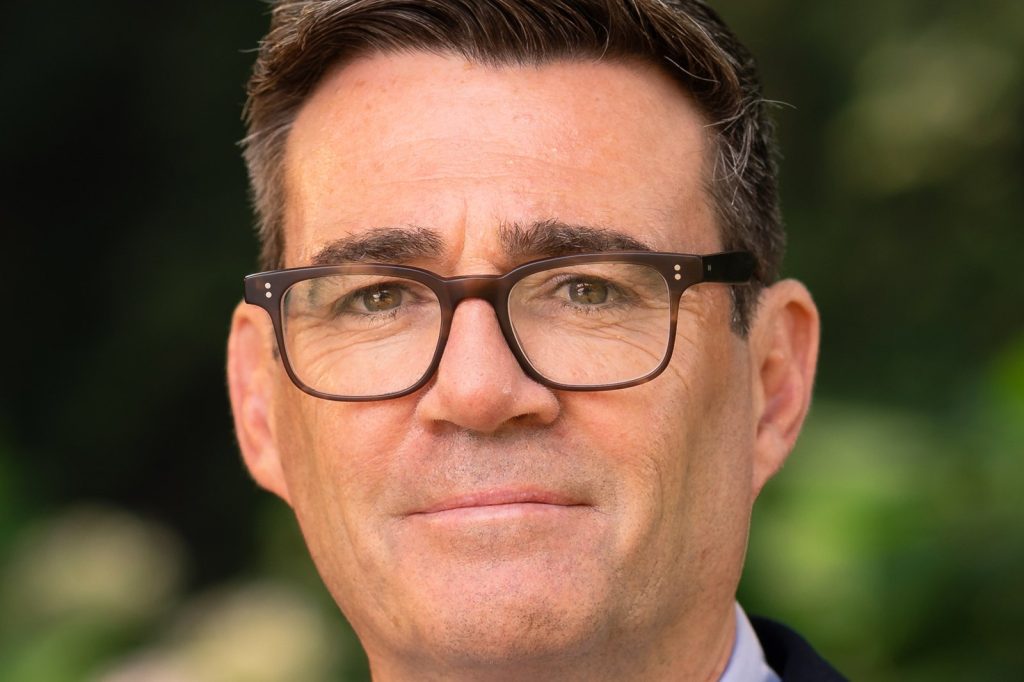
In 2009, Andy Burnham stood on the pitch at Anfield, Liverpool’s stadium, to offer condolences on the 20th anniversary of the Hillsborough disaster, which killed 97 Liverpool fans in 1989. The crowd shouted him down with demands for justice. Footage shows a rattled Burnham, close to tears, nodding and mouthing “OK.” He was 39 and a minister in Gordon Brown’s government.
“My journey away from Westminster began at Anfield that day,” he later said. “It was the turning point in my life. To be honest, I fell out of love with it.”
Burnham, 56, is now the likely next prime minister of the United Kingdom, after Keir Starmer announced he would resign once a successor is chosen.
From Aintree to Cambridge
Burnham was born in Aintree, a suburb of Liverpool, and grew up in Culcheth, a village in Cheshire. His father was a telephone engineer and his mother a doctor’s receptionist. He joined the Labour Party at 14, moved by the BBC drama Boys from the Blackstuff, which follows long-term unemployed men in Liverpool. Both of his brothers were the first in the family to go to university, and Burnham himself won a place to read English at Cambridge.
There he met his future wife, Dutch-born Marie-France van Heel. Professor John Mullan told the Times of London that the young Burnham once turned up to class in a football shirt. “I think that might be quite common on the streets of northwest England, but it’s not necessarily a common thing in a Cambridge college,” Mullan said. He remembered a football-obsessed student who recited Shakespeare.
After graduating he worked on trade magazines, including Tank World and Passenger World Management, then as a researcher for the Labour MP Tessa Jowell and as an adviser to culture secretary Chris Smith. Leigh, his home town in Greater Manchester, elected him to Parliament in 2001.
Cabinet, two lost leadership races and Corbyn
Under Tony Blair he was a junior minister. Under Brown he held three cabinet posts: chief secretary to the Treasury, culture secretary and health secretary.
He ran for the party leadership in 2010 on a platform of “aspirational socialism” and finished fourth of five, behind Ed Miliband. In 2015, nominated by his friend Keir Starmer, he tried again with a centrist, business-friendly pitch, launching his campaign at the accountancy firm Ernst & Young. Entrepreneurs, he said, should be treated “as much our heroes as the nurse.” Jeremy Corbyn won.
Unlike most of his generation, Burnham took a shadow cabinet job under Corbyn, as home affairs spokesperson. He was also among the few who did not quit Corbyn’s team in 2016. He left in 2017 to run for mayor of Greater Manchester, winning more than 60% of the vote and then a bigger margin in 2021.
Mayor of Greater Manchester
As mayor he brought the region’s buses under public control and persuaded the central government to hand cities more power over education and housing. NPR reported that Manchester now has one of the fastest-growing municipal economies in the UK. Rose Marley of Co-operatives UK, who advised him as mayor, recalled that he arrived “suited and booted” and loosened the tie on his first day. He also DJs on the city’s indie music scene.
His national profile jumped in October 2020. Handed a phone mid-press conference with news of another lockdown, Burnham said live on TV: “This is no way to run the country in a national crisis.” Joshi Herrmann of the local site The Mill said that without that moment, Burnham “wouldn’t be going into Downing Street in the next few weeks.”
Critics call him “Captain Flip-flop” because his politics have shifted over the decades. Supporters say he listens. Labour sees him as the party’s best chance of winning votes back from Nigel Farage’s Reform UK on the right and the Greens on the left.
What he promises
He is pitching “Manchesterism,” a plan to move power from London to cities and regions, including a Downing Street branch in the north. In a June 29 speech he said: “Imagine good growth in every postcode and hope in every heart.” He also pledges lower tax rates for retail businesses, the most public housing since World War II, and welfare cuts that are “fair and lasting.”
Herrmann doubts he will find it easy: low growth, high energy prices, defence spending pressure and an unpredictable ally in Donald Trump all await him. “Andy Burnham is someone who really likes to have affirmation,” Herrmann said.
Sources
- Who is Andy Burnham, the ‘man of the people’ likely to be next UK prime minister?
- How England's class divide shaped Andy Burnham, the U.K.'s likely next prime minister




