
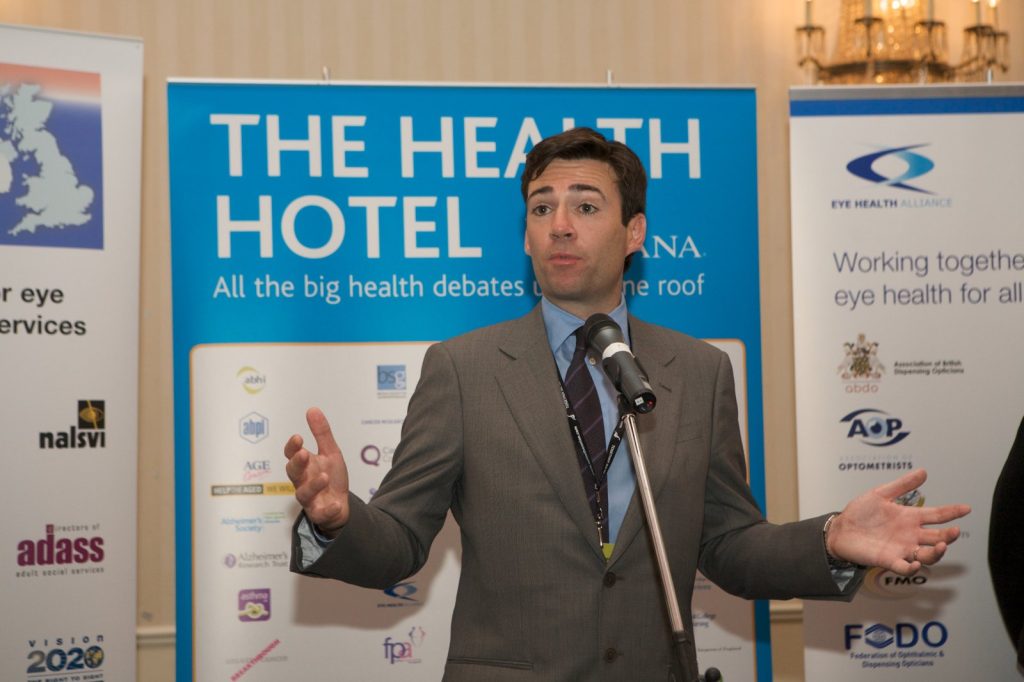
“We will take power out of here and carry it into every postcode in the land.” That was Andy Burnham’s first pledge as prime minister, delivered outside 10 Downing Street on Monday, July 20, minutes after King Charles III formally appointed him.
Burnham, 56, is the seventh person to lead the United Kingdom in ten years. He replaces Keir Starmer, 63, whose government lasted two years after Labour’s 2024 return to power, the party’s first win since 2010. Burnham said he wants to ease the cost of living by putting “life’s essentials back under stronger public control to make them affordable to you again.”
He acknowledged the churn he was stepping into. “This is a moment for reflection and new resolution,” he said, adding that “Britain needs to show the world that we can regain our stability once again.”
How he got there
Burnham sat as MP for Leigh from 2001 until 2017, then spent a decade as Mayor of Greater Manchester. Under Tony Blair he served as a parliamentary private secretary to two cabinet ministers, and under Gordon Brown he was Chief Secretary to the Treasury from 2007 until 2008 and later Culture Secretary. Breitbart noted that he backed the Iraq war vote, which he later said he regretted.
Getting back into the Commons took two tries. Breitbart reported that Starmer blocked his first attempt, at the Gorton and Denton by-election in January. A second chance came when Josh Simons gave up the Makerfield seat after local elections in which Labour lost ground to Nigel Farage’s Reform UK. Burnham won the by-election convincingly against Reform. Health minister Wes Streeting quickly backed him, and once Starmer agreed to go, Burnham faced no serious opposition for the party leadership.
Starmer said as he left: “As I now pass the baton to Andy Burnham, I wish him every success. He has my full support.” A YouGov poll found 64% of respondents thought Starmer had done badly.
The socialist label
Burnham told Renewal magazine last year that he was “happy to call myself a socialist.” In his first major speech as party leader the week before, he said the UK took “a series of wrong turns in the 1980s,” and that the country “surrendered control of the essentials — housing, water, energy, transport — and left people exposed to higher costs.” He did not name Margaret Thatcher. He has argued for bringing utilities under public control and for fully nationalising some, such as Thames Water, although the government has warned that nationalising the entire water industry could cost as much as £100 billion.
Drapers Magazine once called him “the king of the casuals” for avoiding suits. He wore one to see the king.
He once said he wanted to rejoin the European Union. His current position is that the country should not refight the Brexit vote. Farage and other opponents argue that he has no democratic mandate and should call a snap election.
Cabinet and the inherited economy
John Healey becomes finance minister and Ed Miliband foreign minister. Shabana Mahmood stays on as interior minister, and Louise Haigh takes the role of Chancellor of the Duchy of Lancaster and First Secretary of State.
The economy he takes over is stagnant. The British economy grew 0.6% in the first quarter of this year, compared with 2.1% for the United States. Debt stands at more than 95% of GDP, among the highest levels since the 1960s, which the New York Post said may limit how much he can spend. The Iran war has tightened an already strained energy supply.
The war also strained ties with Washington. Trump posted last month that Starmer “failed badly on two very important subjects- IMMIGRATION AND ENERGY.” After speaking with Burnham on Monday night, Trump wrote that they discussed “North Sea Oil, Trade, the Military Alliance, Demining of the Hormuz Strait,” and that a meeting will come “in the not too distant future.”
Sources
- Self-described socialist Andy Burnham becomes seventh British prime minister in a decade
- Self-Described 'Socialist' Burnham Looks to Replace UK's Starmer as PM




