
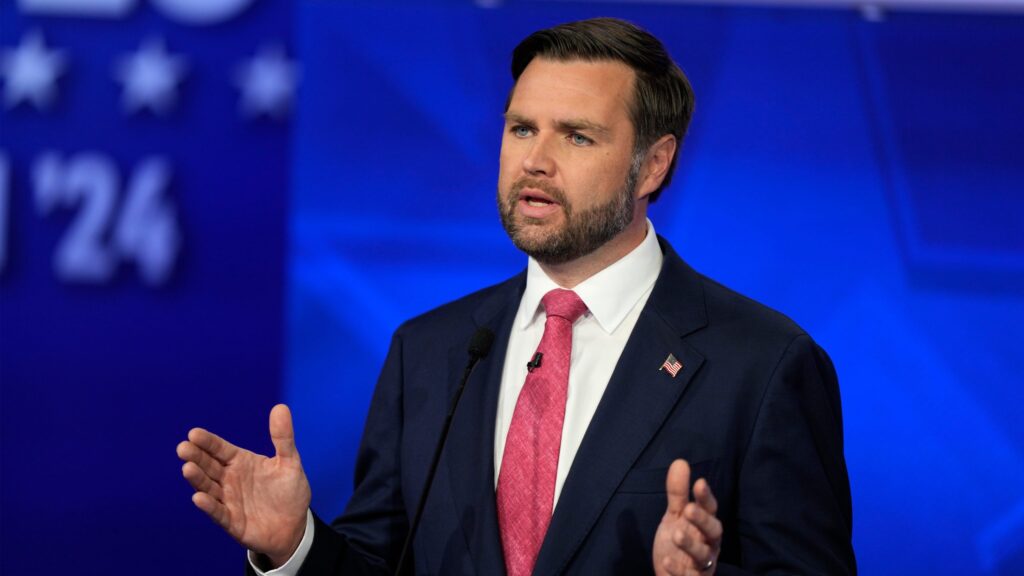
In mid-February, Vice President JD Vance put Iran’s leadership on notice: the United States was ready to look past diplomacy if talks failed to keep nuclear weapons out of Tehran’s hands. The warning, carried by the Christian outlet Endtime Ministries — which pointed its readers to Fox News for the original reporting — framed the standoff as a binary choice, and it did so in language unusually blunt for nuclear diplomacy.
The mechanics were simple leverage. Speaking to reporters on a Tuesday before boarding Air Force Two, Vance insisted diplomacy remained the preferred route — just not the only one available. “The president has told his entire senior team that we should be trying to cut a deal that ensures the Iranians don’t have nuclear weapons,” Vance said. “But if we can’t cut that deal, then there’s another option on the table.” He added, for anyone inclined to miss the point, that the U.S. military stays the most powerful on earth and that President Donald Trump meant to keep every option open while negotiations ran.
The more interesting half of the message was what it ruled out. Vance clarified that the administration was not chasing regime change in Iran; who governs in Tehran, he said, was ultimately a question for the Iranian people themselves. The narrow target was the bomb — keeping it from the government of Supreme Leader Ayatollah Ali Khamenei — an objective the administration noted had long been shared by Washington’s regional allies, Israel above all.
The timing was doing quiet work as well. The comments landed one day before Prime Minister Benjamin Netanyahu was due at the White House to meet Trump, with Iran expected to sit near the top of the agenda. Before leaving Israel, Netanyahu said he planned to lay out his country’s position plainly — principles he judged essential not merely to Israel’s survival but to peace and security across the Middle East. Israel has long treated the prospect of a nuclear-armed Iran as an existential danger, and the February calendar gave that view a stage.
Beneath the rhetoric, the diplomatic channel was technically alive: American and Iranian officials had resumed talks in Oman that week, the first such negotiations since the brief but intense 12-day conflict the previous summer. While those discussions continued, the United States kept a significant military presence sitting in the Persian Gulf — a posture analysts read as both deterrent and bargaining chip, signalling seriousness without tipping into open fighting.
The catch, then as now, is that leverage only matters if the deal it backs gets signed. What remained uncertain in February was whether the negotiations would succeed — or whether events would drag the region toward a broader conflict capable of pulling in several nations at once. Vance’s formulation, deal or “another option,” at least had the virtue of honesty about the stakes.




