
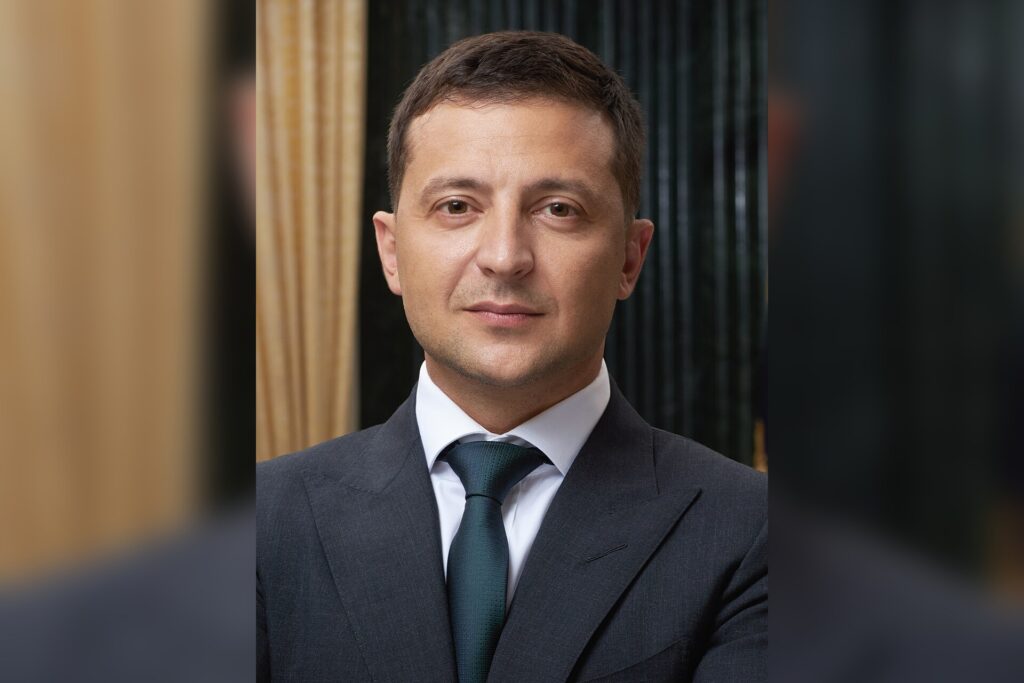
Volodymyr Zelensky had no political experience when he announced he would run in Ukraine’s 2019 presidential election. He was a comedian. His most celebrated role was a school teacher catapulted into the presidency in the TV series Servant of the People, and his candidacy, at 41, was at first seen by some as a joke. His party even took the show’s name.
From screen to office
Zelensky was born in 1978 in Kryvyi Rih, in central Ukraine, and graduated from Kyiv National Economic University with a law degree. He co-founded a successful TV production company and focused on television and film until the mid-2010s. His shows were produced for a network owned by the billionaire Ihor Kolomoisky, who later backed his campaign, which worried some Ukrainians.
He won with a landslide 73% of the vote, promising to fight corruption and bring peace to the east. Sceptics feared a puppet leader controlled by Kolomoisky, who had been under investigation for fraud and money laundering. Zelensky proved more independent than his doubters thought, and his administration’s anti-corruption drive has had some success.
The peace effort went less well. Many Ukrainians viewed his rhetoric on the Donbas and on Russia as too timid, said communications consultant Yaryna Klyuchkovska. There were prisoner exchanges and steps toward implementing parts of the Minsk agreements, but no breakthrough, and his approval rating fell steadily through 2020.
February 2022
The tone changed at the Munich Security Conference in February 2022, where Zelensky laid out the threat his country faced and accused the West of appeasing a resurgent Russia. No Ukrainian leader had spoken so bluntly to the West before, Klyuchkovska said.
On 24 February, hours before Russia began bombarding Ukrainian cities, he posted a sober address, partly in Russian. He said he had tried to call Vladimir Putin to avert a war and been met with silence. “When you attack us you will see our faces – not our backs, but our faces,” he said. His next broadcast came in military fatigues. That evening he warned Western leaders that without help, “war will knock on your doors.”
When Russia falsely claimed he had fled Kyiv, he posted a video of himself with senior advisers. “We are here,” he repeated. “We are in Kyiv. We are protecting Ukraine.” His approval hit a high of 90% in the immediate aftermath of the invasion, and his nightly video addresses became a source of comfort for millions. His wife, Olena Zelenska, and their two children spent months in secret locations, and the four have spent very little time together since.
Courting allies
Zelensky made it his mission to galvanise foreign support, pressing allies for aid and for fast-tracked NATO membership, and travelling the world between visits to the front line. In April 2022 he visited Bucha, where Russian troops are suspected of hundreds of war crimes. His first foreign trip after the invasion came in December 2022, to see then-President Joe Biden in Washington. He received several standing ovations after telling Congress that “Against all odds… Ukraine is alive and kicking” and will “never surrender.”
He sometimes appeared frustrated at the speed of Western support and the reluctance to approve some weapons on the front line.
A rift with Washington
By the third anniversary of the invasion, the picture had darkened. President Donald Trump called Zelensky a “dictator,” echoing Russian claims, and criticised Ukraine for not holding an election since 2019. A vote had been scheduled for May 2024 but was suspended because Ukraine has been under martial law since the invasion, a decision broadly backed by the opposition and the public. Zelensky suggested he would resign in return for NATO membership. He accused the US of helping Putin “break out of years of isolation” and said Trump lives in a “Russian disinformation space.”
At the end of February, a White House visit meant to include signing a minerals agreement ended in acrimony after an angry exchange with Trump and Vice President JD Vance, and he was told to leave. Polling is limited because millions have fled and Russia occupies about a fifth of the country, but a recent survey put his support at 57%.
The war has lasted far longer than Moscow intended. Russia continues to make territorial gains, yet Ukraine has slowed the advance and even mounted a counter-offensive inside Russia itself.




