
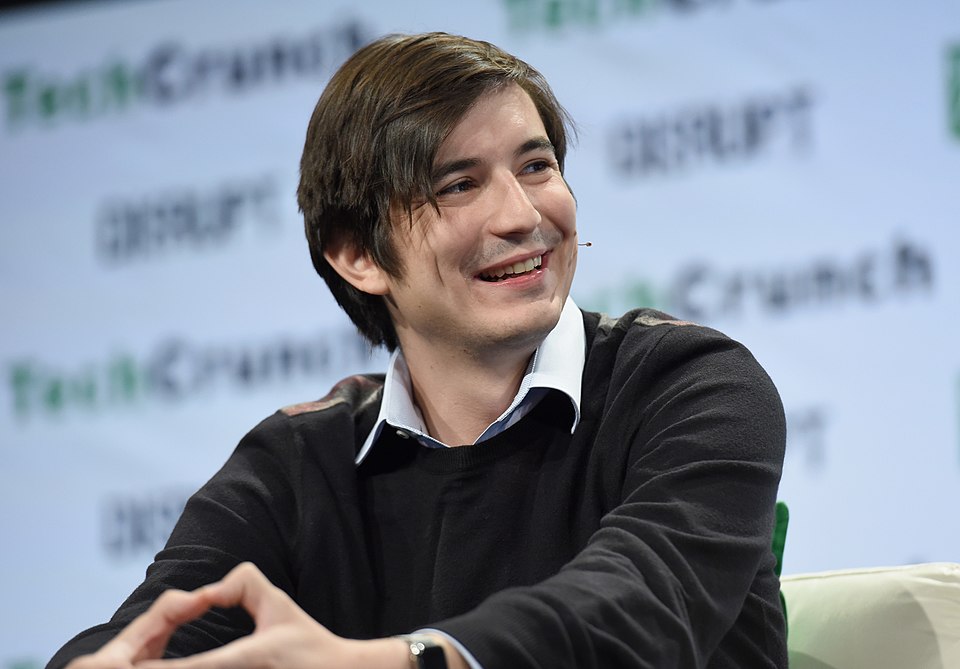
“A very, very interesting time for the industry.” That is how Vlad Tenev describes autumn 2008, when Lehman Brothers collapsed and he was a young mathematician with a Stanford master’s degree in his pocket.
Varna, on Bulgaria’s coast, is where Tenev was born, on February 13, 1987. His father was an economics professor, and after communism ended he had the chance to study in America. His wife and son followed to Virginia. After high school Tenev went west to Stanford, where he met Baiju Bhatt. Each finished a master’s in mathematics in 2008 and then they went separate ways. Tenev started a PhD at UCLA. Bhatt took a job at a trading firm.
From a failed PhD to a trading app
The financial crisis pulled them back together. Bhatt persuaded Tenev to drop out and the pair set up Celeris, a high-frequency trading firm. About a year on they moved to Chronos Research, which made tools for building automated trading strategies, aimed at banks and hedge funds. Many of the engineers on those projects became Robinhood’s first hires.
The push for something consumer-facing came from the Occupy Wall Street protests of 2011, which ran two months and fed on public distrust of finance. Tenev and Bhatt said they wanted to “build something meaningful and something that empowered consumers.” They founded Robinhood in 2013. The name was deliberate, Tenev told TechCrunch: “Robinhood is liberating information that’s locked up with professionals and giving it to the people.”
Regulators took about a year to clear it. The SEC approved Robinhood and it joined FINRA, and the site spent roughly another year as nothing but a waiting list. The app arrived on the App Store in March 2015 billed as the country’s first mobile-first brokerage. There was no minimum deposit and no commission, which was made possible by payment for order flow: Robinhood sold customer orders to market makers, who profited from tiny slices of the spread.
Adding features, then a bad January
Options trading came in 2017, cryptocurrencies in 2018 and fractional shares in 2019. Robinhood counted 9.8 million US users in 2020. Late that year Bhatt gave up the CEO title to become chief creative officer, leaving Tenev as sole chief executive. Forbes points out that in December 2020 Robinhood had agreed to pay the SEC $65 million over charges that it misled customers about how it made money.
Then came GameStop. In early 2021 Robinhood was one of several brokerages that limited trading in GameStop and similar heavily shorted stocks, pointing to liquidity needs and regulatory rules. Users were furious. Tenev ended up before Congress, the company was fined, and it had to tighten its risk controls.
The listing went ahead anyway. Robinhood went public in July 2021 on the Nasdaq with more than 22 million users and a valuation of $32 billion. In 2023 Tenev also started an AI company, Harmonic, with Tudor Achim, and sits as its executive chairman. Its bot, Aristotle, is designed to solve math problems without making things up.
Sources
- Vlad Tenev: Co-founder & CEO of Robinhood (early life, founding)
- Vlad Tenev: Co-founder & CEO of Robinhood (growth, GameStop, IPO)
- Vlad Tenev profile




