
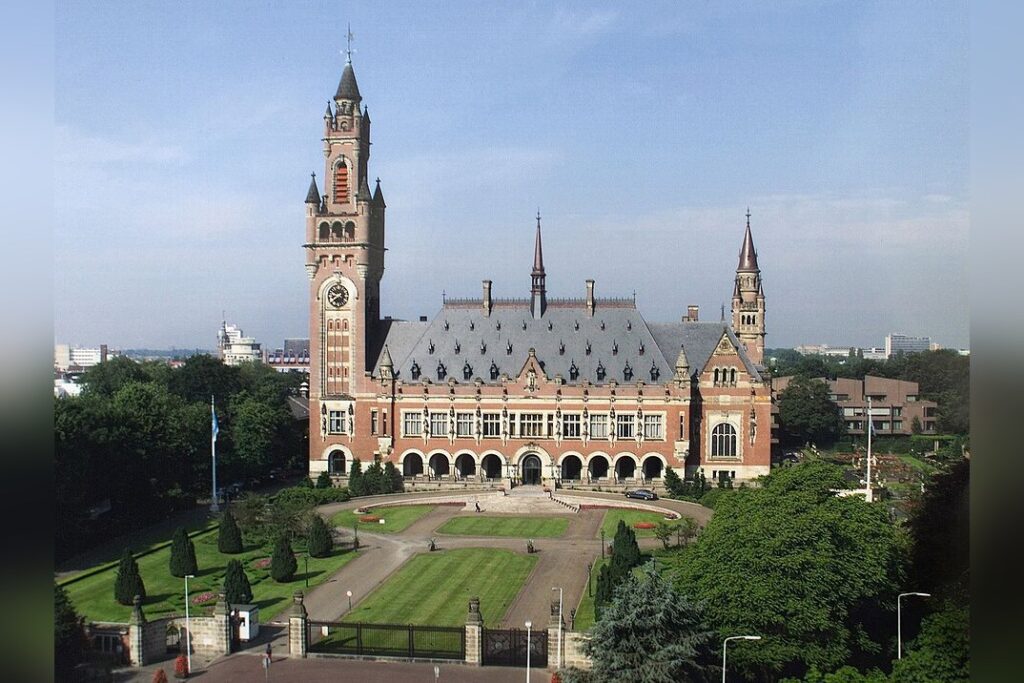
Port Vila, September 1 — The Pacific island nation of Vanuatu filed an application with the International Court of Justice (ICJ) on Monday, seeking a judicial affirmation of its sovereignty over two small, uninhabited volcanic landmasses and the establishment of new maritime boundaries with France’s New Caledonia territory. In the filing, Vanuatu invoked Article 38 of the ICJ Rules of Court, which permits a state to bring a case against another state that has not expressly accepted the court’s jurisdiction through a forum prorogatum provision.
The application requests that the court recognize Vanuatu’s title to the two landmasses, which anchor an exclusive economic zone (EEZ) that grants rights to fishing and seabed minerals. The record shows Vanuatu is a cluster of roughly 80 islands with about 300,000 residents, situated approximately 300 miles northeast of New Caledonia.
The disputed landmasses are currently administered by France as part of New Caledonia, a claim that dates back to France’s 1975 declaration of sovereignty.
Jurisdictional hurdle
According to a statement issued by the ICJ on Tuesday, September 2, the court will not take any action until France consents to jurisdiction in the matter. Under Article 36(2) of the Statute of the ICJ, a state may agree in advance to be sued by any other state that has made a similar declaration.
France terminated its general declaration of acceptance in 1974 following adverse holdings in the Nuclear Tests cases, and although it provided ad hoc declarations of acceptance in 2003 and 2006, it is uncertain whether France will consent to jurisdiction for the present dispute. The ICJ’s statement noted that no action will be taken unless and until France consents to jurisdiction.
International law context
If the case moves forward, it will be argued under the United Nations Convention on the Law of the Sea (UNCLOS), to which both Vanuatu and France are parties. UNCLOS Article 121(3) states that “Rocks which cannot sustain human habitation or economic life of their own shall have no exclusive economic zone or continental shelf.” The provision presents a challenge to any claim for control over the economic zones associated with the uninhabited landmasses in dispute.
The record shows that the EEZ anchored by the two landmasses provides rights to fishing and seabed minerals. In July 2025, officials from both states expressed interest in reaching an amicable and pragmatic solution over the disputed region.
France has not publicly responded to the September 1 filing as of the time of reporting. The ICJ’s procedural note indicates that the next procedural milestone will be France’s decision on whether to accept jurisdiction. Watch for a formal French response to the ICJ application and any subsequent diplomatic overtures that may arise before the court can consider the substantive merits of Vanuatu’s claim.




