
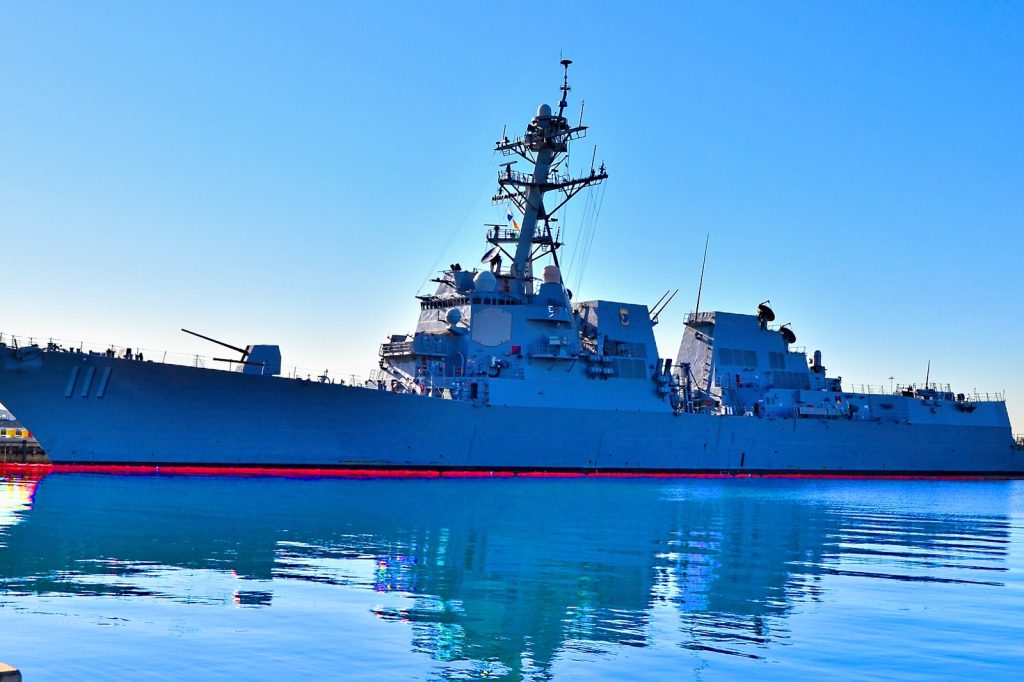
On April 19, 2026, the United States Navy took decisive action in the ongoing blockade, as the USS Spruance (DDG-111) and the 31st Marine Expeditionary Unit seized control of the Iranian-flagged container ship Touska. This direct action marks a significant escalation in the situation, with the US Navy demonstrating its commitment to enforcing the blockade. According to a statement from the US Department of Defense, the operation was carried out in accordance with international law and with the goal of preventing the shipment of prohibited goods.
The United States Navy is the maritime service branch of the US Armed Forces, with a long history dating back to the Continental Navy established during the American Revolutionary War. Today, the US Navy is the world’s second-largest navy, with 290 combat vessels and a total displacement of 4.5 million tons as of 2021.
The Navy’s fleet includes eleven aircraft carriers in service, with one undergoing trials and two new carriers under construction. This impressive capability is a key component of the US military’s global presence and allows the Navy to project power and protect American interests around the world. Admiral Mike Gilday, Chief of Naval Operations, highlighted the importance of the US Navy’s role in maintaining regional stability and security.
“Our presence in the region is a demonstration of our commitment to our allies and partners,” he said. The US Navy has been working closely with allies such as Taiwan, Japan, and the Philippines to ensure the free flow of trade and commerce in the region.
The European Union, the United Kingdom, and Israel have also expressed support for the US Navy’s efforts to enforce the blockade and prevent the shipment of prohibited goods. The US Navy’s actions have been closely watched by adversaries such as China’s government, Iran’s regime, and Putin’s Kremlin. These nations have sought to challenge the US Navy’s dominance and undermine its ability to project power.
However, the US Navy remains committed to its mission and continues to demonstrate its capabilities through exercises and operations such as the seizure of the Touska. As General David Berger, Commandant of the Marine Corps, noted, “The US Navy and Marine Corps are a team, and together we are capable of achieving great things.” The successful operation to seize the Touska is a testament to the strength and effectiveness of this partnership.
The situation in the region remains complex and dynamic, with the US Navy continuing to play a key role in maintaining stability and security. As the blockade continues, the US Navy will remain vigilant and prepared to take action to prevent the shipment of prohibited goods.
With its impressive capabilities and strong alliances, the US Navy is well-positioned to address the challenges in the region and protect American interests. According to a statement from the US Department of State, the US government is committed to working with its allies and partners to achieve a peaceful resolution to the situation. As the world watches the situation unfold, the US Navy remains focused on its mission to protect American interests and maintain regional stability.
With the support of its allies and the strength of its capabilities, the US Navy is a powerful force for peace and security. The seizure of the Touska is a significant development in the ongoing blockade, and the US Navy will continue to take action to prevent the shipment of prohibited goods.
The US Navy’s commitment to its mission and its partnerships with allies such as Taiwan, Japan, and the Philippines will remain a key factor in maintaining stability and security in the region.




