
TEHRAN, July 9 — The shadow of conflict stretching back years between Iran and the United States remains long, with events from 2019 and early 2020 still shaping the landscape for communities across Asia and the wider region. The chain of escalating actions, beginning with the US withdrawal from the Joint Comprehensive Plan of Action (JCPOA) on May 8, 2018, set in motion a series of military and economic confrontations that have not yet found resolution.
President Donald Trump’s decision to exit the nuclear deal, citing Iran’s non-compliance and the agreement’s failure to address ballistic missile development, led directly to the reimposition of US sanctions in November 2018. Those sanctions targeted Iran’s oil exports and banking sector, hitting the Iranian economy hard.
For families across the Middle East and Asia, the economic tremors were felt in volatile energy markets and disrupted trade routes. In July 2019, Iran responded by exceeding the uranium enrichment limits set under the JCPOA, a clear breach of the deal’s terms. This was followed by a dramatic escalation on September 14, 2019, when attacks on Saudi Aramco oil facilities cut global oil supply by 5%.
The United States blamed Iran for the strikes, which sent shockwaves through global energy markets and raised concerns for Asian economies heavily dependent on oil imports.
A Spiral of Violence in Iraq
The conflict moved closer to direct confrontation in late December 2019. On December 27, a rocket attack killed a US contractor at a base in Kirkuk, Iraq. The United States responded swiftly, launching airstrikes on December 29 against Kata’ib Hezbollah, an Iranian-backed militia, in Iraq and Syria.
Those strikes killed 25 people, according to reports. Just two days later, on December 31, Iranian-backed protesters stormed the US Embassy in Baghdad, breaching the compound’s outer walls.
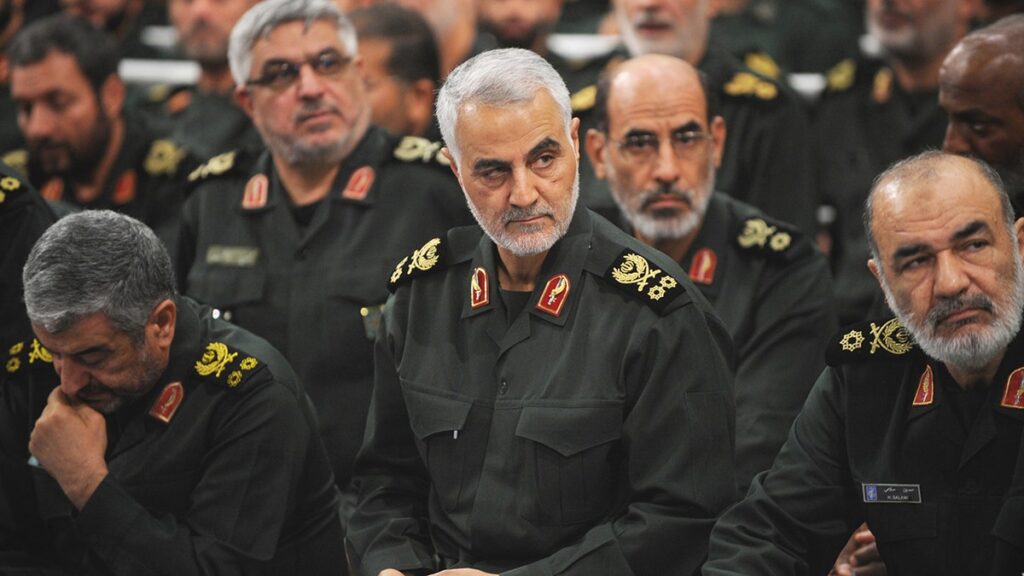
The siege marked a dramatic escalation and brought the two countries to the brink of open conflict. The United States then took its most decisive action. On January 2, 2020, a US airstrike killed Qasem Soleimani, the commander of Iran’s Quds Force, and Abu Mahdi al-Muhandis, the deputy commander of the Popular Mobilization Forces.
Soleimani was one of Iran’s most powerful military figures, responsible for directing operations across the Middle East. His death was a major blow to Iran’s regional influence.
Iran’s Response and Regional Repercussions
Iran’s Supreme Leader, Ayatollah Ali Khamenei, declared three days of mourning and vowed revenge. The threat of retaliation hung over the region, with governments from the Philippines to South Korea bracing for potential disruptions to shipping lanes, oil supplies, and the safety of their citizens working in the Gulf. For communities across Asia, the conflict between Iran and the United States is not an abstract geopolitical contest.
It directly affects the price of fuel, the security of overseas Filipino workers in the Middle East, and the stability of trade routes that carry goods to markets from Manila to Mumbai. The region watches each development with a sense of shared vulnerability.
As of July 2026, the underlying tensions remain unresolved. The US continues to enforce sanctions, and Iran maintains its nuclear activities beyond the limits of the abandoned JCPOA. No formal diplomatic process has restored the nuclear deal.
The question now is whether the cycle of retaliation and escalation can be broken, or whether communities across Asia will continue to bear the costs of a conflict that shows no sign of ending.




