
A small working group in Washington has met Danish and Greenlandic officials at least five times since mid-January to negotiate new US military bases in Greenland, the BBC reported on Monday, citing multiple officials familiar with the talks. Nothing has been agreed formally.
The aim, as sources described it, is three new bases in the south of the territory. The number could still change. One would probably sit at Narsarsuaq, where a former US base once had a small airport. Analysts quoted by the BBC said any others would most likely go on sites that already have airfields or ports, since upgrading those costs less than building from scratch.
What the bases would do
Officials told the BBC the bases would mainly watch for Russian and Chinese maritime activity in the stretch of the North Atlantic between Greenland, Iceland and the United Kingdom, known as the GIUK Gap. One source said US officials have floated designating the three sites as US sovereign territory.
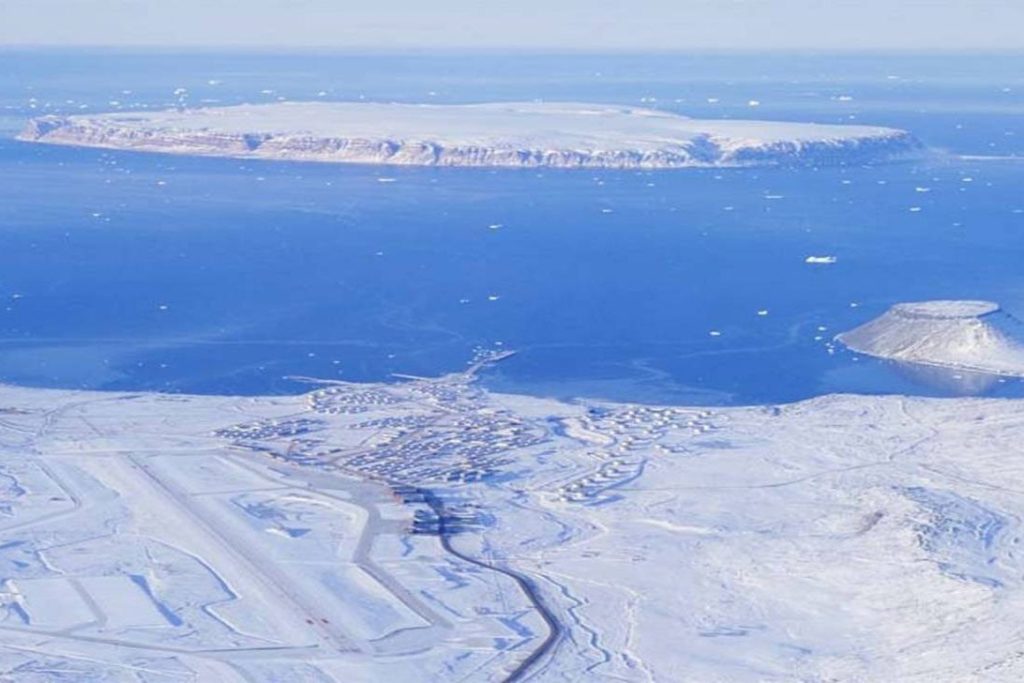
The US has a single base in Greenland now. Pituffik Space Base, in the northwest, tracks missiles for NORAD but is not set up for maritime surveillance. At the height of the Cold War, the US operated roughly 17 military facilities on the island.
The people at the table
Michael Needham, a senior State Department official, is leading for Washington. “Needham is running point,” a senior diplomat told the BBC, adding that the administration is “approaching it very professionally.” He usually brings one or two officials from the State Department or the National Security Council.
Across from him sit Jeppe Tranholm, Denmark’s permanent state secretary of foreign affairs and its chief negotiator; Jesper Møller Sørensen, Denmark’s ambassador to the US; and Jacob Isbosethsen, the top Greenlandic diplomat in Washington. Three sources said Jeff Landry, the Louisiana governor and Trump’s special envoy to Greenland, has taken no part. A close ally of his said he “has never been to any of the actual talks.” Landry’s office did not respond to a request for comment.
Crisis and compromise
The talks follow a diplomatic crisis. In January, President Donald Trump said the US should “own” Greenland to keep Russia or China from taking it, and that this could happen the “easy way” or the “hard way.” Denmark and Nato rejected any seizure publicly, and officials said seizure has not come up in the negotiations.
Negotiators are working inside a 1951 security agreement between the US and Denmark. Arctic security experts said it gives Washington wide latitude to expand operations, subject to Danish approval, and that Denmark has never turned down a US request.
The White House confirmed high-level talks but would not discuss details. A White House official said the administration was very optimistic. A Danish foreign ministry spokesperson said: “There is an ongoing diplomatic track with the United States. The Ministry of Foreign Affairs will not go into further detail at this time.”
Greenlandic Prime Minister Jens-Frederik Nielsen, speaking at a democracy summit in Copenhagen on Tuesday, said the talks had “taken some steps in the right direction” and were in “a better place than when we had our conversations through the media.” His position on sovereignty was plain: “We are not to be taken. We are not for sale.”
Some current and former officials questioned the earlier threats. “Why threaten an ally with a military operation or invasion when what you want is something that could be negotiated quite easily?” asked one former senior US defence official. Retired General Glen VanHerck, who led Northern Command and NORAD from 2020 to 2024, saw the cooperation differently: “Wherever the US and our allies leave a vacuum, that vacuum is often filled by China and Russia.”
Sources
Sources
- US in closely guarded talks to open new bases in Greenland
- The U.S., Denmark, and Greenland Reached a Security Deal.




