
“I asked, how many will die. 150 people, sir, was the answer from a General.” That one line from a presidential tweet explains why American warplanes never left the deck in June 2019. Donald Trump said he stopped the attack on Iran 10 minutes before it was due to begin.
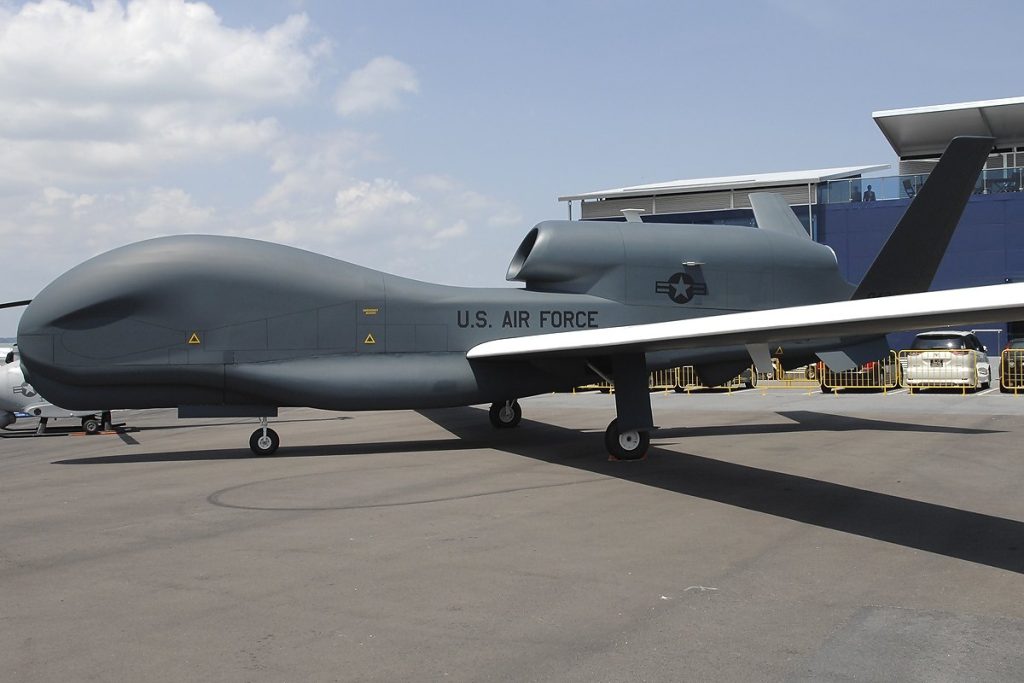
The trigger was a drone. Iran’s Revolutionary Guards shot down a U.S. Navy RQ-4 Global Hawk early on Thursday, June 20, over the waters off Iran’s southern coast, close to the Strait of Hormuz. Trump first called it “a very big mistake.” Then, according to administration officials quoted by the New York Times, he approved retaliation against three Iranian sites and changed his mind later in the evening.
His own account came the next morning. “We were cocked & loaded to retaliate last night on 3 different sights,” he wrote. A general had given him the casualty estimate, and he judged it “not proportionate to shooting down an unmanned drone.” He added that he was “in no hurry.”
Two versions of one flight path
Think of it like two drivers who each swear the other crossed the line. The Pentagon said the aircraft, which costs more than $120 million, was 34 kilometers (21 miles) from Iran when a surface-to-air missile destroyed it in an “unprovoked attack.” Tehran insisted it had entered Iranian airspace.
Brig. Gen. Amir Ali Hajizadeh, who commands the Guards’ aerospace arm, said the drone had been warned. By his account the last warning went out at 3:55am and the missile followed at 4:05am, when the aircraft kept coming. He also claimed a U.S. P-8 patrol plane with 35 people aboard had flown alongside. “We could have downed it, too,” he said, “but we did not.”
Deputy foreign minister Abbas Araghchi summoned the Swiss ambassador, whose country represents American interests in Tehran, and handed over what he called “indisputable” evidence of a violation. He said Iran did not want war but would defend its territory. Iranian television showed debris it said came from the drone, pulled from Iranian waters. A senior U.S. defence official said Navy ships with the USS Abraham Lincoln, including the USS Leyte Gulf and the USS Bainbridge, were ready to hit targets with jets or, more likely, Tomahawk cruise missiles.
What it meant for ordinary travel and markets
The practical upshot showed up quickly. The FAA ordered U.S. civilian planes out of the area until further notice. Qantas, Lufthansa, KLM and British Airways rerouted their own flights away from the Strait of Hormuz. Oil prices had jumped more than 6% the day before and eased slightly on Friday, while gold climbed to near six-year highs.
Iranian officials told Reuters that Trump had sent a message through Oman overnight warning that an attack was imminent, saying he opposed war and wanted talks. The decision on any response, one official said, belonged to Supreme Leader Ayatollah Ali Khamenei. Brian Hook, the U.S. special representative on Iran, told reporters in Saudi Arabia that Tehran should “meet diplomacy with diplomacy, not military force.”
The pressure had been building since Trump withdrew from the 2015 nuclear deal and reimposed sanctions. Iran’s foreign minister, Mohammad Javad Zarif, repeated that from July 7 his country would scale back its commitments under that agreement unless Europe and others helped rescue it.
Sources
- Trump says he called off Iran strikes expected to kill 150 (AFP)
- Trump called off attack on Iran after being told of 150 possible casualties
- Iran vows to defend borders after downing US drone (The Independent)




