
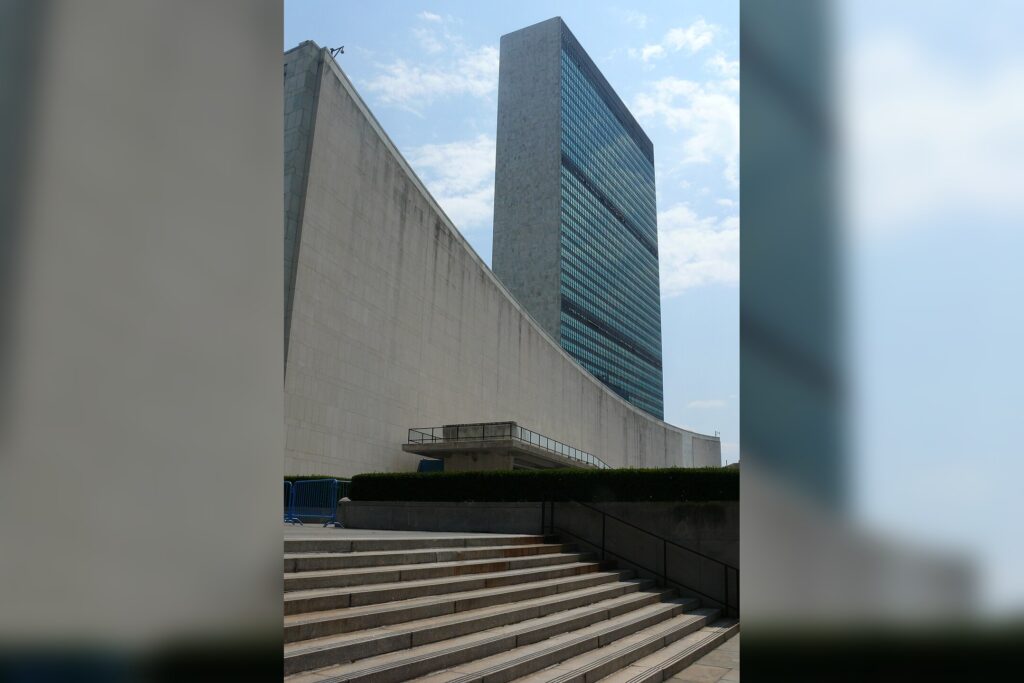
NEW YORK, September 6 — Delegates in the vaulted hall of the United Nations General Assembly gathered under a hush that turned electric as a resolution to endorse a more accurate world map was put to a vote. The measure, introduced by the delegation of Togo and backed by the African Union, sailed through with the overwhelming backing of the assembly. The resolution was passed with 164 member states voting in favor.
Only the United States voted against it, while six other countries — Serbia, Estonia, Georgia, Lithuania, Moldova and Ukraine — abstained. For centuries, classrooms and offices have relied on the Mercator projection, a map style drawn by a Flemish cartographer to aid European navigators at sea.
That design stretches landmasses near the poles, making regions such as North America and Greenland appear larger than they are, while shrinking the expanse of Africa and South America. Opponents of the old chart argue that it warps perception, presenting Greenland and Africa as about the same size. The newer Equal Earth projection, unveiled in 2018, follows the planet’s curvature, laying out continents in proportions that more faithfully reflect reality—showing Africa as 14 times larger than Greenland.
The United Nations resolution does not ban the Mercator projection or impose a replacement, but it encourages governments and institutions worldwide to favor the Equal Earth version, hoping to reshape the visual language of geography worldwide.
Reactions From Leaders
Togo’s foreign minister, Robert Dussey, framed the move as a matter of collective imagination, declaring, “Maps shape our understanding of the world. They guide education, nourish the imagination, and influence collective perceptions.” Advocacy group Africa No Filter, a leading voice behind the campaign, welcomed the vote, stating a desire to see accurate maps in schools, textbooks, newsrooms, businesses and on digital platforms billions of people use every day.
France’s foreign minister, Jean‑Noël Barrot, posted on the social platform X after the vote that correcting a distorted representation is an act of truth, even if it does not change the world. Meanwhile, the United States stood alone in opposition, a stance that underscores the differing diplomatic priorities among the global community.
By nightfall, delegates exchanged copies of the Equal Earth projection, and the buzz in the corridors hinted at an upcoming wave of textbook revisions and corporate rebranding as the new map gains foothold. Watch for ministries of education and major publishing houses to announce rollout plans in the coming weeks, as the United Nations encourages a reshaped visual narrative to take hold across classrooms and screens worldwide.




