
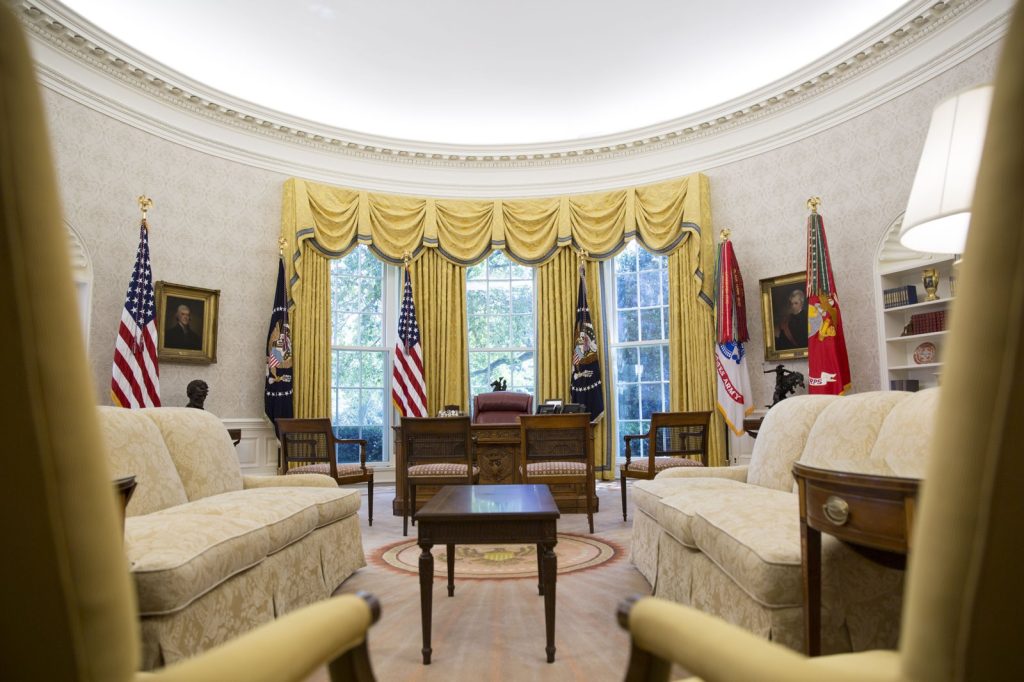
WASHINGTON, September 6 — President Donald Trump sharpened his trade rhetoric against Canada earlier this year, declaring the bilateral goods deficit “unacceptable” and pressing for action on what he termed the “dollar imbalance” between the two economies. The remarks, delivered from the Oval Office on February 7, 2025, signaled that the administration’s confrontational trade posture toward its largest export market would extend well beyond the opening weeks of Trump’s second term. The US Census Bureau recorded a goods trade deficit with Canada of $64.1 billion in 2023.
US goods exports to Canada reached $322.2 billion that year, while imports from Canada totaled $386.3 billion. Canada remains the largest export market for American goods, making the relationship economically consequential for both sides.
Trump framed the gap as unsustainable. “It’s not going to work out,” he told reporters, unless the imbalance is corrected. He did not announce new tariffs during that appearance.
What he did promise was a meeting with Canadian officials, keeping the door open for negotiation while maintaining public pressure.
Strategic Context and Broader Stakes
The calculus here extends beyond the bilateral ledger. Trump’s “dollar imbalance” reference touches on exchange-rate dynamics and trade flows that have figured repeatedly in his trade policy. Strategically, this language allows the administration to broaden any negotiation beyond simple tariff levels into macroeconomic terrain.
This was not the first trade friction of the second Trump term. The president had earlier threatened 25% tariffs on Canadian goods, only to pause them for 30 days after Ottawa agreed to strengthen border enforcement.
That sequence established a pattern: threat, Canadian concession, temporary reprieve, renewed pressure. Canadian Prime Minister Justin Trudeau, then in office, had already drawn his line. Canada would retaliate with tariffs on US goods if Trump imposed them.
The United States-Mexico-Canada Agreement, which took effect in 2020, governs the relationship, but Trump has shown consistent willingness to use tariffs as leverage regardless of existing pact obligations.
What This Signals for Investors and Allies
The February 7 comments formed part of a broader discussion that also encompassed the European Union and other trading partners. For markets, the pattern is clear: the administration views trade deficits not as neutral accounting outcomes but as policy failures demanding correction. The preference for tariffs as a negotiating tool remains intact.
What follows merits close attention. No new tariffs emerged from that specific Oval Office session.
Yet the framing—”massive deficit,” “not going to work out,” the planned meeting—suggests the bilateral temperature will stay elevated. For businesses with cross-border supply chains, the uncertainty itself carries cost. The geopolitical chessboard here involves a treaty partner and the world’s longest undefended border.
The broader stakes: whether USMCA’s architecture can contain disputes that its architect now seems eager to reignite.




