
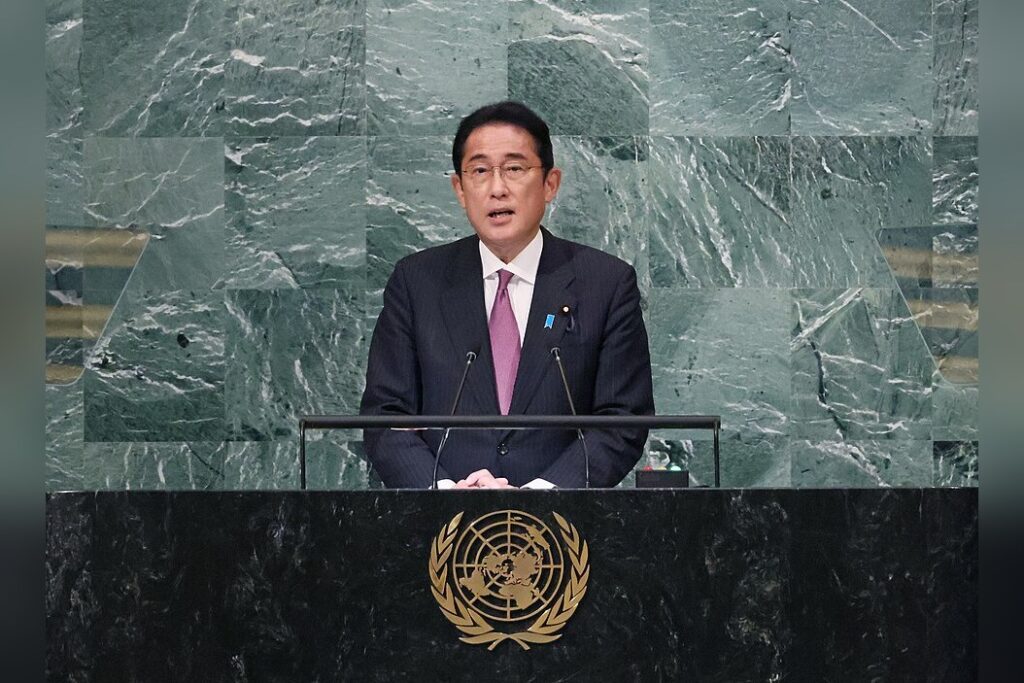
Four years ago, five delegations raised artificial intelligence in the General Assembly Hall. This year it was 128. That figure came from General Assembly President Khalilur Rahman, speaking as the 81st session’s General Debate closed on Monday, September 28, and he said it was more than the number that addressed climate change or human rights.
The debate opened on September 22 and, according to the International Peace Institute’s Global Observatory, produced 194 speeches: 191 of the 193 member states (Afghanistan and Myanmar did not speak), the Holy See, Palestine and the European Union. Artificial intelligence, the state of multilateralism and the wars in Ukraine and the Middle East ran through nearly all of them.
Rahman, in his closing remarks, said one word came before all others. “Peace,” he said, spoken of “less as a distant aspiration than as an urgent defense of the UN Charter, international law and the protection of civilians.”
AI moves to the center
Rahman described a shift from the margins to the middle of the agenda. Leaders pointed to what AI could do for public services, scientific discovery and access to knowledge, while naming its risks. Many treated it as a question of governance. For families in developing countries, his warning matters most: AI governance, he said, must be human-centered and inclusive, and it must prevent a new divide between countries that build the technology and those that only use it.
Trust, reform and a new Secretary-General
The theme was “Restoring trust, managing transformation: a United Nations that delivers for all.” Rahman said trust cannot be commanded. It has to be earned through consistency between words and deeds. On development he was blunt: time is running out, only a few of the Sustainable Development Goals are on track, and progress has stalled.
Member states also pressed for a transparent, inclusive and merit-based process to choose the next Secretary-General. Outgoing Secretary-General Antonio Guterres received a standing ovation after his final address on September 22. The Global Observatory counted about 65 speakers who praised his leadership.
The UAE, one of the delegations in New York, went in with three priorities: conflict resolution and stability, reform of the UN system including responsible use of AI, and climate action tied to water. Sheikh Abdullah bin Zayed Al Nahyan, the UAE’s foreign minister, led its delegation and met other foreign ministers on economy, health, technology and food security.
Walkouts and a missing president
Not everything stayed in the language of diplomacy. Xinhua reported that Palestinian President Mahmoud Abbas could not travel to New York for a second year running after the United States imposed a visa ban on Palestinian officials, and addressed the Assembly by prerecorded video instead. “We reject these unlawful punitive measures,” he said. Israeli Prime Minister Benjamin Netanyahu spoke the same morning, and scores of delegates walked out as he took the podium.
Climate did not vanish from the floor, whatever the AI count suggests. The Global Observatory’s reading of the transcripts found 167 of the 194 speakers made at least a minor reference to it.
Sources
- What Did World Leaders Say about Climate in the 2026 UN General Assembly? – IPI Global Observatory
- UAE at UN General Assembly 2026: From Diplomacy and Dialogue to Implementing Global Solutions on Peace, Climate, Water and AI
- UN General Assembly concludes general debate – Xinhua




