
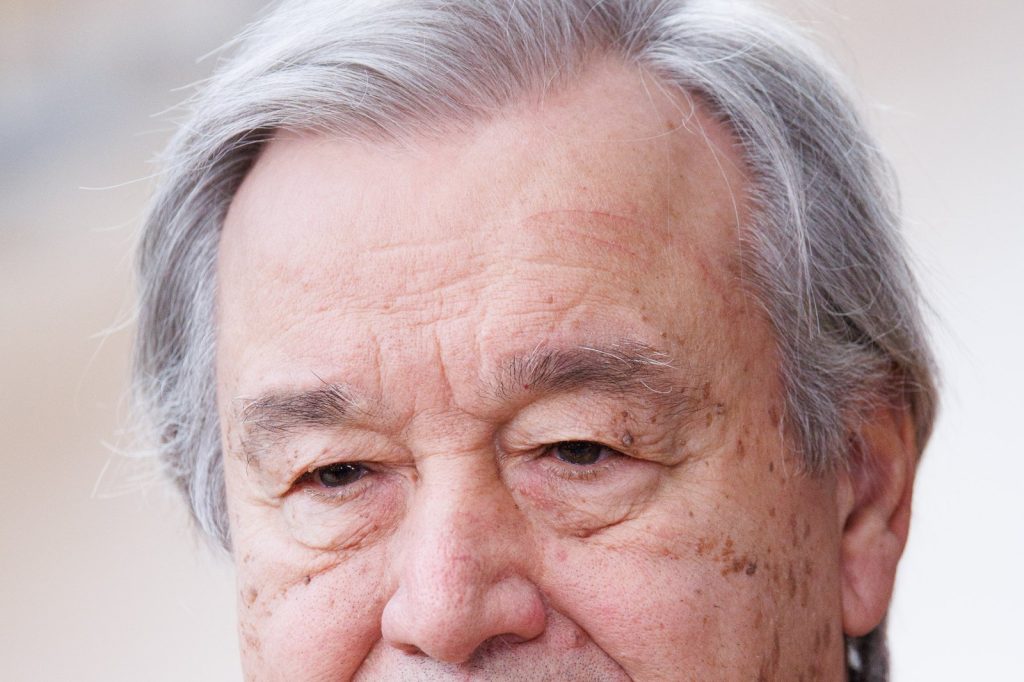
“Our world is increasingly multipolar. That is a good thing and must be strengthened.” With those words, UN Secretary-General António Guterres opened his appeal to the leaders gathered in Bishkek, Kyrgyzstan, on Tuesday, September 1, 2026, for the Shanghai Cooperation Organization summit.
The audience was a big one. The SCO was founded in 2001 and now has 10 member states, among them China, India, Pakistan, Russia and several Central Asian countries. By population and geographic reach it ranks among the world’s largest regional organizations.
Guterres called multipolarity “a condition for justice in global governance and international relations” and “the best support for effective multilateralism.” Then he turned to what he wants changed. Many international institutions, he said, still reflect the world of 1945. “We must reform our multilateral institutions, including the United Nations and the Bretton Woods system,” he told the room, so that developing countries gain more representation and influence. He wants a United Nations that serves everyone “without double standards in line with the Charter.” The SCO itself he praised as “an important pillar of multilateralism.”
Four areas for cooperation
The Secretary-General named four, starting with security.
On the Middle East, he warned that ceasefires and agreements are repeatedly being broken. “I appeal for maximum restraint and for agreements and international law to be respected,” he said, and asked for a settlement that is peaceful, just and durable and that protects navigation rights around the Straits of Hormuz and Bab al-Mandab.
On Gaza he was blunt. The ceasefire “must be respected,” he said, and the Comprehensive Plan to End the Gaza Conflict should be carried out in full. He asked for obstacles to humanitarian aid to be removed and for an end to settler attacks and settlement expansion in the occupied West Bank. “There will only be peace with a two-State solution,” he said, with Jerusalem/Al Quds as the capital of both states.
On Ukraine, after more than four years of war, he said “it is high time for a full and immediate ceasefire” to open talks toward “a just, lasting and comprehensive peace in line with international law.”
The second area was financing for development. Guterres argued that the global financial architecture needs “justice and equity” and has to deal with the debt “that is strangling so many developing countries.” He asked multilateral development banks to become “bigger, better and bolder.”
Third came climate. He warned that the world is on track to exceed the 1.5°C temperature limit and said “climate action requires climate justice,” calling for far more financial support for developing countries. He also raised critical minerals, saying producing countries should see greater benefit from their resources. “No more plundering,” he said.
The fourth was artificial intelligence, which he said must work for all countries rather than a few, with effective guardrails and more inclusive governance.
A side meeting with Iran’s president
Away from the podium, Guterres met Iranian President Masoud Pezeshkian. A UN spokesperson said the Secretary-General voiced concern over the humanitarian and economic consequences of the conflict in Iran and across the region. He pressed for dialogue and negotiations, with full respect for international law, including navigation rights in and around the Strait of Hormuz.
The Afghan Voice Agency, which also covered the speech, reported that Guterres framed multipolarity as support for a United Nations free of double standards.
Sources
- At SCO summit In Kyrgyzstan, Guterres calls for more representative global governance | UN News
- Guterres: The world is moving towards multipolarity | AVA




