
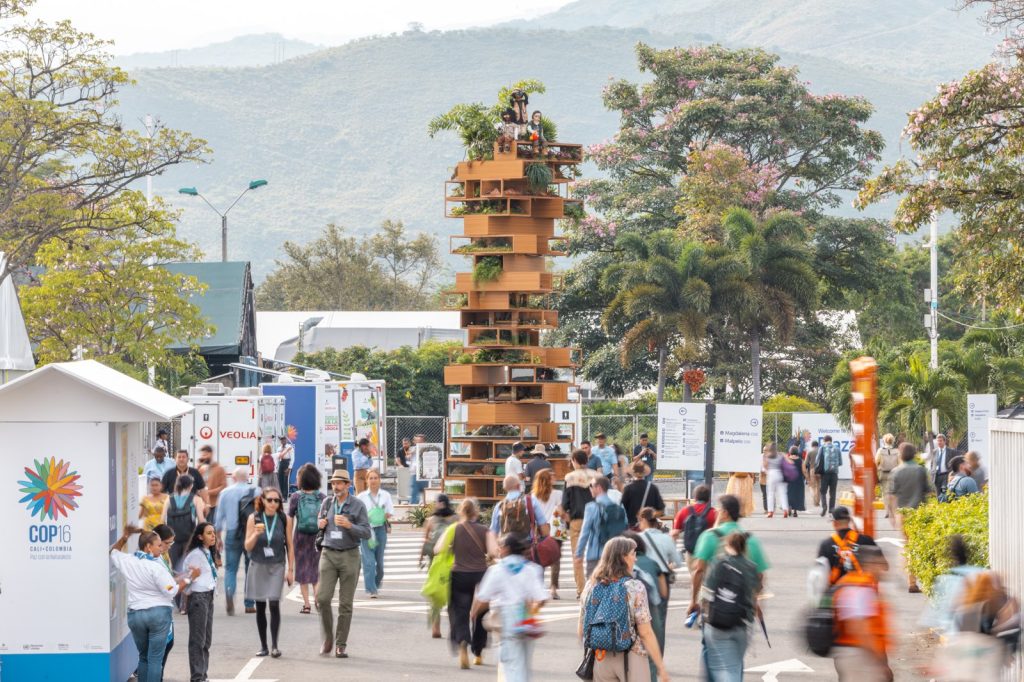
At 8.30am on a Saturday morning in Cali, the UN biodiversity summit simply stopped. With under half the countries still present, the quorum had evaporated, and the president, Susana Muhamad, suspended the meeting with the money question unresolved. Negotiations had been due to end the previous evening and ran almost 12 hours over.
About 23,000 people from 200 countries had spent nearly two weeks on the 2022 Kunming-Montreal framework, which aims to place 30% of land and sea under protection by 2030. Wealthy countries had earlier pledged $20 billion a year in conservation finance for developing nations by 2025, rising to $30 billion by 2030. Cali was supposed to produce a detailed plan for finding it. Instead, rich and poor blocs split over how much to commit.
Left behind at the airport
Many delegates had to leave to catch flights. Fiji’s negotiator, Michelle Baleikanacea, said her country was the only Pacific island nation still present, and that she was the last of a ten-person delegation. “We cannot afford to be changing flights because we don’t have the funds,” she said. Brazil’s negotiator, Maria Angelica Ikeda, questioned the legitimacy of taking up resources so late in the programme, saying the issue should have been tackled from the start.
The summit was not empty-handed. Delegates agreed to a permanent body to advise on matters affecting Indigenous peoples, and to a fund that shares profits from digitally sequenced genetic data with the communities the material comes from. Half of what the fund collects is earmarked for those Indigenous and local groups. The money and the monitoring questions were pushed to another day.
Rome, three months later
That day came in February 2025, when the resumed session, known as COP16.2, opened in Rome, in a hall at the Food and Agriculture Organisation. The last session dragged past midnight and ended on 28 February. When the decision was adopted, delegates stood and applauded. “The applause is for all of you,” Muhamad told them.
Delegates settled on a plan to find $200 billion every year by 2030, new money on top of what flows today. Stéphane Dujarric, who speaks for the UN chief, said that sum is needed to bridge the biodiversity funding shortfall. It keeps the earlier $20 billion target for developing countries, rising to $30 billion by 2030, and negotiators also settled a set of indicators to track progress under the framework.
The hardest fight was over structure. Brazil and the African Group wanted a brand-new fund, arguing that existing channels are slow and unfair to the poorest states. The European Union, Japan and Canada warned that multiple funds fragment aid and make accountability harder, while donors also said a new fund would be costly to set up. The compromise leaves the question open: Rome set a process to decide whether to create one, and the verdict on any new fund was put off to 2028.
Reaction was cautious. Efraim Gomez of WWF International welcomed the move but cautioned: “this necessary step is not sufficient.” He also flagged worry that rich countries are behind on the existing $20 billion a year they promised. The UN convention’s executive secretary, Astrid Schomaker, said the outcome showed that “multilateralism works.”
Sources
- UN summit ends without agreement on biodiversity funding
- Cop16 ends in disarray and indecision despite biodiversity breakthroughs
- Global biodiversity agreement mobilises $200 billion
- Countries agree $200bn deal to protect nature at UN biodiversity talks




