
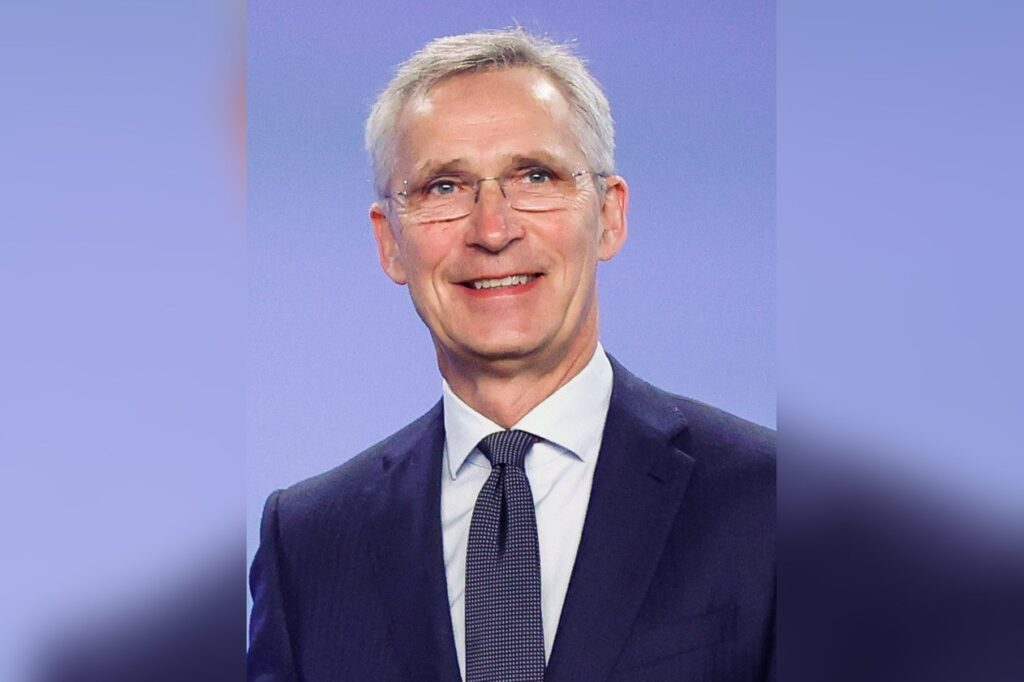
OSLO, July 8 — Jens Stoltenberg, the 13th Secretary General of NATO, is expected to step down in October 2024, according to the record of his tenure. His departure will close a decade-long chapter at the helm of the Western military alliance, a period defined by the most serious confrontation with Moscow since the Cold War. Stoltenberg, born March 16, 1959, in Oslo, Norway, has led NATO since October 1, 2014.
Officials confirmed his term has been extended multiple times, most recently in March 2022, as allies sought continuity during the war in Ukraine. His pending exit now places the question of succession firmly before the 32-member alliance.
The record shows Stoltenberg’s strategic context was set from his first months in office. Russia’s annexation of Crimea in 2014 occurred just months before he took over. That event reshaped NATO’s posture in Eastern Europe, and Stoltenberg managed the alliance’s initial response — a shift toward collective defense that accelerated over the following decade.
His background as a former Norwegian prime minister gave him direct experience with NATO operations. He served as Prime Minister of Norway from 2000 to 2001 and again from 2005 to 2013.
During those years, he oversaw Norway’s involvement in NATO operations in Afghanistan and Libya. Those deployments tested the alliance’s expeditionary capabilities and its political cohesion. As Secretary General, Stoltenberg presided over the alliance’s management of the COVID-19 pandemic, the withdrawal from Afghanistan in 2021, and Russia’s full-scale invasion of Ukraine in 2022.
Each crisis presented distinct pressures on the alliance’s unity and decision-making.
The 2% target and enlargement
Stoltenberg has been a key advocate for the 2% defense spending target, the informal benchmark that NATO members agreed to reach by 2024. According to the statement of his priorities, he consistently pressed allies to move toward that goal, arguing that burden-sharing was essential to the alliance’s credibility. The record shows that during his tenure, the number of allies meeting or planning to meet the target increased significantly, though several major members remained below it.
He also championed NATO’s enlargement to include Finland and Sweden. Finland joined in April 2023, doubling the alliance’s land border with Russia.
Sweden’s accession followed in March 2024, completing a historic expansion driven by the security concerns that followed Russia’s 2022 invasion. Stoltenberg described the additions as the fastest ratification process in NATO’s modern history.
Economic background and political style
Stoltenberg holds a degree in economics from the University of Oslo. That academic background informed his approach to defense economics and the linkage between military capacity and industrial output, officials confirmed. He often framed the 2% target not merely as a political commitment but as a necessary investment in deterrence.
His political style has been described by diplomats as steady and consensus-driven. In a role that requires unanimity among often fractious allies, Stoltenberg avoided the kind of public ruptures that have occasionally plagued the alliance.
He managed relations with the administration of U.S. President Donald Trump, who had publicly questioned NATO’s value and threatened to reduce American commitments. According to the record, Stoltenberg navigated those tensions by emphasizing increased European defense spending and burden-sharing.
The Ukraine war and the road ahead
Russia’s full-scale invasion of Ukraine in February 2022 became the defining crisis of Stoltenberg’s tenure. The alliance activated its defense plans for the first time in a generation, deployed additional troops to its eastern flank, and provided extensive military aid to Kyiv. Stoltenberg described the war as the most dangerous security situation in Europe since World War II.
The record shows that under his leadership, NATO avoided direct military confrontation with Russia while significantly increasing support for Ukraine. The alliance also admitted Finland and Sweden, a move that Moscow had explicitly sought to prevent.
Officials confirmed that Stoltenberg’s term was extended in March 2022 specifically to provide stability during the initial phase of the war. As of July 2026, with Stoltenberg having stepped down nearly two years ago, the question of his legacy is now settled. The record shows a tenure that began with the annexation of Crimea and ended with the largest European land war since 1945.
The alliance he leaves behind is larger, more focused on collective defense, and more engaged in Eastern Europe than at any point in the previous three decades. The succession process, which Stoltenberg himself will not influence, will determine who leads NATO through the next phase of that confrontation.
The alliance’s next Secretary General will inherit a military organization that has returned to its core mission of territorial defense, but also faces new challenges — from the war in Ukraine to the strategic competition with China.




