
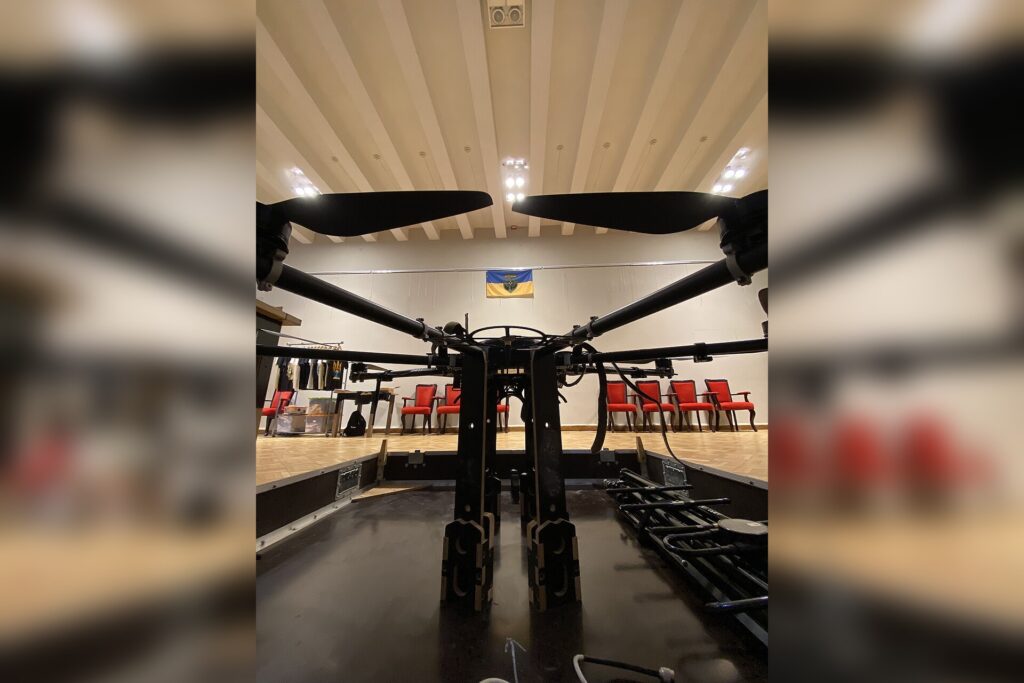
Ukrainian drones hit an oil refinery in Russia’s Tyumen region on June 20, more than 2,000 kilometers from the border. President Volodymyr Zelensky announced it in his nightly address and called it Kyiv’s deepest strike of the war, according to the Guardian. He credited a Ukrainian firm, Fire Point, with building new long-range drones capable of more than 3,000 kilometers, now “successfully deployed.”
How the range grew
Days before the strike, Fire Point showed an upgraded FP-1 at the Eurosatory 2026 exhibition in Paris. UATV reported that its range went from 1,650 to 2,700 kilometers thanks to a reworked wing and an extra fuel tank, enough to reach western Siberia. The same stand displayed the FP-2 and the FP-5 Flamingo cruise missile, which is slated for serial production. A memorandum was signed there with Germany’s Hensoldt to fit air-defense radar to a Fire Point missile complex.
The company now covers three tiers, from 50-kilometer interdiction to the 3,000-kilometer reach Zelensky cited.
Mid-range drones on the supply lines
Shorter-range drones, flying 50 to 300 kilometers, have gone after bridges, fuel trucks and trains. CNN counted roughly 150 geolocated strikes on Russian logistics feeding occupied southern Ukraine. Robert Brovdi, the drone-forces commander, said freight over the Chonhar bridge into Crimea dropped 71 percent in two weeks. Ukraine’s Unmanned Systems Forces told CNN such missions are up 28-fold in a year.
Fuel is tight in Crimea. On June 21 the occupation authorities stopped selling it to civilians and told stations to serve only state agencies, the Kyiv Independent reported. UAWire wrote that Ukraine has made a record 30 strikes on Russia’s oil industry so far this year.
Strikes in July
A Mapshock briefing put the Omsk refinery, Russia’s largest and about 2,445 kilometers from Ukrainian-held ground, under attack on July 6. Direct hits on the primary refining unit halted production, it said. Saratov’s refinery followed on July 8. On July 10, local officials said drone attacks started fires at a refinery, fuel depots and a port in southern Russia, and residents were told to leave affected areas.
The briefing also said the Moscow refinery, among the best defended in the country, was damaged on June 16 and 18 and is out of action until 2027. By its count, only Rosneft’s Angarsk refinery in Irkutsk Oblast, about 4,450 kilometers away, has escaped drone damage in 2026.
The Institute for the Study of War assessed that Ukraine holds a “time-constrained opportunity” while Russian forces remain vulnerable.
Sources
- Ukrainian drones strike oil refinery in southern Russia, escalating conflict
- Fire Point drones hit Siberia in Ukraine's deepest strike




