
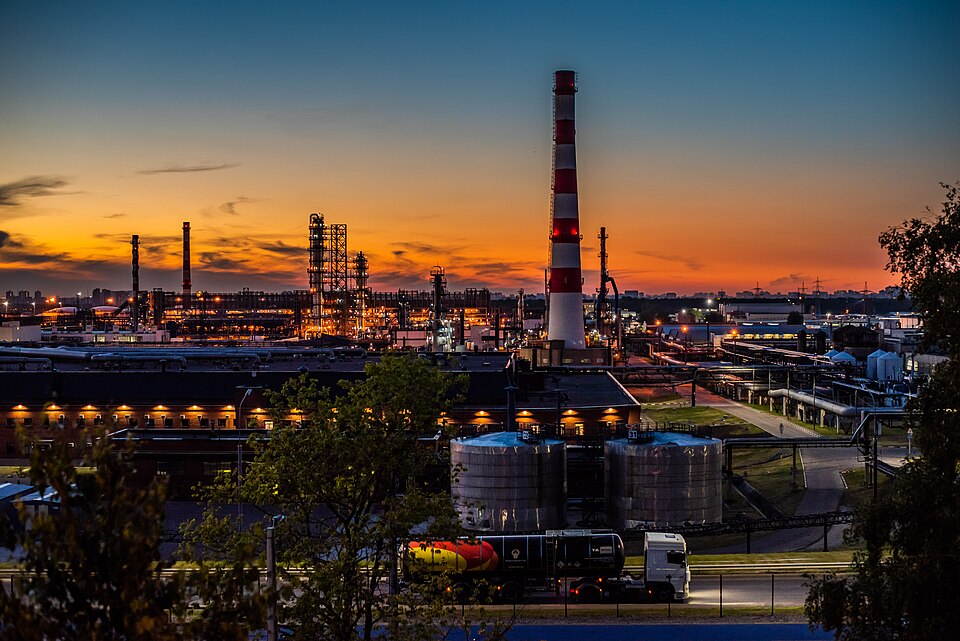
Russia sits among the world’s largest crude exporters. In August it bought gasoline from abroad at a record pace: around 125,000 barrels per day by sea, or an estimated 470,000 tonnes for the month, according to the analytics firm Vortexa. The reason is plain enough. Ukrainian drones keep knocking refineries out of service.
Vortexa counted 32 attacks on Russian refineries across July and August, roughly one every two days. Domestic fuel output fell by as much as 70 per cent, the report said. Moscow answered with restrictions rather than repairs. Its gasoline export ban, covering producers and non-producers alike, now runs to the end of January 2027, and diesel curbs were pushed out to September 1, 2026.
Where the gasoline comes from
India has become a significant supplier. Close to 1 million barrels went to Russia over two months, and much of it came from Nayara Energy’s Vadinar refinery in Gujarat, trade sources told Moneycontrol. Rosneft owns part of Nayara. Turkey and Morocco also helped fill the gap.
The catch is where the fuel began. Since 2022 India has bought far more Russian crude: more than 2.6 million barrels a day in June and July, against about 1 million bpd in February, and over half of its total crude imports. Some of the gasoline heading back to Russia may therefore have been refined from Russian oil.
The shipping is murky. Vortexa said about 55 per cent of August’s gasoline imports, nearly 260,000 tonnes, arrived on sanctioned vessels. Around 40 per cent of the total moved through ship-to-ship transfers, mostly by tankers with their AIS transponders switched off.
“All India-origin gasoline cargoes Russia imported in August were carried on sanctioned fleets and involved dark ship-to-ship (STS) transfers in the Mediterranean,” Vortexa said.
Strikes and shortages at home
The IBTimes reported that a drone attack on 4 July hit the St. Petersburg Oil Terminal and sites around the Leningrad region, and that Yaroslavl, Tuapse and Krasnodar Krai had been hit earlier. Leningrad Governor Alexander Drozdenko and St. Petersburg Governor Alexander Beglov said air defenses responded to large-scale drone activity.
Putin conceded on 28 June that fuel shortages had become a concern in some regions. Reports from affected areas described supply bottlenecks and longer queues at petrol stations. Officials insist the situation is under control.
Diesel is not faring better. Through August 25, seaborne diesel and gasoil exports were near 150,000 bpd, flat against July but about 610,000 bpd below the same stretch of last year. Vortexa expects Russia to keep importing gasoline for now.
Sources
- Russia’s Fuel Crisis: Why India Is Now Supplying Gasoline To Moscow – Outlook Business
- Russia's Fuel Crisis Deepens as Ukrainian Drone Strikes Hit Energy Infrastructure




