
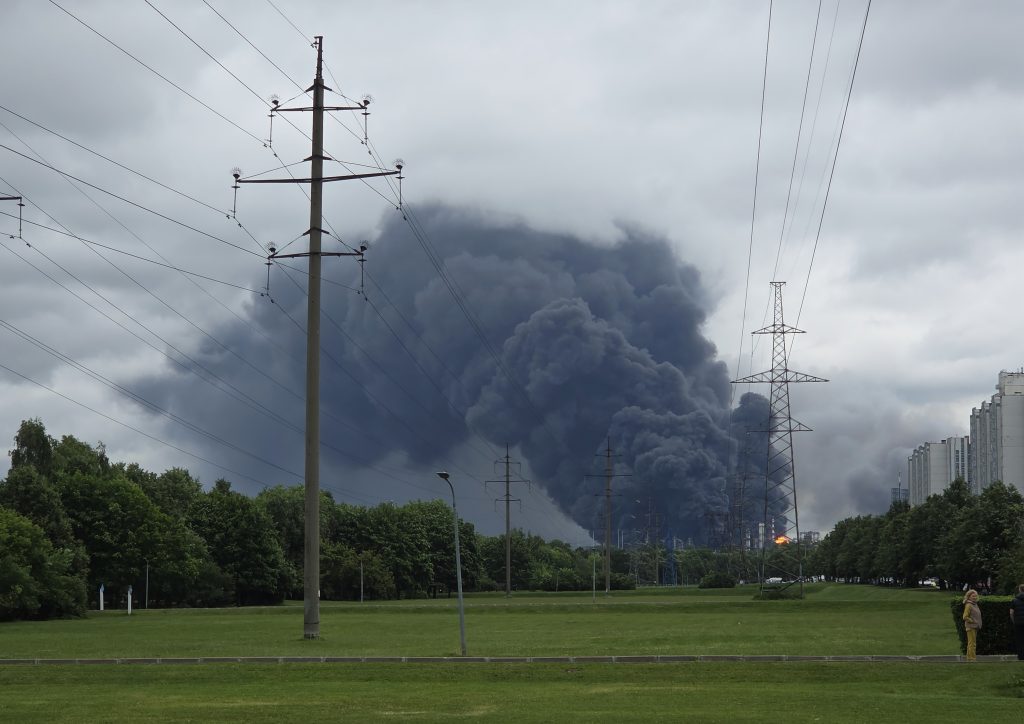
“Our soldiers got off to a very strong start on Ukraine’s Constitution Day,” President Volodymyr Zelensky wrote on Facebook on June 28. Overnight, he said, Ukrainian long-range strikes had hit two oil refineries inside Russia.
One was the Slavyansk refinery in the Krasnodar region, about 300 kilometers from the front line. The other sat in the Yaroslavl region, roughly 700 kilometers from the Ukrainian border. Zelensky said every long-range strike cuts into the resources that feed Russia’s war effort and brings peace a step closer. “We will continue to respond to Russian terror,” he added.
The strikes fit a pattern. Ukrinform reported that drones were shot down over Moscow and the surrounding region on the night of June 26, and that others hit the Azot chemical plant in Novomoskovsk, in Tula Oblast. Ukraine’s Foreign Intelligence Service has said the scale of the attacks is being concealed in Russian regions.
How the refinery campaign began
The campaign is not new. It began in earnest in January 2024, and by April of that year Ukraine had bombed more than a dozen Russian refineries, some of them among the largest in the country. On April 2, 2024, a drone reached a refinery in Tatarstan about 1,300 kilometers from the border, one of the longest-range strikes of the war to that point. Britain’s Ministry of Defence estimated at the time that at least 10% of Russian refining capacity had been disrupted.
Kyiv’s logic was plain. Oil revenue sits at the heart of the Russian war economy, officials argued, which makes oil facilities legitimate targets. Russian forces also depend on refined products such as gasoline, diesel and jet fuel. Repairs are slow because the refineries rely on Western equipment that sanctions keep out of reach. The Kremlin banned gasoline exports for six months from March 1, 2024, to head off shortages, though pump prices still rose.
Allies not in step
In 2024, Washington was uneasy. The Financial Times reported that US officials urged Kyiv to stop hitting refineries over fears of higher global oil prices and retaliation. Zelensky replied that Ukraine would not accept limits on its own weapons: “We used our drones. Nobody can say to us you can’t.” Secretary of State Antony Blinken said in Paris that the US had “neither supported nor enabled strikes by Ukraine outside its territory.” French Foreign Minister Stéphane Séjourné took a different tone, saying Ukrainians were “acting in self-defense” and that Russia was the aggressor.
The cost advantage explains why Kyiv kept at it. Drones are far cheaper than long-range missiles and need less infrastructure. In January 2024 the United Kingdom pledged at least $250 million for 1,000 one-way attack drones.
Sources
- Ukrainian long-range drones strike two oil refineries in Russia — Zelensky
- Ukraine’s allies divided over drone campaign targeting Russian refineries




