
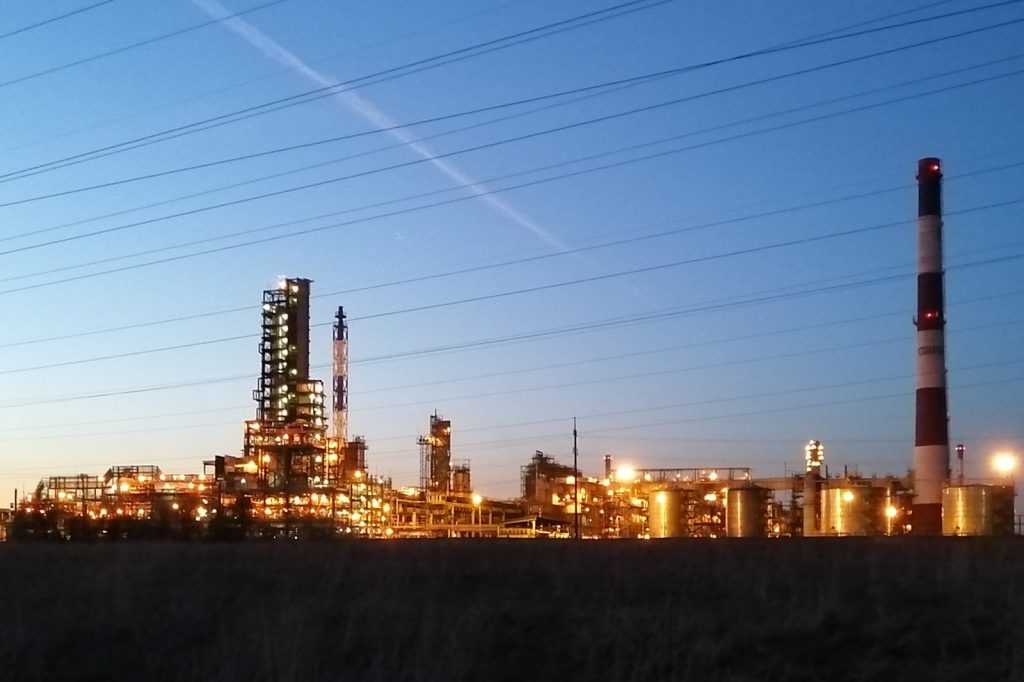
KYIV, September 22 — Ukraine’s General Staff says its long-range strikes have knocked out more than 45% of Russia’s projected oil refining capacity, a figure the military has put forward itself and one that remains a stated Ukrainian claim rather than an independently verified total. The assertion sits at the centre of a war now fought as much against refineries, pipelines and export terminals as against trench lines. Against this backdrop, the confirmed targets matter as much as the headline number.
Ukraine’s General Staff publicly acknowledged a strike on the Yaroslavl oil refinery, and Ukrainian forces also hit a Russian military airfield, according to the same military statements.
A campaign aimed at Moscow’s revenue
Kyiv has pressed the campaign on several fronts. Guardian reporting describes Ukraine targeting Moscow with hundreds of drones on the final day of a Russian election. Bloomberg and the Charlotte Observer reported that Ukraine hit a key Russian oil refinery while Moscow struck Kyiv — the two capitals trading blows in the same news cycle.
The wider picture is mixed for Russia on the ground. A Russia-Ukraine War Report Card dated Sept. 16, 2026, published by Russia Matters, found that Russia’s ground war has stalled.
Yet Russian drones have threatened the safety of Ukrainian, American and European officials travelling to and from Kyiv, a risk that falls on the diplomatic traffic around the capital.
Diesel, and a contested blame game
The economic dimension reaches well beyond the battlefield. Commentary published by the California Globe argues that “Russia Has Lost Control of its Diesel Oil Industry due to its War with Ukraine,” framing Russia’s diesel difficulties as a shared problem rather than a purely Russian one. Related reporting places the diesel crunch in an Iran War context, in which Saudi transits out of the Strait of Hormuz rose markedly while the squeeze became acute.
A separate account states that on 14 September 2026, with American diesel having crossed six dollars a gallon for the first time in history, the US president blamed Kyiv for a diesel crisis in a single sentence posted to social media — a charge the same account attributes to the president’s own Iran War rather than to Ukraine.
What is at stake in the corridors of European capitals is the distinction between three things that are easily blurred: Ukraine’s stated percentage claim, the individual strike targets Ukraine’s General Staff has named, and a diesel-market and political context involving multiple actors and contested attributions. The 45% figure belongs to the first category. The Yaroslavl refinery and the airfield belong to the second.
The third remains disputed. Watch next for independent assessments of Russian refining capacity, further confirmed strike targets, and whether the diesel dispute hardens into policy on either side of the Atlantic.




