
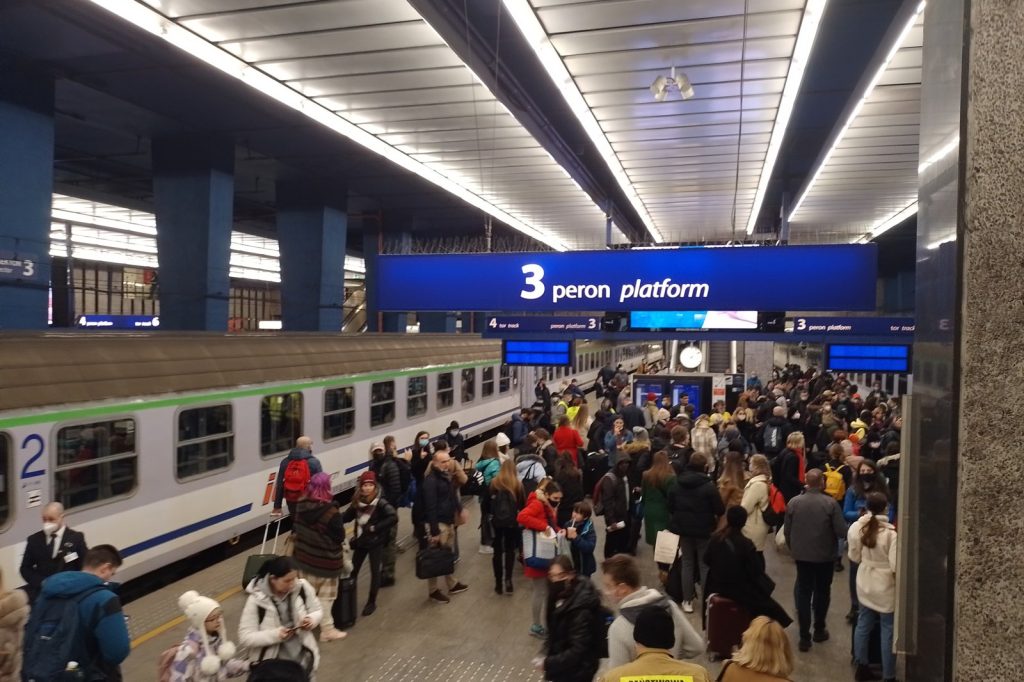
At the Shehyni crossing into Poland, refugees waited in line on March 31, 2022, as they fled the Russian invasion of Ukraine. Twenty days later, the UN put a number to the flight: over five million people had left the country. It was already Europe’s biggest refugee crisis since World War II.
Over half of those refugees entered Poland. Most stayed in the border area for only hours, or a few days at most, before moving on. The response in Subcarpathia and Lublin was largely grassroots. Local mayors and officials supplied shelter, transport, water and energy.
Volunteer-led border response
Julian Vierlinger, a researcher at the European University Institute who spent a month volunteering with the Polish Red Cross at the Ukrainian border, wrote in an Atlantic Council analysis that coordination was ad hoc and largely informal.
That informality left gaps. Funding was slow. Money allocated for the crisis did not reach field operations quickly enough, Vierlinger wrote. Front-line aid workers often knew what was needed but lacked the authority to act.
Transport was another weak point. Refugees moved from reception centers to final destinations in private volunteer vehicles. No system confirmed their safe arrival.
The vast majority of refugees were women and children.
That made the informal transport network a blind spot, he warned, vulnerable to exploitation by traffickers and criminal groups. He called for official transport services and rules for volunteer drivers. Unaccompanied minors, elderly people and people with disabilities needed a clear Poland-wide relocation scheme.
Staffing would also not last. Volunteers were already stretched, and their numbers would fall as the war dragged on. Local responders were often understaffed and underequipped for the work, Vierlinger wrote. Salaried professionals would eventually have to replace volunteers, but local labor markets could not supply enough people.
International agencies themselves were not aligned. Field operations looked to IOM, UNHCR, WHO and UNICEF for guidance, yet those organizations often differed on who would do what, where and when.
Disease outbreaks had already severely tested local capacities. A new Russian offensive in eastern Ukraine was expected to send another surge of refugees toward the border, and current systems could be overrun.




