
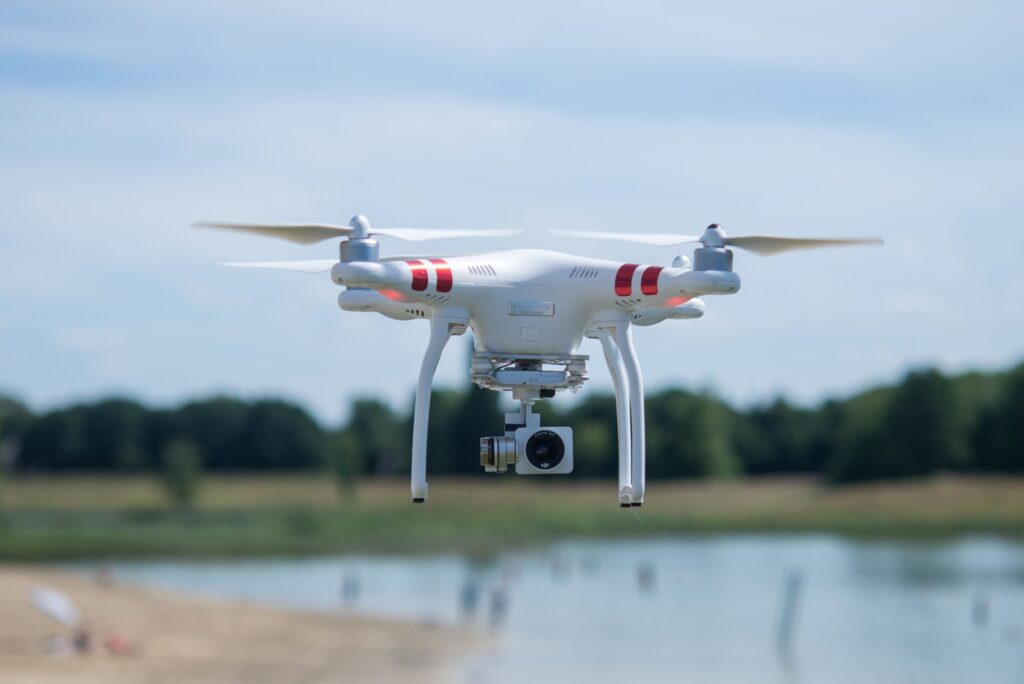
About 10,000 drones a month. That was the loss rate the Royal United Services Institute put on Ukraine’s drone fleet in a May 2023 report, and it explains a lot about how the war is fought.
The RUSI paper, titled “Meatgrinder: Russian Tactics in the Second Year of Its Invasion of Ukraine,” blamed Russian electronic warfare and counter-drone weapons. Russia had placed at least one major jamming system for each 10 km of front, the report said. Some of the drones lost were military models; many were commercial. Ukraine flew “simple gyrocopters” for reconnaissance and heavily modified commercial machines for combat.
The number was contested. In late August 2023, Yuri Shchyhol, who heads Ukraine’s state special communications service, told Ukrainian TV the country was losing about 40 to 45 reconnaissance drones each day. Ukraine, he said, lost everything from Mavic and Matrice consumer models to “large professional drones of Ukrainian and foreign production.”
Replacing what is lost
The losses did not stop the flying. RUSI found Ukraine “is still able to make, purchase or acquire enough UAVs to maintain its deployment of them.” Crowdfunding drives raised money for more unmanned systems after successful attacks on Russian naval assets.
Russia, for its part, adapted. It pulled command posts back from the front after setbacks in summer 2022 and began decrypting some Ukrainian drone communications. It also turned to stand-off weapons, lofting S-8 rockets and dropping FAB-500 glide bombs from medium altitude as far as 70 kilometers away. RUSI’s verdict on those fixes was that they tended to react to events rather than anticipate them. If Ukraine could disrupt Russian defences, it concluded, “Russian units are likely to rapidly lose their coordination.”
An old Soviet drone, new job
Not every Ukrainian drone is new. The Tu-141 Strizh was built at the Kharkiv Aviation Plant between 1979 and 1989, 152 units in all, as a reconnaissance aircraft. Engineers removed the nose cameras and the landing and braking parachutes and turned it into a strike weapon. Defense Express says it offered “significant flexibility in warhead configuration” and had no ready substitute in late 2022.
The specifications are modest by cruise-missile standards but long on reach: a range of up to 1,000 kilometers, a top speed of roughly 1,110 km/h, a 14-meter fuselage and a 3-meter wingspan.
In December 2022 Ukraine sent Strizhs against the Engels and Dyagilevo air bases. At Dyagilevo, Ukrainian sources first reported damage to one Tu-22M3 bomber. Russian sources later conceded as many as three of the aircraft and one Kh-32 missile had been hit. The outlet’s conclusion: “Ukraine became the first country in history to destroy enemy missile-carrying aircraft using strike UAVs.”
Sources
- Report: Ukraine is losing 10,000 drones per month (Task & Purpose)
- Ukrainian drone losses "at 10,000 a month" – new research from RUSI (Unmanned Airspace)
- Russia and Ukraine are filling the sky with drones (RUSI, in the news)
- How Ukraine Used Tu-141 Strizh to Strike Russian Tu-95MS and Tu-22M3 Bombers (Defense Express / defence-ua)




