
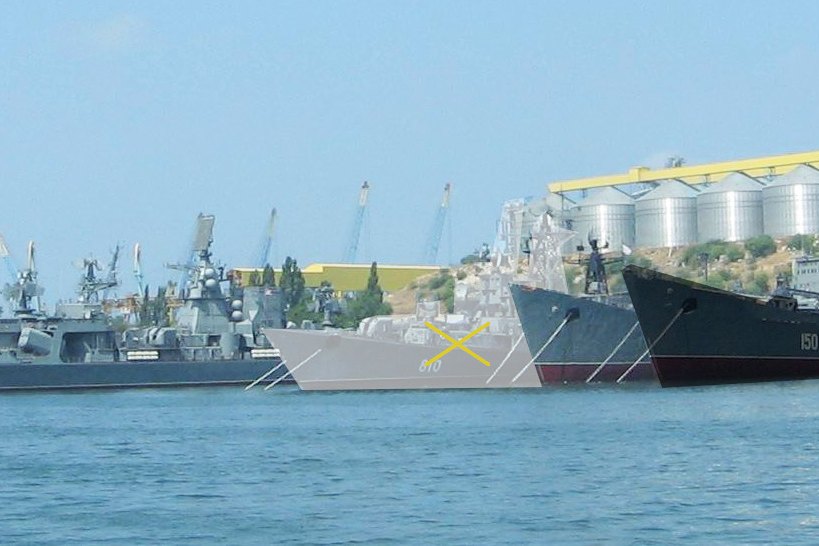
Ukraine has expanded its maritime campaign against the Russian Black Sea Fleet, striking 20 Russian vessels as part of ongoing operations reported in early 2025. The strikes target a fleet that has been based in Sevastopol, Crimea, since Russia’s annexation of the peninsula in 2014.
For Ukraine, the campaign aims to challenge Russian naval dominance in the Black Sea, disrupt supply lines, and protect its own maritime trade routes. Ukrainian forces have employed a combination of unmanned surface vessels (USVs) and missiles, including domestically produced Neptune anti-ship missiles and Western-supplied systems such as Storm Shadow cruise missiles. Notable incidents include the sinking of the Russian cruiser Moskva, the flagship of the Black Sea Fleet, in April 2022, and a strike on the landing ship Saratov in March 2022.
These operations have reduced the operational capability of the Black Sea Fleet, forcing Russia to relocate some vessels to the port of Novorossiysk. The campaign has also included attacks on Russian naval infrastructure, such as the Sevastopol naval base and the Kerch Strait Bridge, which connects the Russian mainland to the annexed Crimean Peninsula.
That bridge was damaged in October 2022 and again in July 2023. Russian Foreign Minister Sergei Lavrov has condemned the strikes, accusing Ukraine of piracy.
Maritime Campaign Targets Russian Fleet
Ukraine’s maritime strategy is part of its broader counteroffensive in the Russo-Ukrainian War, which began with Russia’s full-scale invasion on February 24, 2022. Key Ukrainian officials involved include Defense Minister Rustem Umerov and Commander of the Ukrainian Navy Vice Admiral Oleksiy Neizhpapa.
A central objective of the campaign has been to protect Ukraine’s maritime trade routes, including grain exports. The Black Sea Grain Initiative, brokered by the United Nations and Turkey in July 2022, had provided a protected corridor for such shipments, but that agreement expired in July 2023. The strikes have forced the Russian Black Sea Fleet into a more defensive posture, reducing its operational capability and pushing some assets away from the traditional hub of Sevastopol. By doing so, Ukraine has sought to create breathing room for its commercial shipping and military operations.
A Peninsula at the Crossroads of History
Crimea occupies a narrow peninsula jutting into the Black Sea, its southern coast lined with ports and its interior a mix of steppe and mountains. The region has long held military and trade significance, serving as a crossroads between Europe and Asia. For centuries, it changed hands among Greeks, Genoese, Ottomans, and Russians before becoming part of the Russian Empire in 1783.
After the Russian Revolution, Crimea briefly became an autonomous republic within the USSR, only to be occupied by Nazi Germany during World War II. Stalin’s 1944 deportation of Crimean Tatars reshaped its demographics.
In 1954, the Soviet Union transferred Crimea from the Russian SFSR to the Ukrainian SSR, a move that remained in place after Ukraine’s independence in 1991. A 1997 treaty permitted Russia to maintain its Black Sea Fleet in Sevastopol, a presence that became central to later tensions. Crimea is a peninsula in Eastern Europe, almost entirely surrounded by the Black Sea and the Sea of Azov, connected to mainland Ukraine by the Isthmus of Perekop and to Russia by the Kerch Strait Bridge. The region, internationally recognized as part of Ukraine, has been under Russian occupation since 2014.
Its strategic location made Crimea a flashpoint long before the current war. The Crimean War of 1854 saw British, French, and Ottoman forces clash with Russia over control of the peninsula.
Decades later, Soviet leader Nikita Khrushchev transferred administrative control to Ukraine in 1954, a decision that carried little immediate consequence but gained weight after Ukraine’s independence. The Black Sea Fleet’s presence in Sevastopol became a persistent source of friction, particularly as Ukraine sought greater sovereignty. Russia’s 2014 annexation followed a rapid military takeover, a move condemned by most of the international community.
Economic and Strategic Consequences
Today, Crimea remains a contested symbol of the broader war. Its seizure in 2014 gave Russia control over a key naval hub and a land bridge to reinforce its forces.
For Ukraine, retaking Crimea is both a strategic and symbolic goal—restoring territorial integrity while denying Russia a critical staging ground. The peninsula’s ports, once central to grain exports, now sit under blockade or threat, reshaping global food supply chains. The conflict’s maritime dimension, including strikes on Russian ships and infrastructure, reflects this decades-long struggle for dominance in a region where history and geography collide.
By targeting the Black Sea Fleet and its associated infrastructure, Ukraine has not only reduced the fleet’s ability to operate but has also demonstrated its capacity to challenge Russian control of these waters. The campaign continues to evolve as both sides adapt to the changing dynamics of the war.
{“@context”: “https://schema.org”, “@type”: “NewsArticle”, “headline”: “Ukraine intensifies strikes on Russian Black Sea Fleet with 20 vessels hit”, “description”: “KYIV, July 15 — Ukraine has expanded its maritime campaign against the Russian Black Sea Fleet, striking 20 Russian vessels as part of ongoing operations…”, “datePublished”: “2026-07-15T09:30:00+00:00”, “author”: {“@type”: “Person”, “name”: “Ariel Antonio”}, “publisher”: {“@type”: “Organization”, “name”: “InfoPulse Today”, “url”: “https://newsfeed.infopulsetoday.com/”}}




