
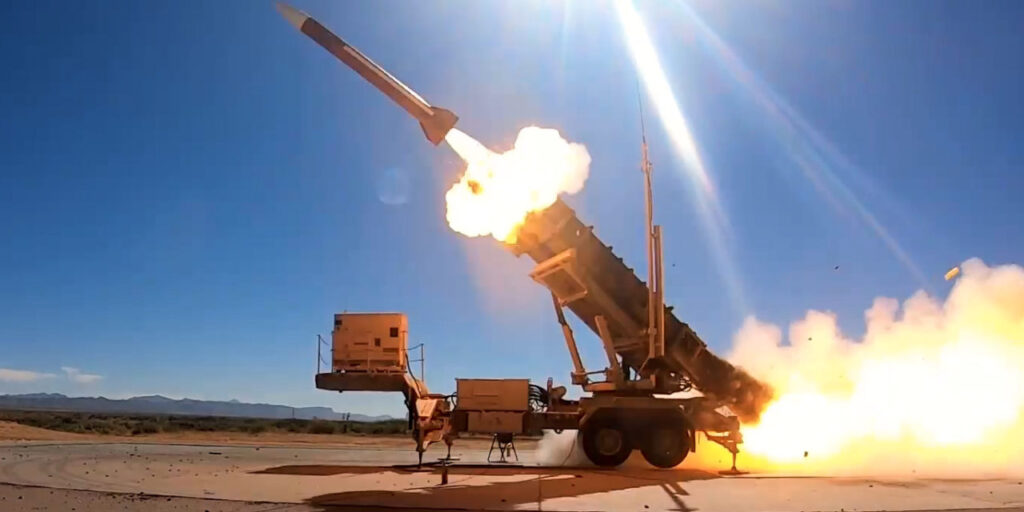
KYIV, September 25 — Ukraine will be allowed to build Patriot missile systems on its own soil under American licence, President Volodymyr Zelenskyy said, describing the decision by US President Donald Trump as final. The announcement, carried by UATV, marks a turn in how Kyiv obtains the weapon that has anchored its air defence through successive Russian missile campaigns. Until now Ukraine received Patriot interceptors as donated aid; under the licensing arrangement it would manufacture them domestically, putting a US-designed air-defence system into Ukrainian production for the first time.
What is at stake is not a single battery but the industrial logic behind it. The Patriot — Phased Array Tracking Radar to Intercept on Target — is a ground-based air and missile defence system built around the AN/MPQ-53 and AN/MPQ-65 radar sets, a fire-control station and launcher stations firing the PAC-2 and PAC-3 interceptor families.
It is designed to intercept aircraft, cruise missiles and short-range ballistic missiles in the terminal phase of flight, which is precisely the threat profile Ukraine has faced since the war began.
A strained supply chain
The decision lands against a backdrop of scarcity on the American side. Lockheed Martin has received its first Patriot missile components made by GM Defense, a sign the prime contractor is widening its supplier base beyond the traditional defence industrial sector. The Pentagon has extended Patriot production beyond the military sector, and the US president told the United Nations that eighteen munitions plants are in the works.
GM is now making parts for Patriot missiles, and recent contract awards point to a surge in demand across Europe, according to Defence Industry Europe. In the corridors of European defence planning, the same pressure is being felt.
European countries and Ukraine have formed an anti-ballistic missile coalition, Eurasia Review reported. But the US stockpile has been depleted by the war with Iran, and Washington has warned allies of weapons delivery delays because of those depleted stocks, according to reports carried by Anadolu Ajansı and Military Watch Magazine, which described extreme depletion of US missile stockpiles forcing extreme delays to critical exports. That shortage is the backdrop to the licensing decision.
Allies that previously expected US-built interceptors may face long waits, making licensed local production more attractive to governments that cannot afford to queue.
What each side gains
For Ukraine, domestic Patriot production would reduce dependence on the pace of Western deliveries and on US political decisions. For the United States, licensing production abroad could ease pressure on its own depleted inventories and its strained production lines. The practical obstacles are substantial.
Patriot interceptors require advanced seekers, rocket motors and precision manufacturing that Ukraine’s defence industry has not previously produced, and no timeline for the start of licensed production was given in the reporting. Trump approved the licences; Zelenskyy announced the decision.
The contractors central to the expansion are Lockheed Martin and GM Defense. What to watch next is whether a production start date emerges, and whether European coalition partners follow Ukraine toward licensed manufacture of their own.




