
On March 29, 2022, after three hours at the table in Istanbul, Turkey’s foreign minister Mevlut Cavusoglu called the Russia-Ukraine talks “the most significant progress” since the invasion began. Russia’s deputy defence minister Alexander Fomin said Moscow had decided to “radically…reduce the military activity in the areas of Kyiv and Chernigiv.” It looked like an opening. It was the closest the two sides came.
Minsk, twice
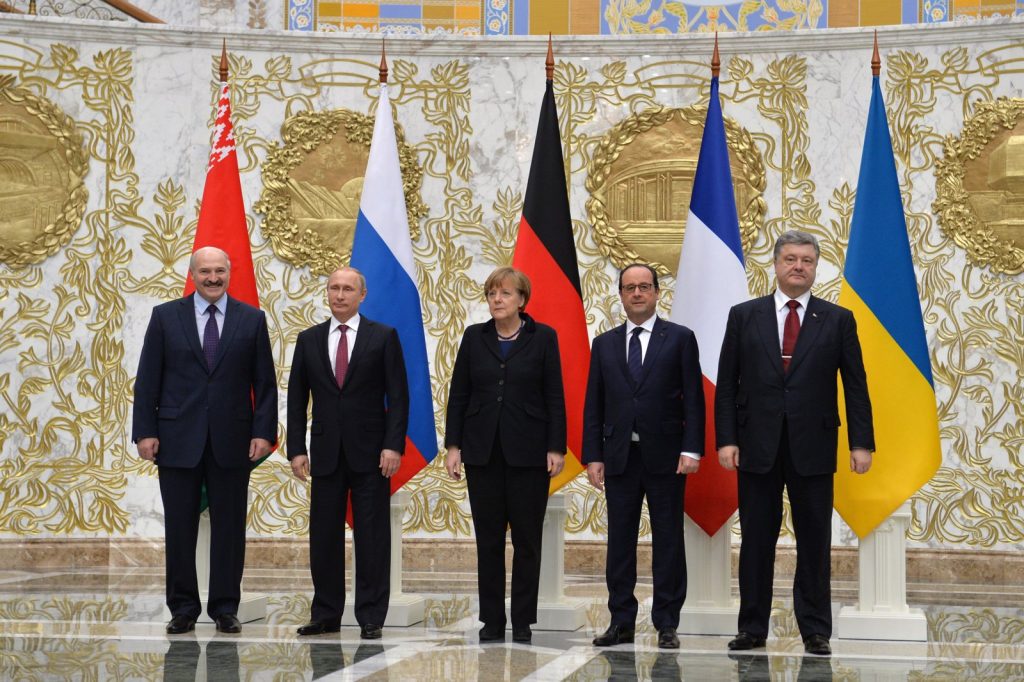
The diplomacy started earlier. Minsk I in September 2014 and Minsk II in February 2015 were meant to end the war in eastern Ukraine, where separatists in Donetsk and Luhansk had held independence referendums in May 2014 and fighting had followed. Researchers at ZOiS in Berlin list the flaws: “ambiguous language and the lack of clear obligations for Russia,” no credible enforcement, no clear order between security and political steps. Ceasefires did not hold. Russia, while backing the separatists, “managed to position itself as a mediator rather than a party to the conflict.”
Each side drew its own lesson. Ukraine said Russia used the deals as cover to rebuild its forces. Russian officials said Kyiv and its Western partners never meant to implement them and wanted time to arm Ukraine.
Istanbul, spring 2022
Russia’s full-scale invasion on February 24, 2022 ended the Minsk process outright. When the first military plans stalled, talks resumed, and the Istanbul round followed. Russian negotiator Vladimir Medinsky described a “meaningful discussion” and said Ukraine’s written proposals would go to President Putin. By his account, Kyiv offered to become “a permanently neutral state under international security guarantees,” with non-nuclear status, no military alliances and no foreign bases, as long as Russia did not oppose its European Union ambitions. Crimea and the separatist regions were left out of any military recovery.
No agreement came. ZOiS notes that the discovery of Russian atrocities in Bucha in April 2022 closed the diplomatic window.
The Trump track
The Council on Foreign Relations traces what followed Donald Trump’s return. In March 2025 he ordered a “pause” in U.S. assistance to push Zelenskyy toward the table. In May 2025 the two sides’ negotiators met directly for the first time since early 2022, and the meeting produced the largest prisoner swap of the conflict. A second round ended with no breakthrough. Trump and Putin met in Alaska in August 2025 and announced no agreement.
In November 2025 Trump put forward a twenty-eight-point draft that would have required Ukraine to cede territory and stay out of NATO, lifted Russian sanctions and returned Moscow to the Group of Seven. Ukraine rejected it, and a revised twenty-point plan followed. After Zelenskyy met Trump in December 2025, Trump said the two countries were “maybe very close” to a deal. In February 2026 Washington set a June deadline. In May 2026 Trump asked for a three-day ceasefire and a prisoner exchange, and both leaders first agreed. The ceasefire fell apart quickly, each side blaming the other.
Sources
- The Ghost of Minsk: How a Failed Peace Process Still Shapes Debates on Peace in Ukraine
- Turkey hails Istanbul talks as 'most significant progress'
- War in Ukraine (Global Conflict Tracker)




