
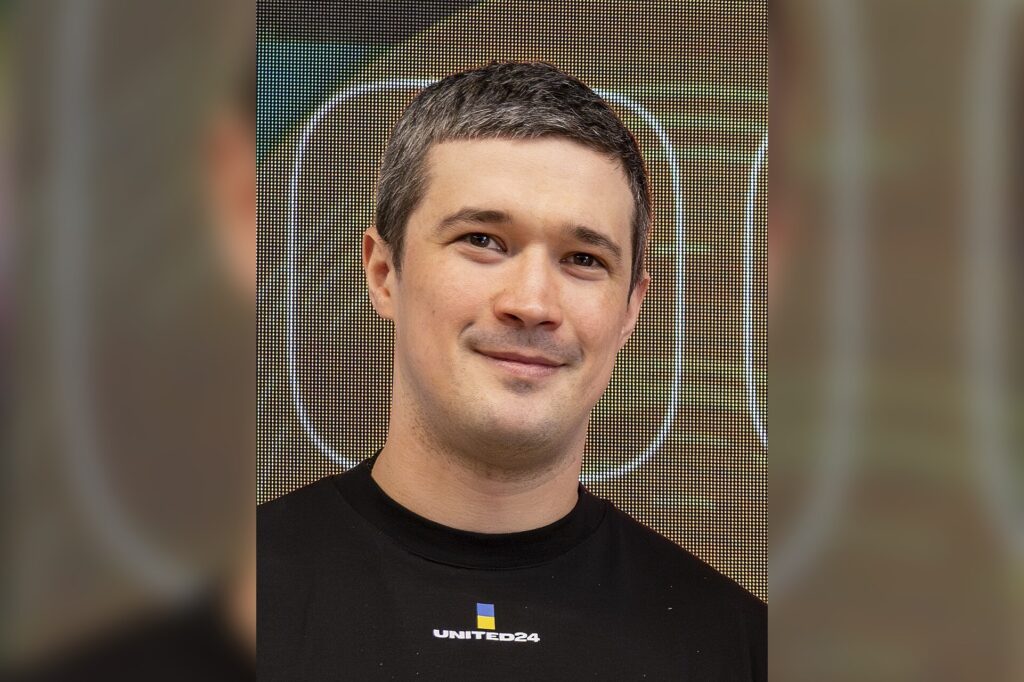
“Syrskyi, go away!” The chant rolled through Kyiv on Thursday, July 16, 2026, as thousands of mostly young Ukrainians took to the streets of the capital and other cities. They were angry about the removal of Defense Minister Mykhailo Fedorov, and they said so loudly.
Fedorov, 35, had held the job for only six months. Before that he ran Ukraine’s digital transformation policies, where he built a following by pushing out drone technology and several e-government platforms. Many people credit his technical know-how, at least in part, with the army’s better results lately against Russia’s much larger force. President Volodymyr Zelensky fired him anyway, as part of a wider shake-up that also replaced the prime minister, the Los Angeles Times reported in an Associated Press story by Samya Kullab and Illia Novikov.
“Deeply outraged”
For ordinary Kyiv residents, the timing stung. Bohdan Huryak told the AP he was “deeply outraged.” He said he was not following the internal political debates closely, but he could see what Fedorov delivered. “We feel the fighting spirit and confidence in victory rising,” Huryak said. “And then, six months later, he is removed from office? Come on.”
The protesters also shouted “A European army for a European country!” Their target was Gen. Oleksandr Syrskyi, the commander of the armed forces, whom Zelensky named as the other side of the quarrel.
The dismissal cost the military a senior figure too. Col. Pavlo Yelizarov, deputy commander of the air force, resigned. On Facebook he wrote that Fedorov’s removal was “a great evil for the country’s defense capability” and warned that it could mean more deaths from Russian attacks.
Two accounts of one dispute
Zelensky told a news conference that the ministry and the military had a difficult relationship at several levels, not just between two men. “I’m just showing that if the sides can’t resolve an issue, I will have to resolve it,” he said. He added that both sides share responsibility for “the things that cause confusion and public reaction.” He spoke standing beside British Prime Minister Keir Starmer, on what the AP described as Starmer’s last foreign visit before leaving office.
Fedorov turned up to his own briefing in a dark T-shirt and jeans. He said Syrskyi had blocked reforms that the war now demanded, “because the war has changed completely” with drones and other new technology. He had been willing to work with the general, Fedorov said, “but we encountered a situation in which all the initiatives we proposed began to be blocked.” His blunt verdict: “Under this arrangement, I personally do not know how the war can be won.”
Syrskyi stayed out of sight. In a Facebook post he thanked Fedorov and wrote, “I wish him to continue to remain in the Ukrainian team.”
Fedorov listed what he counted as his wins: money earmarked for salaries redirected into midrange strike weapons, fiber-optic drones and reconnaissance systems; wider drone buying; Patriot missile defense contracts; successful ballistic missile tests. He also secured limits on Russian forces’ access to Starlink. What he did not finish, he admitted, was bringing the ministry up to “NATO standards and common sense,” moving all procurement to competitive tenders, and building a culture of accountability. He had also spoken of about 200,000 desertions and some 2 million people dodging the draft.
A new line-up in Kyiv
Zelensky asked Maj. Gen. Yevhen Khmara to carry out the defense minister’s duties for the time being. Khmara had been acting head of the SBU security service since January and earlier led its elite Alpha special forces unit. Parliament overwhelmingly approved Serhii Koretskyi, head of the state energy company Naftogaz, as prime minister. Zelensky said the 48-year-old engineer was best prepared to steer the country through another winter of Russian attacks on the power grid.
The same night, Russian missiles hit Kyiv, killing two people and wounding five, including a child, according to Ukraine’s Emergency Service.
It was not the first time Zelensky had faced the street. In July 2025, large demonstrations broke out after he fast-tracked a law that would have curbed the independence of the anticorruption watchdogs. He reversed course quickly and submitted legislation to restore their independence.




