Leningrad Oblast sits about 600 kilometers from the nearest corner of Ukraine. On April 15, its governor called it a “frontline” region, and he had numbers to back it up: 243 Ukrainian drones shot down over the province from January through March.
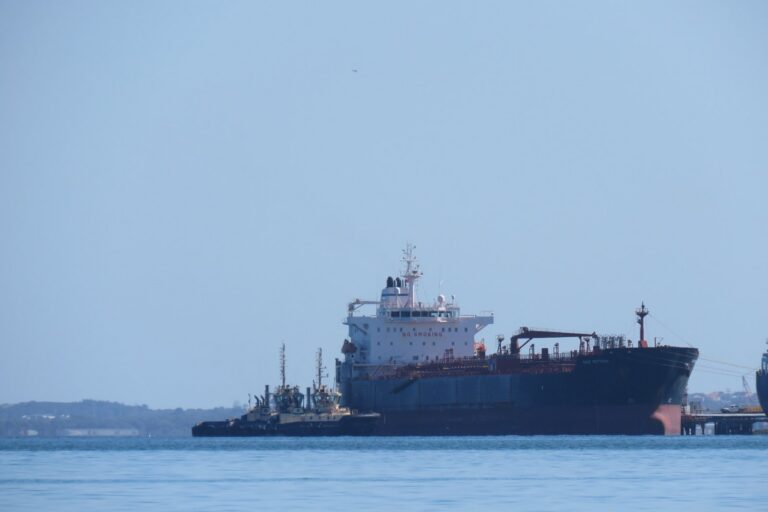
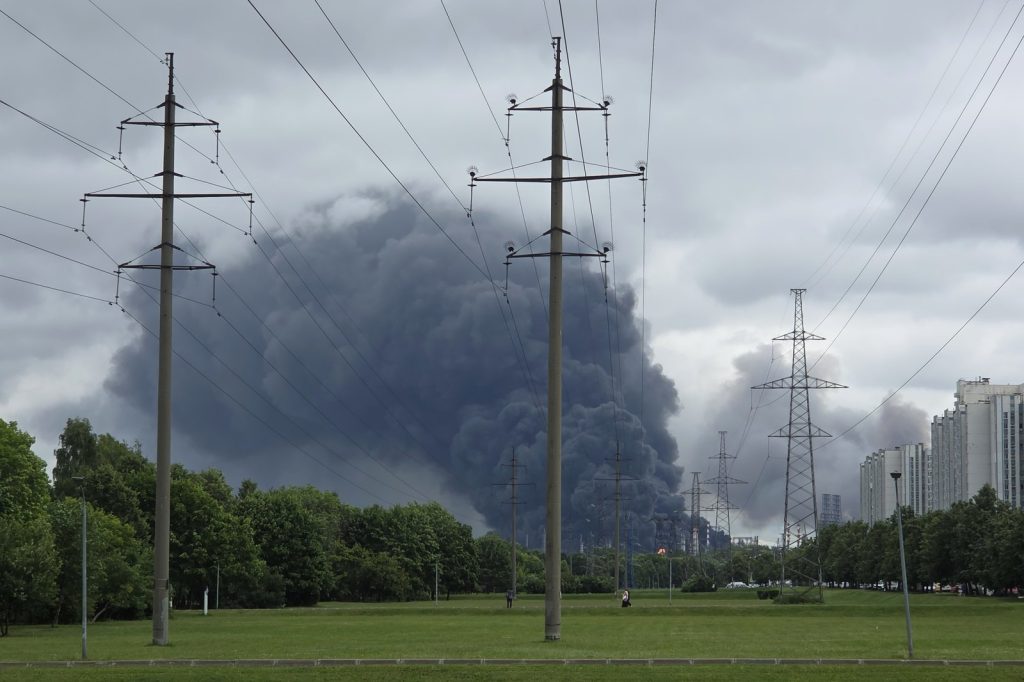
Some got through. Oil facilities around St. Petersburg, President Vladimir Putin’s hometown, from export terminals on the Gulf of Finland to inland refineries, have been among the hardest hit in a surge of Ukrainian strikes on Russian oil production, storage and export, RFE/RL reported in May 2026.
The scale
French open-source researcher Clement Molin counts about 1,000 Ukrainian drones launched into Russia in August 2024, 3,000 in July 2025 and 7,000 in March, the first month in which Ukraine sent more than Russia sent into Ukraine. His tally leans partly on Russian Defense Ministry figures, which is a problem, because Moscow’s claims about how many drones it downs are unreliable. The count dipped moderately in April.
Other tallies point the same way. A June 25 analysis by CNN found Ukraine had struck Russian oil facilities 305 times since the full-scale invasion began in February 2022, only 3 of them in the first year and 13 in the second. The Economist reported on June 17 that Ukraine carried out 685 deep strikes in 2025 and was on pace for more than 800 in 2026.
Bloomberg News reported that Ukraine hit Russian oil infrastructure at least 21 times in April, nine of them on processing plants. Russia’s crude processing volume fell to its lowest level since 2009.
Air defenses in the crosshairs
The oil money is one half of the logic. The other is clearing the sky. Oleksandr Karpyuk, a soldier with the 59th Assault Brigade of Ukraine’s Unmanned Systems Forces, who goes by the call sign Serge Marco, described the sequence: “First the drones arrive, then the missiles arrive. They take out the air defense systems.” A Flamingo cruise missile with a 1,000-kilogram warhead can then hit its target with ease, he said. Ukraine fired several Flamingos on May 5, President Volodymyr Zelenskyy said, including at a plant in Cheboksary, about 1,200 kilometers from Ukraine, that makes navigation components for the Russian military. The regional governor said at least two people were killed and more than 30 injured.
Unmanned Systems Forces commander Robert Brovdi said his service destroyed 41 Russian air defense units in March, up from 54 over the previous three months combined. Analysts warn such claims are hard to verify. Oryx, which tracks equipment losses, counted 18 Russian surface-to-air systems and seven radars destroyed or damaged in March.
Fabian Hoffmann, a researcher at the University of Oslo, argues that Russia’s size works against it, since losing one system can leave an entire area uncovered. He also faults Russia’s reluctance to pull assets from the tight ring of defenses around Moscow. Still, he wrote on April 12 that the campaign “alone does not win Ukraine the war, nor does it eliminate Russia’s economic potential.” Its cumulative effects, he added, “are real, bearing meaningfully on Russia’s budget and planning.”
John Helin of the Black Bird Group urged caution with raw figures. The trend is real, he told RFE/RL, but the campaign should be judged by what was hit, how deep, and whether it forced Russia to disperse air defenses or cut refinery output. “On those counts it’s clear that the Ukrainian long-range campaign is becoming increasingly effective,” he said.
Putin trimmed the May 9 Victory Day parade in Red Square, which will go ahead without tanks or intercontinental ballistic missiles for the first time in almost 20 years.
Sources
- Drone Strikes, Deep Strikes: How Ukraine's Long-Range Air Attacks Are Hurting Russia
- Deep strike campaign – Wikipedia