
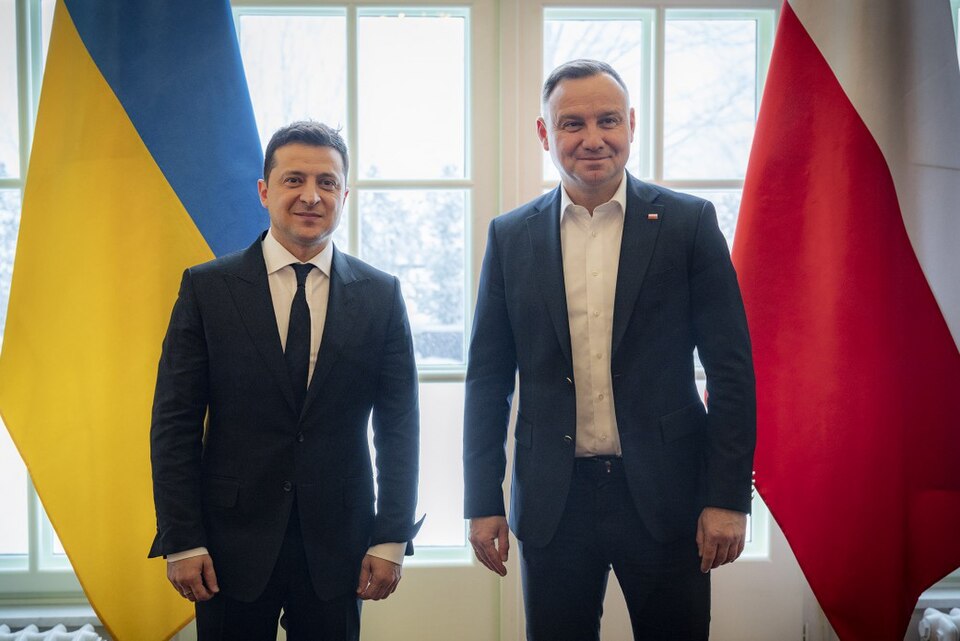
Eighty percent of Ukrainians trusted Volodymyr Zelensky after his 2019 election. By February 2022 that figure had sunk to 37%. Then Russia invaded, and it jumped to 90%. The Kyiv International Institute of Sociology (KIIS) has tracked the swings, and they say a good deal about how Ukraine’s president has held on to his job through the war.
The 2019 mandate
Zelensky came to office on a wave. He won the 2019 presidential election with 73 percent of the vote, which analyst Michael Carpenter of the Atlantic Council called “a strong popular mandate.” Ukrainians, Carpenter wrote at the time, wanted three things: resistance to Russian aggression, an end to oligarchic influence, and economic growth. He also flagged worries about Zelensky’s ties to the oligarch Ihor Kolomoiskiy and said Washington should draw a “red line” against de-nationalizing Privat Bank.
What the polls show
A KIIS survey run from September 20 to October 3, 2024 found that “59% of Ukrainians trust President Volodymyr Zelensky, 37% do not.” The decline from the 90% peak had been gradual through 2023 and 2024. Eastern Ukraine was the weakest region, at 51% trust against 45% distrust. Elsewhere trust ran between 58% and 62%.
Views of the West mattered. Among Ukrainians who believe Western countries genuinely want a good outcome for Ukraine, 69% trusted the president. Among skeptics the figure was 29%.
The numbers moved again in 2025. KIIS recorded 57% trust in February 2025, when relations with the Trump administration were strained. In early May the share stood at 74%, with 22% distrusting him. A poll fielded from May 15 to June 3, 2025 put it at 65%, with 30% distrust, and the sharpest drop came in the south and center. Western Ukraine stayed the most supportive at 73%.
Home-built long-range weapons
Zelensky has also made domestic arms production part of his pitch. On February 8, 2025, he showed Admiral Giuseppe Cavo Dragone, the new chair of NATO’s Military Committee, Ukraine’s own long-range weapons during the admiral’s first foreign trip in the post. United24 Media reported that officials presented the Peklo cruise missile, in production since late 2024, with a maximum range of 700 kilometers and a speed of 700 km/h. The report said it “has already been deployed in combat and continues to undergo improvements.”
About 100 Peklo units had been made within three months, and 70% of the components are sourced in Ukraine. “It is crucial to see the real results of our efforts, not theoretical developments, but tangible outcomes,” Zelensky said. Dragone’s reply was short: “NATO stands by Ukraine.”
Sources
- KIIS: Zelensky is trusted by 59% of Ukrainians, distrusted by 37%
- KIIS: 65% of Ukrainians trust Zelensky. The indicator decreased in mid-May
- Why the West must lean in now
- Zelenskyy Unveils Ukraine's Cutting-Edge Long-Range Weapons to NATO Military Chief




